

Automotive transition and restructuring: navigating change across the value chain
December 2026 | BRIEFING ROOM | BANKRUPTCY & RESTRUCTURING
Financier Worldwide Magazine

December 2026 Issue
FW discusses navigating change across the automotive value chain with Timothy Graulich at Davis Polk & Wardwell LLP, Jeffrey Finger at Jefferies and Daniel Steiner at PwC Germany.

FW: From your perspective, how has the automotive transition agenda changed in recent years? Which risks, opportunities and market forces are now shaping the industry most significantly?
Graulich: The automotive industry is in the midst of a broad strategic reset. Original equipment manufacturers (OEMs) and suppliers are balancing, among other things, electrification, software-defined and autonomous vehicle development, shifting trade tariff regimes, the need for new and more resilient supply chains, and rising competition from Chinese automakers. At the same time, uneven consumer demand, affordability pressure, evolving regulation and heavy investment requirements across batteries, charging, artificial intelligence (AI) and mobility are reshaping strategic priorities. Put simply, the agenda has broadened and is no longer defined by electric vehicle (EV) adoption. This creates both risk and opportunity. For example, while EV growth and opportunity remain meaningful, adoption has been uneven and difficult to forecast – increasing the risk of further disruption across production, sourcing and investment decisions, such as another EV whiplash reverberating across the supply chain.
Steiner: The transition has moved from a powertrain debate to a full business-model reset. Electrification remains essential, but the decisive questions are now where value will migrate, which capabilities companies must own, and how quickly capital and capacity can be reallocated. Software, AI, autonomous functions, new mobility models and geopolitical fragmentation are reshaping the product, the customer relationship and the competitive landscape at the same time. Growth, scale and cost benchmarks are increasingly being set outside Europe, particularly in China. Europe’s central risk is therefore not a lack of ideas, technology or engineering talent, but the gap between recognising change and acting at sufficient speed and scale. The opportunity remains substantial, from software-defined vehicles to new services and partnerships. Europe has the capabilities to compete. What it no longer has is the luxury of time.
Finger: The industry has moved from setting transition goals to funding and delivering changes that are progressing at different speeds across markets. Electrification is continuing, while Chinese manufacturers are increasing competition on price and technology, and trade barriers and geopolitical risks are changing where production makes financial sense. Companies must fund old and new products at the same time, despite uncertain demand, factory use and returns. Growth cannot be relied on to absorb spare capacity, and not every investment will pay off. Flexible production, distinctive technology and stronger partnerships offer opportunities, but companies must keep enough cash available to adapt rather than bet everything on one demand or regulatory outlook.
FW: To what extent are manufacturers and suppliers reassessing their electrification strategies in response to changing demand patterns, regulatory developments and profitability considerations?
Steiner: This is a recalibration, not a reversal. Electrification remains a structural direction of travel, but the pace and economics differ significantly by market. Demand, regulation, charging infrastructure, affordability and total cost of ownership are developing at different speeds. This means manufacturers will have to manage multiple powertrains for longer, while concentrating capital on scalable platforms with customer relevance and a credible path to returns. Suppliers face an even harder allocation challenge: they must fund batteries, power electronics and software capabilities while legacy volumes and margins decline. The strongest companies are reducing complexity, reassessing programmes that cannot earn their cost of capital, and preserving strategic flexibility through modular platforms and partnerships. Technology openness without capital discipline is not a strategy. It is an unaffordable portfolio of options.
Finger: Companies are adjusting their electrification plans, not abandoning them, as EV demand grows at different speeds across markets. Manufacturers and suppliers are reviewing launches, capacity and spending rather than following one global timetable. They should stay flexible across battery-electric, hybrid and combustion vehicles, releasing investment only when demand and expected returns justify it. Regulations and incentives need to be reviewed market by market, while suppliers that spend before production begins should seek clearer compensation for cancellations, delays and lower volumes. The goal should be profitable growth in electrification, not market share or capacity at any cost.
Graulich: Manufacturers and suppliers are reassessing electrification strategies to a significant degree, but it appears that most are adjusting course rather than pulling back altogether. Slower and less predictable EV demand, affordability concerns, charging infrastructure gaps and weaker residual values have made earlier growth assumptions harder to justify. Moreover, evolving regulations and shifting tariffs, among other things, are forcing companies to rethink where they build, source and invest. Profitability is also a big factor. Many are moving away from an EV at all costs mindset toward a more balanced approach, with a refocus on, for example, hybrid vehicles. In practice, that means a more pragmatic strategy – phasing investments, focusing on the right markets and segments, sharing risk through partnerships and aligning product plans more closely with actual demand and returns.
“The strongest companies are reducing complexity, reassessing programmes that cannot earn their cost of capital, and preserving strategic flexibility through modular platforms and partnerships.”
FW: How are supply chain localisation efforts, geopolitical tensions and shifting trade policies influencing investment decisions and operational restructuring across the sector?
Graulich: It appears that supply chain localisation, geopolitical tensions and changing trade and tariff policies are having a significant impact on investment and operations across the automotive sector. Instead of the primary focus being lowest-cost sourcing, companies are putting more money into regional production and supplier diversification, among other things, to reduce risk, including exposure to tariffs. So far, automakers have largely absorbed the higher tariff costs instead of raising sticker prices, though that may eventually change – further worsening affordability for consumers. Companies may also restructure supply chains by adding backup suppliers, holding more inventory and making sure they can meet local-content rules and qualify for subsidies. Overall, investment decisions may become more region-specific and risk-adjusted, while operating models shift toward greater flexibility, redundancy and geopolitical resilience.
Finger: Supply chain decisions now depend on market access, resilience and available capital, not just efficiency. Tariffs, rules on where goods are made and geopolitical risks shape sourcing and production alongside labour and transport costs, but moving factories is slow and expensive, especially for cash-constrained suppliers. Companies should avoid replacing reliance on one country with reliance on another, using selected regional facilities, alternative suppliers and partnerships rather than duplicating every asset. They should test investments against different trade policies, since current protections may change before a factory reaches full output. Production changes must also align with customer commitments, working-capital needs and funding limits: local production creates value only if it remains financially viable.
Steiner: Localisation has moved from an operational consideration to a board-level capital-allocation question. Geopolitical tensions, tariffs, export controls and conflicting regulatory regimes require companies to assess resilience, market access and security of supply alongside unit cost. This is particularly important for batteries, semiconductors and critical raw materials, where concentrated supply and refining capacity can create single points of failure. Companies are responding with more regional footprints, alternative sourcing and, selectively, vertical integration. In some cases, they are even stockpiling inventory to guard against disruptions. Yet localisation also adds fixed costs, duplicates capacity and can reduce scale benefits. The answer is not to localise everything. It is to identify the exposures that could interrupt production or block market access, then protect them economically. Every major investment case should now include explicit scenarios for tariffs, supply disruption, local-content requirements and alternative sourcing routes. The objective is not maximum localisation, but minimum strategic vulnerability at an economically sustainable cost.
FW: Where in the automotive value chain is financial distress concentrating today? Why are tier one and tier two suppliers facing disproportionate pressure relative to original equipment manufacturers?
Finger: Financial pressure is greatest in businesses with thin cash margins, high fixed costs, few major customers and limited funding options. These include traditional suppliers with spare capacity, companies whose electrification investments have not delivered expected volumes, and some battery producers and smaller EV makers. Tier one and tier two suppliers are especially exposed because contracts can delay recovery of rising costs, while production changes leave them with fixed overheads and committed spending. Smaller suppliers also struggle to fund local production, but vulnerability does not always mean lower reported margins: recent industry analysis shows that overall supplier margins can exceed those of OEMs. The key difference is the ability to withstand cash pressure – a supplier can be essential to production yet unable to sustain its contracts and debt.
Steiner: Financial distress is concentrating most visibly among tier one and tier two suppliers. Many are effectively carrying out the economics of two industries at once: weakening returns from mature programmes and rising investment requirements for the next technology cycle. At the same time, premium OEMs are looking to cut costs and are less willing to pay top dollar or help fund suppliers’ research and development for the latest technologies. The pressure is particularly acute for suppliers exposed to declining legacy technologies, structurally underutilised plants and investment-heavy transition technologies. They often pre-finance engineering, machinery and capacity before volumes are secure, while operating with lower margins, limited financial headroom and dependence on a small number of OEM customers. Weaker production volumes, pricing pressure, labour and energy costs, financing expense and software investment then converge on cash flow. OEMs generally have greater portfolio flexibility and more direct access to the end customer. Suppliers have less room to absorb a prolonged transition. For them, delay is not neutral: it consumes liquidity, customer confidence and ultimately strategic choice. The critical management question is therefore not whether pressure will ease, but which parts of the portfolio remain structurally viable if it does not.
Graulich: Financial distress has seemingly been hitting the supplier base hardest, particularly tier one and tier two suppliers. These suppliers are being squeezed from both sides: OEMs still have more pricing power – that is, greater leverage to push for lower component prices or resist supplier price increases – while suppliers are also dealing with rising costs, weaker volumes, tariff pressure, and the need to invest in new technologies tied to electrification and localisation. Many are also more exposed to day to day disruption, including volatile customer schedules and inventory swings. As a result, distress is concentrating in the middle of the supply chain, where suppliers are expected to remain cost competitive while also funding major operational and strategic change. That said, as more tier one and tier two suppliers come under pressure, they are increasingly likely to obtain relief from OEMs, which could make financial stress across the industry more evenly shared over time.
FW: What are the most significant implications of the shift toward software-defined vehicles for traditional automotive business models and competitive dynamics?
Steiner: The software-defined vehicle shifts competitive advantage from the product at the point of sale to the ability to improve, monetise and secure it throughout its lifecycle. Over the air updates may also help resolve some issues remotely, potentially reducing the number of costly recalls. A software-defined approach can also accelerate development and start of production by allowing final software changes after production is underway, while making it easier to accommodate differences in hardware. Value increasingly sits in software architecture, data, updates, digital services and the customer relationship. This creates recurring-revenue opportunities. But the financial sequence matters: software creates recurring cost before it necessarily creates recurring revenue. Common architecture, cyber security, continuous updates and shorter release cycles require sustained investment before monetisation is proven. But it also challenges organisations built around long hardware cycles and fragmented technology stacks. Incumbents need common architecture, fewer platforms, faster release cycles and stronger integration of engineering, cyber security and commercial governance. The strategic questions are clear: which elements of the architecture must the company control, where can partnerships provide superior scale and who owns the customer interface and commercial rights to data? Technology, energy and infrastructure players will continue to enter the ecosystem. Not every OEM needs to own every layer of the stack. But every OEM needs to know which layer it cannot afford to lose.
Graulich: The shift toward software-defined vehicles is changing both how automotive companies make money and how they compete, and suppliers are being affected as well. Software, electronics, data, and the ability to update vehicles over the air are becoming an increasingly central focus for car companies, creating new revenue opportunities through features, subscriptions and services. At the same time, this shift requires major upfront investment in areas such as software platforms, talent and cyber security, among others. Overall, software-defined vehicles are pushing the industry away from a one-time product sale model and toward a more continuous, service-oriented and technology-driven business model. Competitive dynamics are also changing, as tech players and newer EV companies enter the market.
Finger: Software-defined vehicles shift competition from individual components to the systems that connect them and shape the customer experience. Central computing and remote updates can improve vehicles throughout their lives, but also increase cyber security and chip supply chain risks. The key question is who earns the returns: manufacturers, technology platforms or specialist suppliers. Traditional suppliers need to offer more than hardware built to order, while manufacturers must decide which capabilities to own and where partnerships make more financial sense. Companies should not count on recurring software revenue without a clear reason for customers to pay, and must fund ongoing development and support rather than expect to recover all development costs at launch.
“Companies that adapt early protect cash, track profitability by programme and factory, and change direction before funding becomes urgent. Refinancing alone will not fix weak underlying economics.”
FW: How are companies balancing the need to invest in future technologies while simultaneously maintaining financial discipline and protecting margins? How available is capital across high-yield, private credit and sponsor markets, and where are financing conditions proving most challenging?
Finger: Companies should protect technology that gives them a competitive edge, phase in new capacity and use partnerships to avoid duplicate development spending. Capital is available selectively: high-yield markets still fund refinancing, and private credit offers tailored loans, but both require a credible repayment plan. Sponsor investment is most attractive when better operations, consolidation or distinctive technology can deliver a clear equity return, rather than simply cover ongoing losses. Funding is hardest for heavily indebted suppliers that rely on a few customers, face uncertain production volumes and keep using more cash than they generate. These businesses may need customer support, new equity and major operating changes alongside any additional debt.
Graulich: Automotive companies are exercising tighter financial discipline by becoming more selective about where they spend. Many are continuing to fund electrification, software, batteries and other strategic technologies, but with a stronger focus on, among other things, near-term returns. Financing can be challenging for companies experiencing operational underperformance, tariff exposure or heavy transition risk, among other things. These challenges are likely to be exacerbated as more and more suppliers and OEMs become distressed. Recent bankruptcies of large tier one suppliers can make financing harder for automotive companies as well – especially suppliers – because they make lenders and investors more cautious about sector risk. This has been borne out in what we are seeing in the credit markets – banks have become more restrictive in lending to automotive suppliers, making traditional refinancings and credit extensions more difficult.
Steiner: The central challenge is to build the new business while releasing resources from the old one. Financial discipline therefore does not mean cutting transformation investment. It means protecting investment in the few technologies and capabilities that can genuinely differentiate the business, while applying clear return thresholds to everything else. Capital remains available, but investors and lenders will distinguish between a temporary funding requirement and a structurally uneconomic footprint. That makes credible self-help measures, cash visibility and robust downside scenarios essential. Alternative financing can provide flexibility, but financing cannot repair the underlying economics. The financing instrument must follow the transformation plan, not replace it. Capital can bridge a transformation. It cannot substitute for one.
FW: What restructuring, refinancing and portfolio-management strategies are proving most effective in the current environment? To what extent do factors such as OEM dependence on critical suppliers influence negotiating leverage and outcomes in distressed situations?
Graulich: Distressed suppliers are unlikely to complete a successful comprehensive restructuring without the support of key OEM customers. Distressed suppliers often seek claims relief, liquidity support and related accommodations from OEMs through consensual go-forward restructured agreements between the parties. Dependence on critical suppliers can materially shift leverage in distressed situations because an OEM that allows an essential supplier to fail may ultimately harm its own bottom line. As a result, OEMs may need to support a supplier through a restructuring simply to protect themselves. That said, with some OEMs facing their own pressures in the current environment, an important question is whether they will remain able – and willing – to provide that support. Lastly, a Chapter 11 filing of a large supplier can be immensely costly, particularly given the length of certain recent cases, such as in the case of Marelli, 16 months and counting. For suppliers in distress, early engagement with OEMs is therefore critical.
Steiner: Fix, partner, sell or close – those routes should be assessed in parallel before liquidity dictates the answer. The comparison must be fact based: strategic fit, time to break-even, cash burn, restructuring cost, buyer appetite, execution risk and closure liabilities. Market readiness must be built before a transaction process begins. Where the core business is viable, operational measures, financing and stakeholder negotiations need to form one plan. OEM dependence can provide leverage, particularly where substitution is difficult and disruption would be costly. But operational criticality is not a restructuring strategy. Management still needs transparent data, a credible turnaround plan and realistic alternatives. Criticality gets management to the negotiating table. Credibility determines what can be achieved there.
Finger: Effective restructuring fixes both operations and debt, rather than simply extending repayment deadlines. Companies should restore profitability on customer programmes, cut spare capacity, free up working capital and sell noncore assets when the proceeds outweigh their strategic value. Refinancing or debt reduction must support a realistic plan that includes the cost of making these changes. Critical suppliers can negotiate better prices, payment terms or temporary funding when replacing them would be difficult, but customers still need confidence in reliable deliveries and a workable recovery plan. If losses or liabilities cannot be resolved by agreement, formal restructuring may be needed to protect viable operations.
“Dependence on critical suppliers can materially shift leverage in distressed situations because an OEM that allows an essential supplier to fail may ultimately harm its own bottom line.”
FW: Where do you see the greatest opportunities for value creation emerging across the automotive ecosystem, whether through technology, partnerships, operational improvements or portfolio optimisation?
Steiner: The biggest value-creation opportunity is not another transformation programme. It is a more decisive reallocation of capital and management attention toward the areas where innovation can create a sustainable competitive advantage. In terms of portfolio and capital allocation, companies need to define where they have a credible right to win and focus investment and innovation accordingly. Divestments can release capital from non-core activities, while acquisitions, mergers and partnerships can add technology, capabilities or scale that would be too costly or too slow to build organically. The objective of consolidation should not be size for its own sake, but stronger capabilities, greater scale where scale matters and structurally better economics. In terms of structural productivity, procurement, footprint, production, logistics, research and development, and corporate functions need to be addressed as one performance agenda rather than as isolated cost initiatives. Software, AI and automation can accelerate development, quality and productivity, but only where they solve a defined economic problem. The winning formula is not innovation or restructuring. It is innovation funded by restructuring and protected by capital discipline.
Finger: The best opportunities are where a clear operating advantage is backed by careful investment decisions. Software integration, advanced electronics, thermal management and selected electrification technologies offer growth, but not guaranteed returns, while partnerships can provide skills and technology without building everything in-house. Better programme costing, recovery of costs from customers, factory use, quality and working capital management can also create value. Companies should decide which businesses to invest in, combine, sell or run for cash, including legacy operations whose capacity and spending match realistic demand. Well-funded buyers may find opportunities in buying business divisions and combining suppliers, but prices must reflect restructuring costs, customer approvals and execution risks without relying on extra sales from the deal.
Graulich: Among other areas, value-creation opportunities in today’s automotive ecosystem can be found in software and electrification components supported by defensible demand. In this environment, value creation depends less on broad expansion and more on disciplined execution, targeted capital allocation and selectivity. Portfolio optimisation remains an effective lever for concentrating investment behind core strengths while divesting non-core assets and underperforming programmes. Partnerships and operational improvements can also drive meaningful value when they reduce development costs, strengthen supply security, improve manufacturing efficiency or accelerate access to new platforms. Companies that combine strategic focus with operational discipline should be better positioned to navigate volatility across the evolving automotive landscape.
FW: Looking to the next phase of industry evolution, which developments are likely to be the most influential drivers of change and restructuring activity over the coming years? What distinguishes companies that have navigated this cycle successfully from those that have required further intervention, and what should management teams and boards be doing earlier to stay ahead of disruption?
Graulich: Looking to the next phase of industry evolution, influential drivers of change and restructuring activity are likely to include uneven EV adoption, increasing competition from technologically advanced entrants, continued pressure on supplier margins, rising technological complexity, and the need to fund multiple platforms and strategies at once. Geopolitical uncertainty and trade policy shifts will also continue to reshape the landscape. Companies that have navigated this cycle successfully tend to act early, preserve strategic flexibility and make disciplined choices about where and how to compete. To stay ahead of disruption, management teams and boards should move early to pressure-test demand scenarios, reassess portfolio fit, identify assets and programmes that may no longer justify continued investment, and evaluate partnership options. In this environment, the advantage will go to companies that respond proactively rather than reactively, pairing strategic focus with operational discipline and a willingness to act before performance deterioration forces their hand.
Finger: I expect uneven electrification, Chinese competition, software spending, trade barriers and spare capacity to drive restructuring together, rather than any single technology milestone. Even promising technologies can cause financial strain when companies invest long before revenue arrives. Companies that adapt early protect cash, track profitability by programme and factory, and change direction before funding becomes urgent. Refinancing alone will not fix weak underlying economics. Boards should require downside scenarios that connect operations and funding, reliable short-term cash forecasts, realistic restructuring budgets and clear rules for continuing or stopping investment. Discussions with customers and lenders should start while options remain open, since waiting for cash shortages or delivery problems weakens negotiating power.
Steiner: The next phase will reward companies that convert early warning signals into decisions before financial pressure forces their hand. Boards need a concise view of profitability and cash, capacity utilisation, customer and programme exposure, capital commitments and implementation progress. But information alone is not the issue. They also need to quantify the cost of delay, speed up innovation, define portfolio and workforce destinations and agree decision rights before liquidity becomes the trigger. The hardest decisions around portfolio, footprint and funding should be prepared while management still has choices. Engaging lenders, customers and employee representatives early is part of preserving those choices. Restructuring creates the greatest value while it remains a strategic option. Once it becomes a liquidity event, management is no longer choosing the outcome. It is managing the consequences.
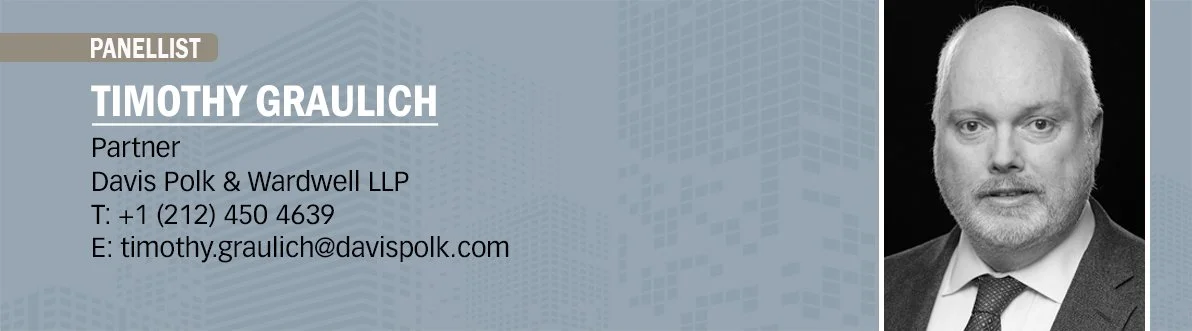
Timothy Graulich heads Davis Polk & Wardwell LLP’s international restructuring practice. He has deep experience in US and international restructurings, including prepackaged and traditional bankruptcies and out of court workouts. He has represented public and private companies, agent banks and lenders, acquirers and hedge funds in connection with prepackaged and traditional bankruptcies, out of court workouts, DIP and exit financings, bankruptcy litigation and section 363 sales. He can be contacted on +1 (212) 450 4639 or by email: timothy.graulich@davispolk.com.
Jeffrey Finger is a managing director and US co-head of the capital structure solutions group at Jefferies. He has over 25 years of experience advising companies, boards of directors, financial sponsors and creditors across a range of industries in restructuring, recapitalisation, liability management, financing and M&A transactions. Prior to joining Jefferies, he was a partner in the debt advisory and restructuring group at Centerview Partners. He can be contacted by email: jfinger@jefferies.com.
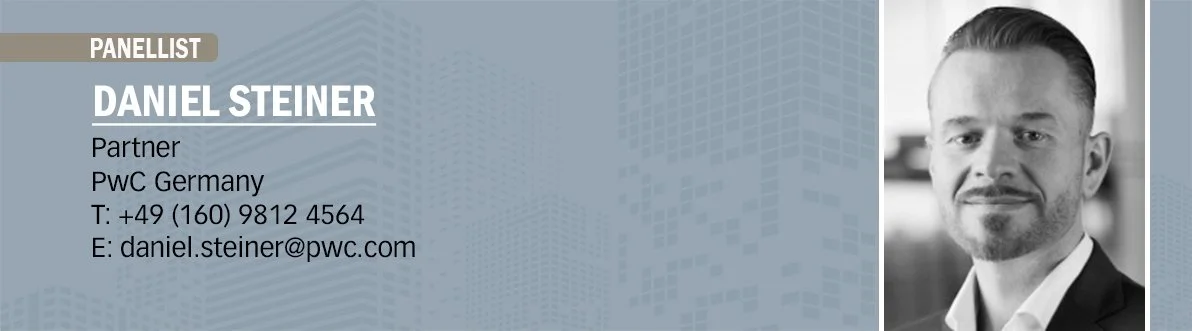
Daniel Steiner is a partner at PwC Germany and head of performance & restructuring Germany. He also serves as global automotive performance & restructuring leader, advising businesses on complex deals, performance and restructuring challenges. With more than 15 years of experience in industry and consulting, he specialises in transformation, turnaround management and restructuring. He also supports clients in improving performance, optimising processes and organisations, and strengthening cash and working capital management. He can be contacted on +49 (160) 9812 4564 or by email: daniel.steiner@pwc.com.
© Financier Worldwide
THE PANELLISTS
Davis Polk & Wardwell LLP
Jefferies
PwC Germany