

M&A in the professional services sector
September 2026 | BRIEFING ROOM | MERGERS & ACQUISITIONS
Financier Worldwide Magazine

September 2026 Issue
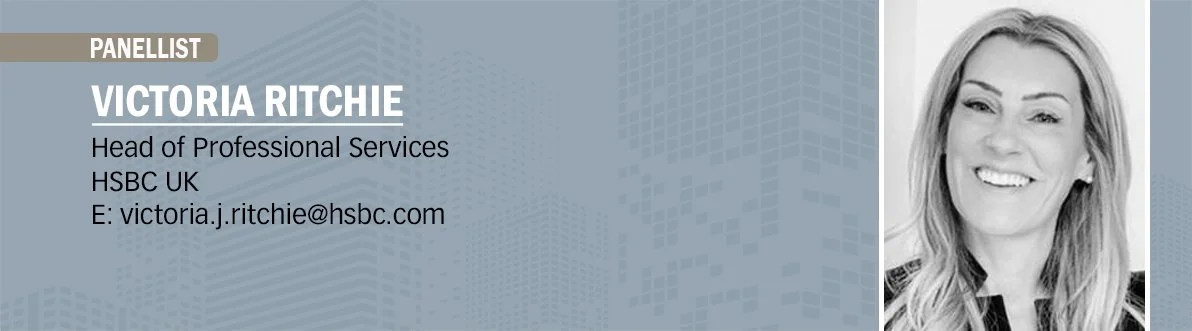
FW discusses M&A in the professional services sector with Victoria Ritchie at HSBC UK and Andrew Millar at Shoosmiths LLP.

FW: How is the current wave of consolidation in the professional services sector reshaping the competitive balance between scaled platforms and specialist firms?
Ritchie: We are seeing a market that increasingly rewards either scale or genuine specialism. Larger firms are using acquisitions to broaden their capabilities, enter new regions and invest more heavily in technology, compliance and talent. That can create a compelling proposition for clients looking for a wider range of services from fewer advisers. Equally, specialist firms continue to perform strongly where they have deep expertise, strong client relationships and a clear market reputation. The pressure is often felt most in the middle. Firms are having to be very clear about what differentiates them and where they can genuinely add value in an increasingly competitive market.
Millar: It is too simplistic to view consolidation as a straight contest between scaled platforms and specialist firms. The sharper divide is between consolidators, which are using capital to build national or international platforms, and independent firms that regard autonomy as part of their proposition. We are seeing specialist firms become particularly attractive targets where they bring deep, defensible expertise, a strong brand and a sticky client base that can be scaled. For buyers, those attributes can plug directly into an existing platform and expand capability without diluting quality. The best consolidators are seeking scale, shared infrastructure and broader reach, while filling gaps in their service offering and preserving the specialist edge that made the target valuable in the first place.
FW: How is private capital influencing deal structures, governance models and long-term strategy within professional services M&A?
Millar: Private capital is changing both the economics and discipline of professional services M&A. We are seeing partnership-led businesses move toward more corporate structures into which partners rollover or reinvest, with formal boards, tighter financial reporting and key performance indicator-led decision making becoming more common. That corporate focus and investment can be transformative, but it must be handled carefully. These businesses are often built on partner autonomy, client trust and culture, so an abrupt move to a financially driven corporate model can create friction. The big shift is that acquired firms are increasingly being run as assets with a value creation plan, not simply as successful practices. Buy and build strategies, cross-selling, operational efficiencies and exit planning are now much more central to strategy. The challenge is aligning that sharper commercial focus with the culture, behaviours and incentives that made the business successful.
Ritchie: Private capital is bringing a different level of ambition and pace to the sector. Many firms that historically grew organically can now invest at a pace that simply was not possible before – whether through acquisitions, technology or expanding into new markets. Alongside capital comes a more corporate approach to governance, performance measurement and strategic planning. However, the most successful investors understand that professional services businesses are fundamentally people businesses. We cannot simply apply a financial model and expect success. In order for this structure to work, firms need investors and management teams that share a long-term vision, and recognise the importance of culture and talent.
“Systems, governance, reporting lines and cost synergies all matter, but professional services firms are people businesses and value can be lost quickly if client relationships, professional identity or motivation are disrupted.”
FW: To what extent are technology, data and process capabilities now driving valuation and deal rationale?
Ritchie: Technology has moved from being a supporting factor to a strategic differentiator. Buyers increasingly want to understand how a firm delivers its services, how effectively it uses data and whether its operating model can scale. Strong technology platforms can improve efficiency, support growth and enhance the client experience – all of which are attractive to investors. Artificial intelligence (AI) is adding another dimension, particularly in the legal, accountancy and consulting sectors. While people remain the core asset, firms combining expertise with strong technology and operational discipline are often better positioned to grow, and are increasingly commanding greater interest from buyers.
Millar: Technology, data and process capability are now central to valuation and deal rationale, not peripheral diligence points. Buyers increasingly want to understand whether a firm has the systems, data discipline and operating model to scale. For larger targets, the focus is often on whether the platform is fit for purpose and whether it can support integration, automation, compliance and better management information. In smaller deals, the opportunity may be more basic but still valuable – improving back-office systems, consolidating processes and unlocking economies of scale. We are also seeing technology become a reason why smaller firms seek external investment, particularly where they cannot fund the pace of change alone. AI is adding another layer, but value depends on effective implementation, governance and risk controls, not simply the existence of tools.
FW: How are buyers evolving their due diligence approaches to reflect risks such as cyber, data privacy and geopolitical exposure?
Millar: Buyers are now much more forensic on cyber, data privacy and technology risk. Professional services firms often hold sensitive client data, so General Data Protection Regulation (GDPR) compliance, cyber resilience and incident history are no longer secondary issues, nor are risks arising from the tension between data localisation requirements and governmental access or other compulsory disclosures. We are seeing specialist IT and cyber diligence run alongside legal, financial and commercial workstreams, with buyers focusing not only on historic breaches or non-compliance but on weaknesses that could affect integration or future value creation. AI is also becoming part of the diligence focus: buyers want to know what tools are embedded in the business and whether a governance framework has been developed that is calibrated to their sector and risk profile. Geopolitical risk is a constant feature, especially on international deals, but we certainly do not see that as unique to this sector.
Ritchie: Due diligence today is much broader than reviewing historic financial performance. Buyers want to understand how resilient a business is and whether it is equipped to operate in an increasingly complex environment. Cyber security and data privacy have become particularly important given the sensitive information many professional services firms handle. There is also greater focus on international exposure, regulatory compliance and operational resilience. Buyers are looking beyond whether risks exist, because every business has risks. They are looking at how well management understands them, monitors them and responds when challenges arise.
FW: What are the most effective ways to align partner incentives and retain key talent through a transaction and integration?
Ritchie: One of the biggest misconceptions is that retention is purely about money. Financial incentives matter, but people also want clarity, opportunity and confidence in the future direction of the business. The most successful transactions give partners and key employees a genuine stake in the future through equity participation or long-term incentive plans, while also clearly articulating the strategic vision. Communication is critical throughout the process. People need to understand not just what is changing, but why. Where leadership creates that sense of shared purpose, retention tends to be much stronger and integration considerably smoother.
Millar: Retention has to be designed into the deal, not treated as a post-completion human resources issue. A transaction can deliver a significant payday for senior partners, so buyers need structures that discourage a ‘cash out and leave’ outcome. Earn outs, rollover equity and sensible restrictive covenants can help, but they work best when linked to a credible growth plan rather than simply locking people in. We are fortunately seeing much more focus on the wider team as well. Junior partners and senior employees may lose the perceived upside of partnership without sharing in the immediate proceeds, which can feel like a career block and damage morale if not addressed. Bonus plans, option schemes including synthetic arrangements, progression routes and genuine involvement in the enlarged business can be just as important as legal protections. Ultimately, retention is driven by a combination of financial alignment, career opportunity and cultural fit.
“Protecting talent, maintaining client relationships and creating opportunities for people to succeed together are ultimately what separate the long-term success stories from the disappointments.”
FW: What are the biggest challenges in integrating professional services firms, particularly across borders or differing operating models?
Millar: The hardest integration issues are usually cultural rather than mechanical. Systems, governance, reporting lines and cost synergies all matter, but professional services firms are people businesses and value can be lost quickly if client relationships, professional identity or motivation are disrupted. We are seeing buyers pay closer attention to cultural fit before signing, particularly where a partnership model is being moved into a more corporate structure. Cross-border deals add complexity because regulatory expectations, employment norms, decision-making styles and client-service models may differ materially. Integration also has a generational dimension. Senior partners may receive a meaningful payout, while the wider team is asked to deliver the growth case without the same immediate benefit. Successful integration therefore needs clear communication, phased change and a credible explanation of what the enlarged platform offers to clients and staff.
Ritchie: The biggest challenge is rarely technology or systems – it is people and culture. Professional services firms often have deeply embedded ways of working, different approaches to leadership and varying expectations around decision making and reward. Those differences become even more pronounced in cross-border transactions. Integration takes time and requires a clear focus on bringing people together around a common vision. Successful acquirers recognise that culture cannot simply be imposed. They invest heavily in communication, leadership alignment and client continuity. In our experience, firms that get the people side right tend to overcome most of the operational challenges relatively quickly.
FW: What distinguishes those transactions that successfully deliver long-term value from those that fall short?
Ritchie: The most successful transactions have a clear strategic purpose from the outset. They are not simply about getting bigger – they are about becoming better. Whether that is expanding capabilities, entering new markets or enhancing client service, there needs to be a compelling rationale that everyone understands. The transactions that struggle are often those where integration is underestimated or where cultural alignment is treated as an afterthought. In professional services, value walks out of the door every evening. Protecting talent, maintaining client relationships and creating opportunities for people to succeed together are ultimately what separate the long-term success stories from the disappointments.
Millar: The best transactions are not judged by how efficiently they complete, but by how clearly they convert the deal thesis into long-term value. Successful buyers enter the process with a defined plan for growth, integration, governance and culture, and they keep partners and key staff aligned behind that plan after completion. We are seeing the strongest outcomes where sellers remain meaningfully invested, management understands the value creation strategy and clients receive a clear, confident message about the benefits to them. Transactions fall short when the deal is treated as the destination rather than the starting point. Poor communication, rushed integration and failure to protect the qualities that made the target attractive can undermine value quickly and can, especially for professional services firms, in the worst case lead to key employees walking out the door.
Victoria Ritchie has over two decades of experience in banking and finance, working with large corporate, mid-market and SME clients. She has led frontline teams and delivered strategy and change initiatives, bringing additional insight from the professional and business services sector to support clients’ growth ambitions. She can be contacted by email: victoria.j.ritchie@hsbc.com.
Andrew Millar is a corporate partner at Shoosmiths advising public and private companies, investors and management teams on M&A, investment transactions, public markets and strategic growth. He has a particular focus on the professional services sector and has significant experience in cross-border transactions. He is known for clear, commercially-focused advice and a proactive and collaborative approach. He can be contacted on +44 (0)3700 865 725 or by email: andrew.millar@shoosmiths.com.
© Financier Worldwide