
INDEPTH FEATURE
Corporate Fraud & Corruption 2026
October 2026 | FRAUD & CORRUPTION
financierworldwide.com
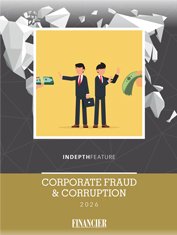
Click cover to download
(Subscriber-only password access)
Not a subscriber?
Click here to join the FREE mailing list and receive password access
Corporate fraud and corruption remain significant threats to businesses and economies worldwide. Their financial impact remains substantial, while increasingly sophisticated schemes, rapid technological change and geopolitical uncertainty are creating new challenges for organisations seeking to protect themselves. In this environment, businesses must strengthen internal controls, enhance due diligence processes and promote a culture of accountability.
UNITED STATES
FTI Consulting
“Companies that have been subject to regulatory scrutiny in the past, or those that work in industries receiving substantial government funding like healthcare or defence, are more likely to maintain robust compliance processes because they understand the consequences of enforcement. With the current administration’s efforts to combat fraud against public funds, companies in affected sectors should be proactively revisiting their compliance programmes to ensure they are functioning as intended. There is heightened sensitivity among board and senior management in response to recent enforcement actions and the Department of Justice’s (DOJ’s) corresponding messaging.”
UNITED KINGDOM
KPMG LLP
“UK boards and senior executives are paying much closer attention to fraud and corruption risks today than they did a decade ago. This reflects heightened regulatory scrutiny, stronger corporate governance expectations, increased enforcement activity and the growing complexity of third-party and technology-related risks. However, this increased focus is not necessarily being supported by investment in those functions despite fraud and corruption remaining persistent and pervasive issues.”
NETHERLANDS
LXA NV
“Dutch companies are taking a range of measures to prevent and detect fraud, but there is still considerable room for improvement. Recent research from Allianz Trade among Dutch and Belgian organisations shows that 89 percent of respondents had encountered fraud, compared with 78 percent in the previous year's survey. Despite this increase, investment in protective measures is declining. The proportion of Dutch organisations with a fraud response or emergency plan also fell from 67 percent to 60 percent. Interestingly, while 79 percent of respondents regard fraud as an increasing risk for organisations generally, only 64 percent say the same about their own organisation.”
INDIA
Kroll
“Boards and senior executives in India are taking meaningful steps to mitigate fraud and corruption risks, but unevenly. Some listed and multinational companies have moved beyond policy statements into genuine prevention; however, the progress cannot be described as consistently embedded or demonstrably effective. This is particularly challenging amid heightened regulatory scrutiny, geopolitical uncertainty, sanctions, supply chain disruptions and increasingly sophisticated cyber fraud. More mature companies are integrating prevention into business decisions – identifying risky counterparties, controlling gifts and directors’ conflicts, and requiring remedial action after audits.”
SINGAPORE
Hogan Lovells Cadwalader Lee & Lee
“Singapore starts from a position of strength, with a zero-tolerance attitude to corruption and a recent record-low in corruption-related cases registered for investigation by the Singapore Corrupt Practices Investigation Bureau reported for 2025. Boards and senior executives are increasingly focused on fraud and corruption risk, driven by heightened local regulatory scrutiny and increasingly sophisticated fraud typologies. The modern compliance officer must focus on a wide range of issues including bribery and corruption, trade, sanctions, export controls, workplace culture, third-party management, environmental concerns and more.”
HONG KONG
Kroll Associates (Asia) Limited
“Boards and C-suites executives in Greater China have demonstrated increased interest in fraud and corruption prevention, mostly by setting the right tone from the top and endorsing relevant policies and procedures. Publicly listed companies have put strong emphasis on enhancing corporate governance and maintaining ethical integrity in business transactions. However, a disconnect remains between good intention and operational reality. Fraud and corruption risks remain highly prevalent in the region and continue to pose significant challenges to sustainable growth for corporations.”
JAPAN
PwC Risk Advisory LLC
“In Japan, corporate governance has been significantly strengthened through the 2015 amendments to the Companies Act, followed by the 2021 amendments that require listed companies to appoint independent directors. These regulatory changes represent a clear shift toward the enhancement of the oversight and supervisory functions of board members, thereby mitigating the risk of corporate misconduct. This trend is reflected in the number of listed companies with independent directors serving as board chairs reaching a record high in 2026.”
UNITED ARAB EMIRATES
Ankura Consulting (Europe) Limited
“Boards and senior executives are paying much greater attention to fraud and corruption risk, although maturity remains uneven. Regulated financial institutions (FIs) are generally further advanced due to increasingly prescriptive supervisory expectations, while governance and control maturity vary considerably among corporates. In the United Arab Emirates (UAE), FIs are strengthening fraud governance, transaction monitoring, analytics and customer-awareness programmes in response to more explicit Central Bank of the UAE (CBUAE) expectations around fraud prevention, detection and response.”
SOUTH AFRICA
Deloitte Africa Consulting Services
“There has been a meaningful shift in South Africa toward treating fraud and corruption as board-level and enterprise risks rather than as matters confined to compliance. However, the maturity of organisational responses remains uneven. King V, released on 31 October 2025 and effective for financial years beginning on or after 1 January 2026, reinforces an outcomes-based approach centred on ethical and effective leadership, proportionate governance and meaningful disclosure.”
CONTRIBUTORS
Ankura Consulting (Europe) Limited
Deloitte Africa Consulting Services
FTI Consulting
Hogan Lovells Cadwalader Lee & Lee
KPMG LLP
Kroll
Kroll Associates (Asia) Limited
LXA NV
PwC Risk Advisory LLC