

Maximising value in divestitures
July 2026 | TALKINGPOINT | MERGERS & ACQUISITIONS
Financier Worldwide Magazine

July 2026 Issue
FW discusses maximising value in divestitures with J. Henning Buchholz, Brenda Ciampolillo, Lucy Julian, Ryan J. Stecz and Vinayak Viswanathan at Deloitte.

FW: What is driving boards to use divestitures as strategic portfolio moves rather than reactive disposals?
Viswanathan: We see boards using divestitures more strategically because capital allocation has become less forgiving. Artificial intelligence (AI), digital modernisation, cyber and supply chain resilience all compete for funding and management attention, while investors are rewarding focus and asking harder questions about which businesses still deserve incremental capital and management bandwidth. This changes the conversation from ‘what can we sell?’ to ‘what should we still own?’ Our 2026 ‘Global Divestiture Survey’ points in the same direction – 71 percent of respondents are evaluating or actively pursuing strategic alternatives, and 74 percent of sellers expect at least one divestiture in the next 12 to 18 months. The important shift is that divestitures are no longer just reactive fixes for underperforming assets. They are increasingly deliberate portfolio moves designed to sharpen strategy, release capital and create capacity for the next phase of growth.
“The important shift is that divestitures are no longer just reactive fixes for underperforming assets.”
FW: When companies talk about maximising value in a divestiture, what should that mean beyond headline proceeds?
Buchholz: Too many companies define value simply as headline proceeds. That is too narrow. In a divestiture, real value is the combination of proceeds, time-to-close, cost-to-achieve, certainty, and the post-close performance of both the divested business and the seller’s remaining business. A premium valuation may look attractive until it comes with extended transition service agreements (TSAs), unresolved stranded costs, heavy execution demands or a remaining business that is slower, more complex and less profitable than management expected. Stronger sellers widen the lens. They build optionality before deal process launch, reduce post-close commitments and design the remaining business as deliberately as the asset being sold. A useful test is simple: after the transaction, is the organisation easier to run, better funded and better positioned to reinvest in its core strategy? If not, divestiture value was not fully realised.
“Before signing, value may erode where the legal and structural reality of the asset has not been pressure-tested early enough.”
FW: What aspects of preparation matter most in shaping valuation, buyer confidence and time to close?
Ciampolillo: Preparation quality is where leading sellers separate themselves. Buyers pay for clarity and they discount ambiguity. The items that matter most are deal financials that enable decision making, a defensible standalone business plan, a clearly defined deal perimeter, a credible day one and TSA approach, and early work on treasury, debt, working capital and intercompany arrangements. Many organisations lose value because they go to market before they fully understand and can explain how the business will actually operate as a standalone entity. When the financial story is incomplete or inconsistent, buyer diligence drags, valuation risk premiums widen, and issues turn into execution bottlenecks. Our survey findings are very consistent here: higher-than-expected values were most associated with demonstrated value creation potential, strong recent performance, quality financial and tax information, separation plan clarity, and deal preparation quality. In practice, finance readiness is not a workstream but rather the backbone of buyer confidence.
“Stranded costs should be treated as a value protection issue from the onset, not as a clean-up exercise after deal close.”
FW: Where do legal, tax, regulatory and separation issues most often erode value before signing, and between signing and close?
Stecz: Before signing, value may erode where the legal and structural reality of the asset has not been pressure-tested early enough. The recurring issues are legal entity complexity, trapped contracts and cash, tax leakage, regulatory approvals, licensing, employment matters and cross-border constraints that limit how cleanly a business can be separated. Those issues tend to be manageable when they are identified early, but expensive and time consuming when they surface in diligence or late-stage negotiations. Our survey results reinforce this point: sellers cited tax-related execution costs, regulatory approvals and carve-out preparation among the most common drivers of higher one-time transaction costs. In practice, the question is not whether these issues exist, but whether management has translated them into a realistic separation vision before the market penalises them for not doing so.
Buchholz: Between signing and close, the pressure really shifts from vision to execution. This is where separation interdependencies, especially unplanned ones, become apparent, approvals take longer, transition service requirements expand, and business performance can deteriorate under uncertainty. Our work and survey findings show that regulatory approvals and operational readiness are among the most common reasons timelines extend beyond expectations. When that happens, value can erode quickly: TSAs get broader, stakeholder fatigue rises, financial terms can be revisited, and some tax benefits may become harder to preserve. The practical answer is to define day one standalone readiness early, reduce operational entanglements before signing, and keep separation planning grounded in what the business can deliver without putting business continuity at risk. Sellers that make these decisions too late – or leave them up to their counterparty – often discover that timing risk is really execution risk in disguise.
FW: How can sellers effectively balance their priorities around price and deal certainty with buyers’ concerns about strategic fit, synergies and execution feasibility?
Buchholz: Leading sellers do not try to choose between price and certainty. They build a divestiture process that supports both. The mistake is to optimise too narrowly for headline valuation while leaving buyers to discover execution risk on their own. Buyers are underwriting future value, not just the divested business at deal close. If they do not see strategic fit, synergy potential and a feasible path to day one or standalone operations, they either lower price, slow down or walk away. Our survey captures that asymmetry clearly: sellers lean toward bid price, speed and certainty, while buyers put more weight on strategic fit, growth and synergy potential, and execution feasibility. One way to bridge that gap is to do more of the buyer’s work before launch: a sharper value story, stronger carve-out financials, more asymmetrical diligence and a credible separation plan. Competitive tension matters, but informed competitive tension can matter more.
“Many organisations lose value because they go to market before they fully understand and can explain how the business will actually operate as a standalone entity.”
FW: What practical steps help reduce stranded costs, manage transition service agreement complexity, and protect the performance of the seller’s retained business after close?
Julian: Stranded costs should be treated as a value protection issue from the onset, not as a clean-up exercise after deal close. The first step is to identify what the remaining business needs in terms of people, systems, operational footprint, third-party contracts and governance. Once that baseline is clear, everything else can either be transferred, removed or temporarily supported through a TSA. The problem is that TSAs often offset stranded costs in the near-term and make the issue look smaller than it really is. Then management attention moves on, TSA exit timelines slip and the seller carries cost it no longer needs. Our research shows roughly half of organisations identify underutilised resources after close, but only about one in 10 fully mitigate them. That is why early quantification, narrow TSA design and exit plans with clear ownership matter so much.
Viswanathan: Protecting the remaining business also requires more than just cutting stranded costs. It means actively redesigning the post-divestiture operating model of the organisation remaining after divestiture, ideally while the deal is still underway. Leading sellers define what capabilities, cost structure and leadership model, and decision rights the retained business should have on day one and beyond, forcing a clear vision at deal close rather than waiting until after close to work it out. This matters because post-close value erosion is often driven by complexity that was never addressed, not just by costs that were left behind. Our survey and deal experiences both point to the same lesson: TSAs can mask problems temporarily, but they do not solve them and dis-synergies can linger for years if the retained business is not deliberately reset. The goal should be a remaining business that is simpler, faster and better positioned to grow once the transaction is complete.
“Too many companies define value simply as headline proceeds. That is too narrow.”
FW: Looking ahead, how are technology and artificial intelligence (AI) likely to change the way companies prepare for and execute divestitures?
Buchholz: Technology and AI will not replace separation judgment, but they may materially compress the work around it. We are already seeing this in the data. In our divestiture survey, 54 percent of sellers said they had deployed AI and machine learning in recent deals, and 74 percent rated the value as high. Separately, our ‘2025 GenAI in M&A’ study found that 86 percent of organisations have already integrated generative AI into M&A workflows, with the strongest current use in strategy and market assessment, due diligence and deal execution. The near-term opportunity in divestitures is practical: faster document reviews, better contract and legal entity mapping, sharper carve-out financial analysis, cleaner TSA scoping, and more dynamic scenario modelling. The constraint is still governance. Data security, data quality, model reliability and regulatory compliance remain issues executives need to manage carefully if they want AI to improve performance rather than introduce new risks.
J. Henning Buchholz is a principal in Deloitte Consulting LLP and co-leader of the US divestitures and separations group. He advises boards and management teams on portfolio reshaping, strategic divestitures and separation execution, with a focus on unlocking operational value through complex transactions. He has more than 15 years of M&A and transformation experience across the US, Europe and Asia Pacific. He can be contacted on +1 (832) 943 9380 or by email: hbuchholz@deloitte.com.
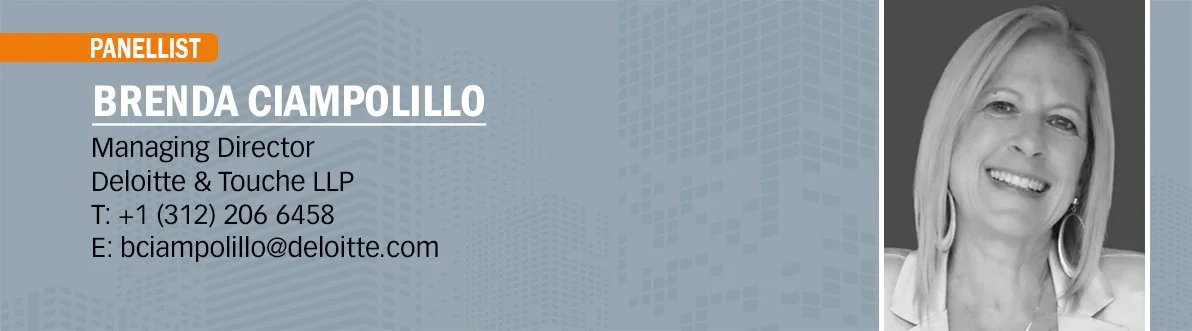
Brenda Ciampolillo is a managing director in Deloitte & Touche LLP and leader of Deloitte’s US sell-side and divestiture practice. She advises clients on complex global M&A and carve-outs, with particular focus on sell-side diligence, preparation of carve-out financial statements, standalone cost analysis, financial reporting and finance separation issues. She has nearly 30 years of experience and has led multibillion-dollar carve-out, IPO, spin-off and de-SPAC transactions. She can be contacted on +1 (312) 206 6458 or by email: bciampolillo@deloitte.com.
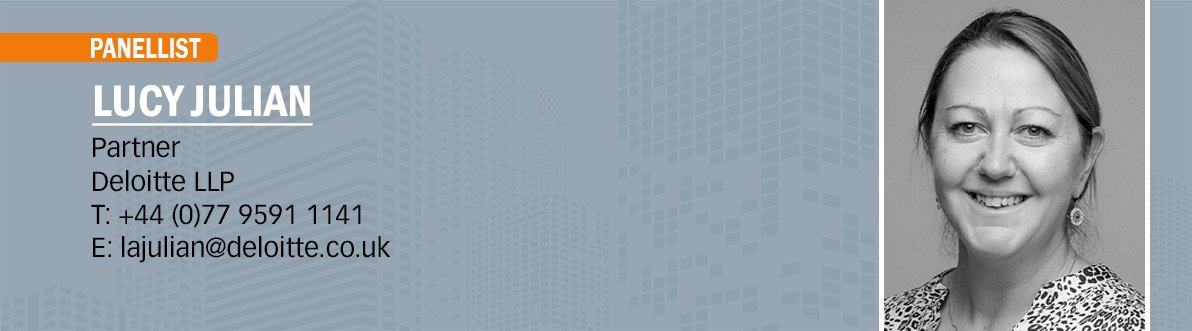
Lucy Julian is a partner in Deloitte UK’s value creation services practice, specialising in managed exits and corporate simplification. She advises large multinational businesses on carve-outs and wind downs when planning and executing a managed exit, legal entity rationalisation and related transformations, with more than 20 years of advisory experience across Europe, the Middle East and Asia. She can be contacted on +44 (0)77 9591 1141 or by email: lajulian@deloitte.co.uk.
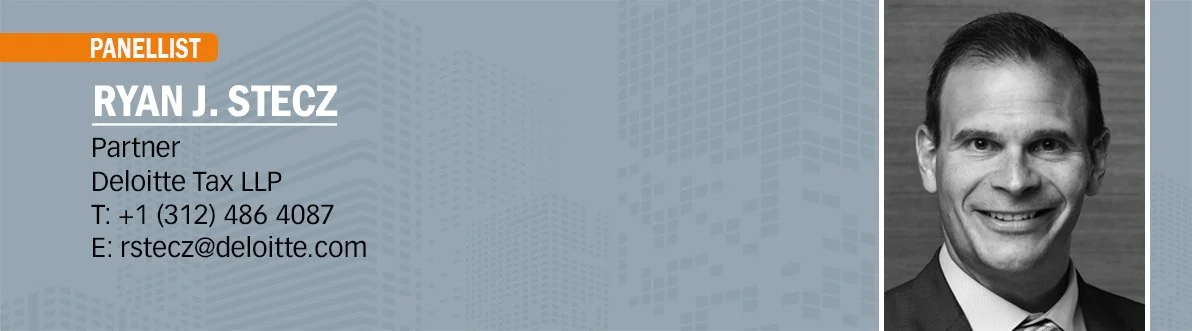
Ryan J. Stecz is a partner in Deloitte Tax LLP’s M&A transaction services practice, based in Chicago. With more than 25 years of accounting experience, including more than 20 years as an M&A specialist, he advises financial and strategic buyers and sellers on due diligence, deal structuring, carve-out financial statements, vendor due diligence and the tax implications of complex transactions. He can be contacted on +1 (312) 486 4087 or by email: rstecz@deloitte.com.
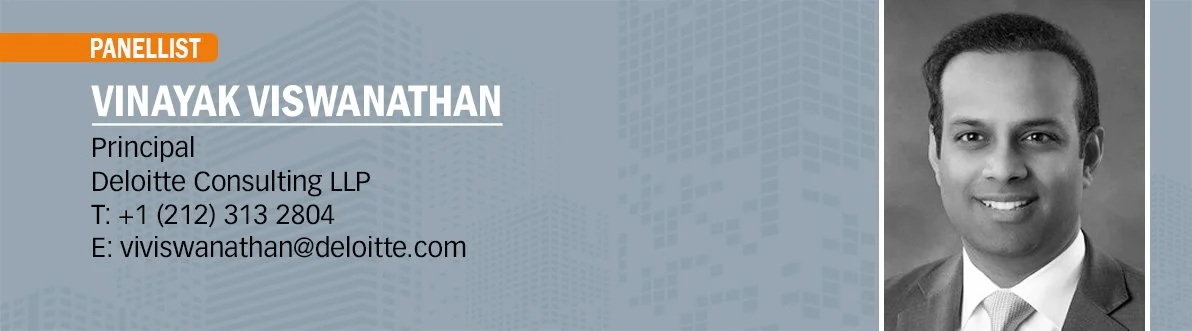
Vinayak Viswanathan is a principal in Deloitte Consulting LLP with more than 15 years of experience advising boards and management teams across insurance, asset management and banking on M&A, separations and value creation. He focuses on carve-outs, post-close performance and retained-business optimisation, helping organisations improve margins, simplify operations and modernise platforms through complex transactions. He can be contacted on +1 (212) 313 2804 or by email: viviswanathan@deloitte.com.
© Financier Worldwide
THE PANELLISTS
Deloitte