

Bankruptcy and restructuring
December 2026 | WORLDWATCH | BANKRUPTCY & RESTRUCTURING
Financier Worldwide Magazine
December 2026 Issue
Geopolitical uncertainty, financing challenges and regulatory pressure are shaping bankruptcy and restructuring activity worldwide. While many restructurings are still negotiated consensually, offering greater flexibility around enforcement and recapitalisations, some businesses face challenges that cannot be resolved through balance-sheet measures alone. As structural industry change, technological disruption and shifting cost bases force boards to consider more fundamental operational responses, priorities should be addressed early, before liquidity pressures limit strategic options.


FW: What major shifts have you observed in the restructuring and insolvency landscape recently? What factors have been most influential in shaping developments across your jurisdiction of focus?
COLOMBIA
Gomez-Clark: One of the most significant recent developments in Colombia has been the increased use of expedited insolvency mechanisms made permanent by Law 2437 of 2024. These tools, first introduced by emergency decrees during the pandemic, give debtors more flexible ways to address financial distress. Depending on the procedure, a debtor may negotiate with one or more creditor classes, such as suppliers or financial creditors, and an agreement may include a discharge of liabilities or a sustainable debt pact, subject to the applicable requirements. Expedited procedures are designed to conclude within three months, compared with the ordinary reorganisation process under Law 1116, which can take considerably longer in practice. Bogotá Chamber of Commerce figures provide an early indication of their use: in 2025, it received 14 requests for the Business Recovery Procedure. Eight resulted in agreements, one was withdrawn and five remained in progress at year-end. A sector-specific example is Acerías PazdelRío, a steel producer that concluded a pre-pack before the Bogotá Chamber in October 2025. The agreement restructured approximately $86.3m in debt, including $75.5m owed to financial institutions and $10.8m owed to DIAN, Colombia’s tax authority.
UNITED ARAB EMIRATES
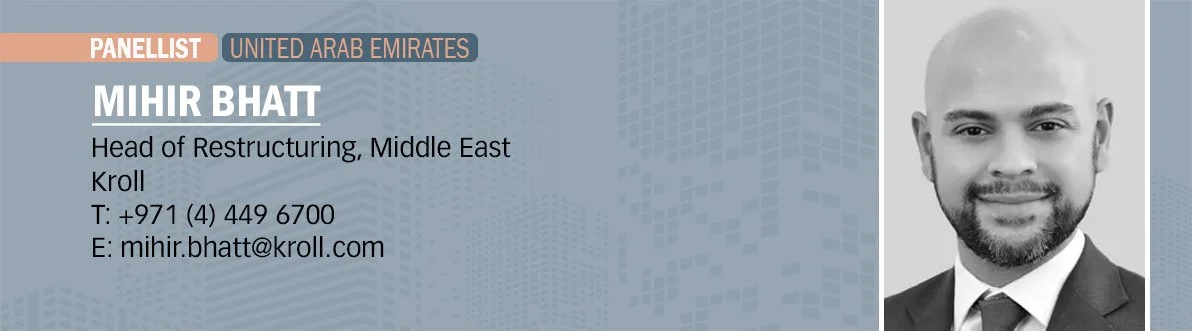
Bhatt: Over the last few years, restructuring in the Middle East has shifted from predominantly informal, relationship-driven solutions toward more structured and court-supervised processes. Legislative reform has been central to this change, with the United Arab Emirates’s (UAE’s) Federal Decree-Law No. 51 of 2023 and Saudi Arabia’s Bankruptcy Law giving businesses and creditors a far broader restructuring toolkit. 2026 has added a new dimension. Regional conflict has disrupted trade, supply chains and business confidence, increasing pressure on businesses already facing liquidity and operational challenges. The UAE responded by activating the Emergency Financial Crisis provisions of its Bankruptcy Law in June 2026, to prevent otherwise viable businesses from being forced into bankruptcy by a widespread economic crisis. The more significant shift is now behavioural rather than legislative. Many restructurings are still negotiated consensually, but the availability of court-supervised processes, including moratorium protection and the ability to bind dissenting creditors, has given both sides a credible fallback if talks stall.
GERMANY
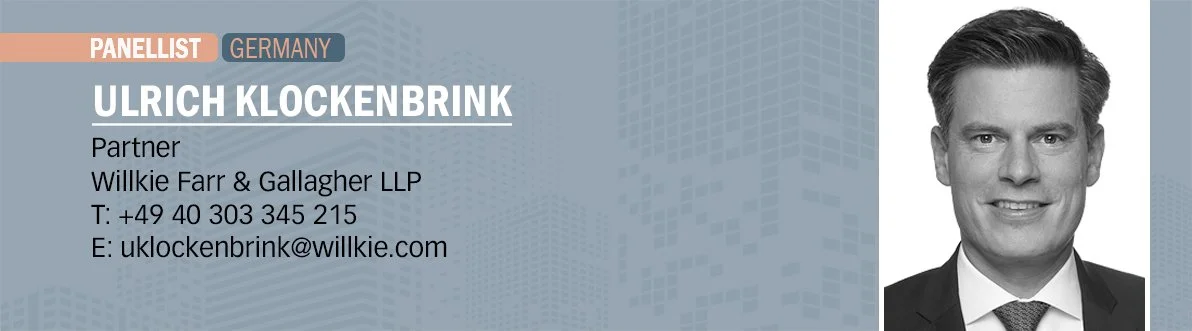
Klockenbrink: The German economy continues to be very strong, and it can adjust to new trends, challenges and structural change. In recent years, however, it has experienced structural pressure with strong negative impacts in many industries, including high energy costs, weaker industrial demand, higher interest rates, changes in tariffs difficult to handle for an export-oriented economy, topline and technology shift challenges in the automotive sector, as well as consumer reticence, among others. This has led to a wave of restructuring and insolvency cases in many industries. What is not yet fully understood is the interdependencies between the distress visible across various industries. But what we are seeing is that distress in one industry does lead to risks and opportunities for others in that specific industry, as well as for other industries.
SWITZERLAND
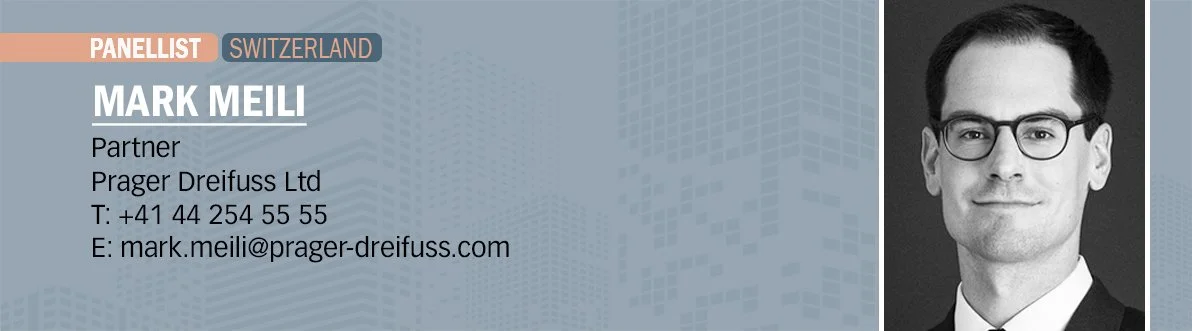
Meili: Corporate insolvencies in Switzerland have risen sharply, reportedly increasing by almost 55 percent in the first half of 2026 compared with the prior year, the highest level since 1994. Notably, established companies, rather than mainly young firms, are increasingly being affected. Alongside rising company formations, this suggests a structural market correction rather than a broad crisis. A key driver is the Swiss Debt Enforcement and Bankruptcy Act amendment, effective since 1 January 2025. Public law claims, including taxes, fees and social security contributions, against debtors registered in the commercial register are now pursued through bankruptcy rather than seizure proceedings, accelerating insolvency risk for companies with arrears. Further pressure comes from geopolitical uncertainty including US tariffs, energy costs, weaker foreign demand, the end of coronavirus (COVID-19) support and high financing costs. Consequently, restructurings should begin earlier, when liquidity constraints, margin pressure or creditor arrears first emerge, not only when insolvency is imminent.
AUSTRALIA
Olde: While traditionally a secured creditor-led restructuring regime, Australia has experienced a relatively debtor-led restructuring environment in recent years, supported by abundant liquidity and a willingness among lenders to give businesses time to develop their own solutions. That dynamic is beginning to move back. As liquidity tightens, debt becomes more expensive and stress builds across several sectors, creditors, especially secured lenders via banks and private credit, and PE firms are likely to play a more active role. Private credit has also changed the landscape, bringing different risk appetites and greater flexibility around restructurings, enforcement and recapitalisations. At the same time, many businesses face challenges that cannot be solved through balance sheet restructuring alone. Structural industry change, technology disruption, and changing cost bases are forcing boards to consider more fundamental operational responses. The opportunity is to address these issues early before liquidity pressure removes strategic options.
“Good restructuring work with experienced and reliable players in the market will continue to be key in the foreseeable future to avoid greater harm to the German economy.”
FW: How significant are refinancing challenges and debt maturity obligations as catalysts for restructuring activity today? Which businesses appear most exposed to these pressures?
UNITED ARAB EMIRATES
Bhatt: Refinancing pressure remains an important catalyst for restructuring, but it rarely operates in isolation. In many situations, a refinancing challenge is the symptom rather than the cause. The underlying issue is often operational underperformance, weak cash conversion or an unsustainable business model. Tighter credit conditions, macroeconomic pressures and other external shocks tend to expose these weaknesses rather than create them. We are seeing pressure across a broader range of sectors than in previous cycles. Construction and contracting remain among the most visible areas of stress, given their working-capital intensity, long payment cycles and exposure to project delays. However, similar pressures are building in real estate, retail and consumer businesses, hospitality, and logistics and trade-dependent businesses, where disruption to supply chains and demand has squeezed cash flow at the same time as lenders have become more selective. The healthcare and education sectors are also facing closer scrutiny from lenders and investors.
GERMANY
Klockenbrink: Refinancing is one of the most important catalysts today. Many capital structures of German borrowers were set up when money was cheap. Then, they were amended and extended. Now these structures, again, face maturities at much higher interest rates while earnings and profitability are under pressure. The most exposed businesses are highly leveraged companies, especially in automotive, chemicals, mechanical engineering, construction and real estate, retail and parts of healthcare. Businesses in the middle of costly transformations are facing fresh money needs, which require effective solutions for the old debt first. In Germany, our restructuring regime under the Law on the Stabilisation and Restructuring Framework for Companies (StaRUG) helps implement long lasting debt and equity solutions which can be imposed despite opposition from dissenting creditors and shareholders. Restructuring plans under StaRUG can also be implemented in combination with UK schemes of arrangement and US Chapter 11 proceedings.
SWITZERLAND
Meili: General interest rate pressure has eased, with the Swiss National Bank (SNB) policy rate at 0 percent since June 2025 and COVID-19 loan rates reduced to 0 and 0.5 percent from 1 April 2026. The SNB also noted that Swiss banks generally have substantial lending capacity, though the interest rate and risk environment has changed. Refinancing, however, remains difficult for financially weaker companies. As favourable legacy loans, COVID-19 loans or other financing arrangements mature, extensions on the same terms are not guaranteed. Low-cost debt may need to be refinanced on less favourable terms, increasing interest expenses, reducing margins, pressuring free cash flow and weakening profitability. Restructuring needs are most acute where companies must meet operating costs, taxes, social security contributions and loan repayments despite insufficient revenues. Businesses with low margins, stagnant demand or high fixed costs are particularly exposed, especially in construction, hospitality, retail, wholesale and real estate.
AUSTRALIA
Olde: Refinancing risk is becoming a more important catalyst for restructuring as businesses confront higher funding costs and a less accommodating liquidity environment. The issue is not simply whether debt can be refinanced, but whether the underlying business or asset can support the cost and structure of replacement capital, and if the owners accept that risk and effective dilution. Real estate and construction assets are particularly exposed where higher build costs, financing costs, decreasing or slower growth, asset values and loan-to-value considerations combine to challenge project viability. Consumer-facing sectors such as retail and hospitality remain vulnerable to cost-of-living pressures and reduced discretionary spending, while industrial and manufacturing businesses continue to face input, wage and energy cost pressures. Increasingly, refinancing discussions will expose operational or structural weaknesses that previously could be deferred. That should encourage boards and lenders to address problems earlier rather than relying on liquidity alone to bridge performance challenges.
COLOMBIA
Gomez-Clark: Refinancing remains challenging for companies that rely on traditional banks. Restructuring or extending loans can increase provisioning requirements and directly affect lenders’ earnings, which may discourage early action. Companies often postpone addressing financial difficulties until debt maturities are imminent. By then, there is less time and flexibility to negotiate a consensual, out of court rescheduling that gives the company breathing room while allowing lenders to develop more sophisticated, mutually workable solutions. In addition, debt incurred three years ago may carry a lower interest rate than any refinancing available today. Small and medium-sized enterprises are particularly exposed: they may fail to identify early liquidity warning signs in their cash flows, often lack experience retaining specialist advisers, and face more complex negotiations once a simple refinancing is no longer sufficient.
“Businesses with low margins, stagnant demand or high fixed costs are particularly exposed, especially in construction, hospitality, retail, wholesale and real estate.”
FW: In what ways are geopolitical developments, economic uncertainty and changing trade dynamics affecting the strategic decisions being made by distressed companies and their stakeholders?
GERMANY
Klockenbrink: Geopolitical volatility has turned restructuring from a mainly financial or operational exercise into a strategic one. The export-dependent German economy is directly exposed to tariffs, protectionism and fragmented supply chains on the supplier and customer side. Companies are therefore reconsidering footprints, nearshoring production and cutting their dependence on single markets or suppliers also by way of carve outs. That affects business plans and, in turn, how much debt they can sustainably carry. Uncertainty makes valuations harder to agree on, which slows consensual and semi-consensual deals and lengthens negotiations. Stakeholders respond with more flexible structures, such as contingent value instruments, milestone-based funding and shorter planning horizons. Wise shareholders and lenders in the German market now prefer to act early, before external shocks erode options under StaRUG. However, what we are also seeing is that many distressed businesses address their restructuring needs very late.
SWITZERLAND
Meili: Geopolitical developments, economic uncertainty and changing trade dynamics are increasingly forcing financially distressed companies to adjust strategically. Higher costs, possible tariffs, uncertain sales markets and delayed investments can further pressure existing business models. The State Secretariat for Economic Affairs has identified geopolitical conflicts, high energy prices and ongoing trade policy uncertainty as key economic risks for Switzerland. Distressed companies must therefore plan more cautiously, postpone investments and focus on liquidity preservation. Export-oriented businesses should review sales markets, supply chains and pricing models, as tariffs, trade barriers or weaker foreign demand can directly affect margins. Geopolitical risks should also be integrated more systematically into operational planning through scenario analysis, alternative suppliers, market diversification and realistic assessments of energy, raw material and transport costs. Creditors and investors are likewise more cautious, often requiring stronger business plans, stricter terms, additional security or greater control before providing new capital or extending financing.
COLOMBIA
Gomez-Clark: The year has brought significant challenges. The central bank’s policy rate began 2026 at 9.25 percent and has since risen to 12.25 percent, while inflation remains elevated at around 7 percent. These pressures reflect broader uncertainty and domestic policy measures, including a 23 percent increase in the minimum wage at the start of the year. This has materially raised payroll expenses, along with other costs linked to the minimum wage. Conflict around the Strait of Hormuz has also driven up fuel costs, affecting nearly every sector. Consumption remained strong in the first half of the year despite uncertainty surrounding the elections, but has slowed since they took place. Peso appreciation has also weighed heavily on exporters. The flower sector is particularly exposed because labour represents a significant cost and revenues are largely earned in US dollars. Against this backdrop, uncertainty is prompting companies and their stakeholders to pause or defer strategic decisions.
AUSTRALIA
Olde: Geopolitical uncertainty is increasingly feeding directly into restructuring decisions because its consequences ultimately appear in business costs, supply chains, investment decisions and confidence. Inflationary pressures and higher energy and fuel costs can quickly erode margins in already stressed businesses, while wider political and economic uncertainty makes forecasting more difficult. For distressed companies, this reduces the margin for error in business plans and increases the importance of scenario analysis and liquidity management. For lenders and investors, greater uncertainty can also affect decisions about whether to provide additional capital, amend existing facilities or pursue a more fundamental restructuring. In that environment, boards cannot rely solely on a return to more favourable economic conditions. Restructuring strategies increasingly need to test whether the operating model and capital structure remain viable under a range of economic and geopolitical scenarios.
UNITED ARAB EMIRATES
Bhatt: Over the past two decades, Middle East businesses have come through the global financial crisis and Dubai’s 2009 debt standstill, the oil price collapse of 2014-16 and the pandemic. The geopolitical uncertainty of 2026, including the conflict that began in February and the resulting disruption around the Strait of Hormuz, is different in nature, hitting trade routes, supply chains and working capital at the same time. But what will determine outcomes is not the shock itself – it is how companies and their stakeholders respond to it. In previous cycles, the instinct was often to wait. Lenders rolled over facilities, shareholders provided informal support and problems were resolved quietly, sometimes long after value had been lost. This time, the response is noticeably different. Stakeholders are using a range of tools to manage financial pressure, including force majeure notices to renegotiate contracts, Saudi contractors and retailers using preventive settlement procedures, and UAE lenders allowing loan deferrals without default classification under Central Bank measures.
“Construction and contracting remain among the most visible areas of stress, given their working-capital intensity, long payment cycles and exposure to project delays.”
FW: As private credit providers play an increasingly prominent role in the market, how are they influencing restructuring processes, negotiations and creditor relationships?
AUSTRALIA
Olde: Private credit has introduced greater flexibility into Australian restructuring, but also greater complexity. Different funds have different risk appetites, investment horizons and approaches to enforcement, recapitalisation and debt-for-equity solutions. Valuation, investor reporting, disclosure and fundraising considerations also significantly influence the timing and structure of a lender’s response to an underperforming investment or restructuring options. A further development is the increasing potential for debt to trade during a restructuring. A creditor that originated debt and holding it at par may have very different economic objectives to an investor acquiring that debt at a material discount or an investor who is implementing a loan to own strategy. As creditor constituencies change, the dynamics of negotiations can change with them. Regulatory scrutiny of valuations and disclosure within private credit may add another dimension. Understanding the economic motivations of each stakeholder is therefore becoming increasingly important to achieving consensual outcomes.
UNITED ARAB EMIRATES
Bhatt: Private credit’s influence in the region is less about market size and more about what it offers that banks often cannot: speed, flexibility and a different approach to credit. The Gulf Cooperation Council market is still at an early stage, and large-cap borrowers continue to rely mainly on banks. The shift is happening in the small and medium sized enterprise segment. Banks remain largely collateral-led and constrained by capital limits, and approvals are taking longer. Private lenders can move in days or weeks, and many underwrite on cash flow, business plans and asset value rather than hard security. That allows them to fill gaps banks will not, from bridge and rescue financing to new money in stressed situations. But that speed may come at a cost. Pricing is typically in double digits, often with fees, payment-in-kind interest or equity-style returns. The cost is not only financial: private lenders bring tighter covenants, stronger information rights and a more hands-on approach to enforcement and strategy if performance slips. As the market deepens, we expect more lender-led negotiations and faster timelines.
COLOMBIA
Gomez-Clark: Private credit is increasingly filling a financing gap for distressed companies, particularly where traditional banks have stepped back or cannot accommodate complex situations. Providers can tailor terms, structure collateral packages and, in some cases, offer debtor-in-possession financing with court-approved super priority. This funding can provide essential liquidity to keep a viable business operating, while giving the lender meaningful influence over the timing and execution of a turnaround. These structures can also reshape creditor dynamics: new money priority and security may alter bargaining positions and raise concerns about the treatment of existing or local creditors. Given the relative novelty of these mechanisms in the region and the limited local jurisprudence, clear legal protections, transparency and constructive coordination among creditors are critical.
SWITZERLAND
Meili: The private credit market has become more important in Switzerland as companies are increasingly seeking financing outside traditional bank loans. This trend is partly driven by the final Basel III standards, applicable in Switzerland since 1 January 2025, which require banks to hold more capital for riskier activities. As a result, higher risk bank financing may become more expensive, creating opportunities for private credit providers. In restructurings, private credit providers can often act more flexibly and quickly than banks. Individually negotiated financings allow faster agreement on maturity extensions, covenant waivers or interest adjustments. However, they also change negotiation dynamics. Companies often deal with a small number of specialised lenders rather than broad bank syndicates or bondholders. This can simplify coordination but concentrate negotiating power. Private credit providers also tend to seek tighter covenants, broader information rights, stronger control rights and, in exchange for concessions, additional collateral, higher margins, stricter reporting or greater operational influence.
GERMANY
Klockenbrink: Private credit has fundamentally changed the dynamics of German and European restructurings. Instead of broad bank syndicates, we often negotiate with a small group of sophisticated lenders, or a single one. This can speed up decisions and make bespoke solutions easier. At the same time, these funds are more willing to take control, in the form of debt-for-equity swaps, enforcement of share pledges and lender-led sales, all of which have become far more common. Negotiations are very commercial and less relationship-driven, and documentation is tighter. Liability management transactions familiar from the US are increasingly being tested in Germany, with its stricter set of management duties and liabilities. For shareholders, this means that losing ownership is a realistic outcome. For borrowers, it means involving shareholders and lenders early and transparently is critical. Where this very general rule is observed, we do see good and efficient restructuring outcomes.
“Refinancing risk is becoming a more important catalyst for restructuring as businesses confront higher funding costs and a less accommodating liquidity environment.”
FW: Which emerging risks, opportunities or market developments do you believe will shape the next phase of restructuring and insolvency activity in the years ahead?
UNITED ARAB EMIRATES
Bhatt: Looking ahead, we expect the next phase of restructuring in the region to be defined less by new legislation and more by how the existing frameworks perform under real pressure. Three developments stand out. First, the frameworks will be properly tested. As central bank loan deferrals expire and refinancing needs build, distress that has been held back is likely to surface at the same time. In Saudi Arabia, where most cases since 2018 have ended in liquidation, the Bankruptcy Commission’s Early Warning Initiative is encouraging earlier action. In the UAE, the 2023 law has yet to be used at scale. How the courts handle the first significant restructurings will determine whether boards and lenders see formal processes as a credible option or still as a last resort. Second, creditor groups are becoming more complex. Private credit funds, bondholders, sukuk holders and trade creditors increasingly sit alongside relationship banks, often across onshore, free zone and offshore entities. Their interests and timelines rarely align. Third, distress will create opportunity. Private credit funds, special situations investors and regional family offices are positioning for this, and we expect turnarounds and accelerated sales to become a more established route to recovery.
COLOMBIA
Gomez-Clark: Climate shocks will also shape restructuring activity. A potentially strong El Niño is forecast for late 2026 and early 2027, possibly the strongest since 1997-98. That earlier event offers lessons on impacts across agriculture, infrastructure, energy, supply chains and liquidity. Sargassum is another growing concern for Caribbean economies, especially tourism-dependent markets such as the Dominican Republic, where it can disrupt hotel operations and revenues. Such shocks may not trigger insolvency alone, but can deepen vulnerabilities and accelerate distress. Business and creditor preparedness, and frameworks that enable timely restructuring agreements, will be crucial to preserving viable companies and supporting recovery.
SWITZERLAND
Meili: The next phase of restructuring and insolvency activity in Switzerland is likely to be shaped by regulatory pressure, financing challenges and geopolitical uncertainty. A key driver remains the amendment to the Swiss Debt Enforcement and Bankruptcy Act, under which public law claims against commercially registered debtors have generally been enforced through bankruptcy proceedings since 1 January 2025. This may cause financially weak companies to enter insolvency more quickly, while composition proceedings may increase in importance as an early restructuring tool. Refinancing and repayment obligations also remain relevant. Despite lower interest rates, companies with weak liquidity or creditworthiness may struggle to refinance or obtain new funding. COVID-19 loans must generally be repaid by 2028, or 2030 in hardship cases. High energy, raw material, rent and personnel costs, together with geopolitical and trade uncertainty, continue to pressure margins. Stakeholders should prioritise scenario planning, liquidity management, business reviews, early warning systems and realistic turnaround plans.
GERMANY
Klockenbrink: Good restructuring work with experienced and reliable players in the market will continue to be key in the foreseeable future to avoid greater harm to the German economy. What will be more important than ever is that solutions must be developed by international teams finding restructuring solutions considering the instruments and means available in European markets and beyond. Not only does this mean that our restructuring instruments must be used in an internationally integrated way, it also means that new players will have to come to the table to find good and sustainable solutions in restructuring and insolvency situations on all sides of the table.
AUSTRALIA
Olde: We expect the next phase of the Australian market to be characterised by tighter liquidity, greater creditor engagement and increasing complexity. Businesses that previously had time to pursue self-help solutions may find that refinancing constraints bring stakeholders to the table earlier. This creates an opportunity for boards to use restructuring strategically, while options remain available, rather than waiting until liquidity dictates the outcome. Creditor dynamics will also become more important as private credit expands and debt trading creates different entry prices and return objectives within creditor groups. Cross-border restructuring options may receive greater attention as companies assess the most effective restructuring platforms available to them. Meanwhile, geopolitical instability, cost-of-living pressures, regulatory scrutiny, and rapid technological change, including artificial intelligence, will continue reshaping business models, cost structures and client expectations. Early intervention will therefore become increasingly important.
“Private credit is increasingly filling a financing gap for distressed companies, particularly where traditional banks have stepped back or cannot accommodate complex situations.”
Cristina Gomez-Clark is a managing director with Alvarez & Marsal. With 30 years of financial and consulting services experience, she focuses on restructuring and turnaround. She specialises in financial, operational and commercial business diagnoses and turnaround plans, cash flow projections and liquidity management, and financial restructuring. Ms Gomez-Clark serves in interim roles such as chief financial officer and chief restructuring officer and has led several transformations, restructurings and turnarounds in North Latin America. She can be contacted on +57 31 0280 4252 or by email: cgomezclark@alvarezandmarsal.com.
Quentin Olde is a senior managing director at Ankura and is leader of the APAC transactions, turnaround and restructuring practice. He has over 30 years of experience in business consulting, corporate advisory, restructuring, and operational turnarounds. He is a highly regarded restructuring and corporate advisory practitioner who provides strategic advice to clients on numerous complex informal and formal restructurings, insolvencies and workouts, as well as a range of corporate transactions. He can be contacted on +61 2 9037 3561 or by email: quentin.olde@ankura.com.
Mihir Bhatt is the head of restructuring for the Middle East. He brings over 20 years of experience and oversees Kroll’s restructuring capabilities and growth strategy across the region. He brings significant expertise across the transaction and financial advisory spectrum, having led execution-focused roles across debt restructuring, operational improvement, turnaround and M&A. He can be contacted on +971 (4) 449 6700 or by email: mihir.bhatt@kroll.com.
Mark Meili joined Prager Dreifuss in 2013 and became a partner in January 2024. He advises companies in company and contract law matters, focusing on distressed and finance transactions. He can be contacted on +41 44 254 55 55 or by email: mark.meili@prager-dreifuss.com.
Ulrich Klockenbrink is a partner in Willkie’s strategic capital and restructuring department and serves as co-chair of the German strategic capital and restructuring practice. He is based in Hamburg. With more than 15 years of experience, he advises investors, lenders, steering committees, insolvency administrators and distressed companies on complex restructurings, distressed M&A and enforcement. He can be contacted on +49 40 303 345 215 or by email: uklockenbrink@willkie.com.
© Financier Worldwide
THE PANELLISTS
COLOMBIA
Alvarez & Marsal
AUSTRALIA
Ankura
UNITED ARAB EMIRATES
Kroll
SWITZERLAND
Prager Dreifuss Ltd
GERMANY
Willkie Farr & Gallagher LLP