

Merger control
October 2026 | WORLDWATCH | MERGERS & ACQUISITIONS
Financier Worldwide Magazine

October 2026 Issue
Merger control is undergoing significant evolution. Across the globe, many regimes are experiencing change, while others are reforming their approach to potentially problematic transactions, prompting dealmakers to treat the process as a core transaction-planning issue rather than a post-signing regulatory formality. As policy and geopolitical priorities shift, antitrust agencies will seek to enhance legal certainty and procedural flexibility while preventing anti-competitive market concentration, balancing robust enforcement with a pro-growth agenda.


FW: How would you characterise the recent evolution of merger control, particularly in terms of key trends, emerging risks and the balance between enforcement intensity and pro‑growth policy objectives?
EGYPT
Nabil: In Egypt, merger control has undergone significant transformation following the shift from ex-post to ex-ante mandatory merger control in 2022, prompted by the Uber-Careem acquisition. As the regime remains relatively new, enforcement precedents are limited, and few notifications have progressed to the second phase, making its longer-term impact difficult to assess. While the Egyptian Competition Authority (ECA) requests detailed market information, which may burden parties, it has also adopted a more proportionate approach by applying simplified procedures to concentrations that do not raise material competitive concerns. The ECA has also issued guidelines to enhance legal certainty, particularly regarding its jurisdiction over economic concentrations, transaction implementation and barriers to entry. The regime is expected to be changed under draft amendments that would raise notification thresholds, increase administrative fines for implementing prohibited concentrations and introduce grievance procedures. The executive regulations should clarify the proportionality of fines and reasonable procedural timelines.
HONG KONG
Arena: Hong Kong has a voluntary merger control regime that currently only applies to the telecommunications sector. The Hong Kong Competition Commission (HKCC) has not intervened in mergers outside of telecommunications, but has increasingly examined the need to do so. For example, the HKCC did not intervene in Cathay Pacific’s acquisition of Hong Kong Express in 2019. However, in 2023, it did look into a possible joint venture (JV) between Cathay and Malaysia Airlines – a JV that was ultimately abandoned. Just this year, the HKCC announced it would closely monitor a potential merger between Hong Kong’s two largest supermarket chains, Wellcome and ParknShop. There have also been calls for cooperation between the HKCC and its counterparts in mainland China. Wang Xianlin, an antitrust adviser to China’s Cabinet, proposed a voluntary parallel-review mechanism and also identified Hong Kong’s limited merger control regime as an area where the city’s system could evolve.
UNITED STATES
Shapiro: The first 18 months of the Trump administration have been turbulent for merger control. From a procedural standpoint, a significantly revised Hart-Scott-Rodino (HSR) filing regime briefly took effect before being rolled back following a successful court challenge, thereby restoring the prior framework. This whiplash led to a period of uncertainty for dealmakers. Substantively, the Department of Justice (DOJ) and the Federal Trade Commission (FTC) have been operating under unprecedented political pressure from the White House, producing a less predictable enforcement environment. If a deal or an industry lands on the White House’s radar, it could attract unexpected scrutiny from antitrust agencies. But other than for the most politically charged deals, most deals still find ways of getting across the finish line. Negotiated remedies, such as divestitures and behavioural commitments, which became disfavoured during the Biden administration, have reemerged as a viable path to resolving concerns in potentially problematic transactions. To that end, the US antitrust agencies appear to be giving merging parties an ‘off ramp’ whenever possible. As evident in the DOJ’s recent announcement that it would return to a more streamlined ‘second request’ investigation process, the DOJ – and likely the FTC too – appears intent on enforcing the antitrust laws in a manner that reduces the burden and costs on merging parties as much as possible. To the extent that the federal antitrust agencies end up taking their foot off the gas too much in the course of striking this balance between aggressive enforcement and a pro-business and pro-growth agenda, we expect to see state attorneys general stepping in more regularly to pick up the slack with their own merger challenges.
SWITZERLAND
Lauterburg: Swiss merger control is approaching its most significant structural change in three decades. In 2025, the Swiss parliament adopted a revision of the Cartels Act replacing the current ‘qualified market dominance’ test with the internationally aligned ‘significant impediment to effective competition’ (SIEC) standard. Beyond this legislative reform, there has been no landmark jurisprudence recalibrating Swiss merger doctrine. The Swiss Competition Commission (COMCO) prohibition rate remains historically low, and the UBS-Credit Suisse transaction, resolved under emergency law, bypassed ordinary merger review and set no precedent. Once the SIEC test enters into force – which is expected in mid-2027 – deal certainty may narrow, with lower intervention thresholds, more intensive phase two reviews, more frequent remedies and growing interplay with the new foreign direct investment (FDI) regime, which is also expected to come into force in mid-2027. The regime appears to go toward stricter enforcement, requiring antitrust strategy to be integrated at the earliest stages of transaction planning. A further aspect of the reform attempts to exempt parties to certain international mergers from seeking clearance in Switzerland.
UNITED KINGDOM
Batchelor: The UK Competition and Markets Authority (CMA) has sought to respond to the new Labour government’s call for regulators to support growth, and “pro-growth and pro-investment interventions” as set out in its May 2025 ‘CMA Strategic Steer’, by reforming its approach to mergers to provide a “best in class” experience. It has sought to cut pre-notification from three to six months to a more predictable 40 working days from receipt of a draft merger notice, and to shorten the formal 40-day review period to 25 to 35 days. In practice, officials have sought to maintain closer dialogue with parties, with more frequent and regular access to senior officials during pre-notification to signal areas of interest and narrow lines of investigation. The in-depth review at phase two has also seen changes to frontload engagement on the merits and create more opportunities for substantive discussion with the independent decision-maker panel.
“In the five years since Brexit when larger, global deals fell within its jurisdiction, the CMA has latterly taken steps to create an effective, focused and more thoughtful merger control process.”
GERMANY
Goncalves: German merger control is currently undergoing significant changes. This is reflected in the recent 12th amendment to the Act Against Restraints of Competition (GWB), which introduces notable reforms to the transaction value threshold – clarifying that future domestic activities of the target are sufficient to trigger a filing requirement and introducing a new pre-notification procedure for the transaction value threshold. This broadens the application of the transaction value test for reviewing below-threshold mergers. These changes respond to extensive judicial and policy debate following the German Federal Court of Justice (BGH) Meta/Kustomer ruling. Regarding pro-growth support, there has been some relaxation on cooperations and mergers in the defence sector, with the clearance of JVs between key players such as KNDS, Rheinmetall and Thales, and a further cooperation between Rheinmetall and KNDS. On the flip side, it is expected that acquisitions in the technology sector may be subject to even greater scrutiny, including in relation to acquihires.
FW: As merger control becomes increasingly complex, how are dealmakers adapting their filing strategies, sequencing and overall transaction planning to manage timing and execution risk?
HONG KONG
Arena: Dealmakers are having to consider increased use of call-in powers as part of their overall filing strategy. For instance, China, Japan, South Korea and many European Union (EU) member states have been enhancing – or at least publicising – their ability to review transactions below their national thresholds. Even voluntary filing jurisdictions, such as Singapore, have also increased their use of merger probe letters, requesting additional information in transactions while reminding parties of their powers to investigate. While Hong Kong remains a voluntary regime – with enforcement currently focused on telecommunications – the HKCC has been watching these developments closely and may well become emboldened to take more proactive action in reviewing M&A in the near future. Therefore, dealmakers are having to think early and upfront about risks of not filing in a jurisdiction even when they are below the thresholds.
UNITED STATES
Shapiro: Dealmakers are seeking comprehensive and authoritative antitrust advice early in transactions, as well as building more contingency into their timelines and budgets due to regulatory flux in the US. The old days of waiting until the economic terms have been hashed out to bring in the antitrust team to take the deal over the line are over. Antitrust has become a material gating item in the dealmaking process and in many cases is one of the first factors considered in the C-suite when making the go or no-go decision. In practice, this means that deal teams are frontloading the substantive risk assessment early in the planning stage and are making the allocation of antitrust risk a key negotiation point. Ensuring that clients are well positioned with the risk-shifting provisions ensures that the signing to closing timelines can absorb procedural surprises without derailing the transaction.
SWITZERLAND
Lauterburg: Whether and where prior approval for a merger is required and how long merger proceedings may take, should be examined at an early stage of a planned merger or acquisition. The more complex a transaction is, the more recommended it is – at least from a Swiss perspective – to involve COMCO as early as possible and submit a draft notification. This allows them to prepare the review and inform the parties whether further information is required or if the notification is complete. For example, the one-month phase one examination period will only begin if the notification is deemed complete.
UNITED KINGDOM
Batchelor: The CMA is sensitive to a global deal’s broader timetable. The UK system is unusual in not requiring filing or barring closing at phase one. Parties can provide the CMA’s merger intelligence unit with a short briefing paper to seek informal comfort, typically in one to two weeks, as to whether the CMA is likely to investigate. The CMA has also adapted its practices to global transactions by being receptive to arguments that the relevant markets are broader than the UK, that the deal will be reviewed by peer regulators and that any remedies may also benefit competition in the UK. The CMA has given ‘wait and see’ informal guidance on that basis, asking to be kept informed of the investigations in other countries. There is also some scope to align the CMA to the broader review timetable of peer authorities when it decides to investigate.
“The possible move away from sector-specific merger control has the potential to be a major development in Hong Kong. Senior HKCC officials have been vocal about this.”
GERMANY
Goncalves: The various national and multinational proceedings are an increasing challenge for dealmakers. Making 20 or more filings in light of a continuous broadening of the regimes – including expansion of merger control thresholds and call-in options, new and stricter foreign investment regimes, as well as filings under the Foreign Subsidies Regulation (FSR) – makes the regulatory filing process complex and time consuming. Furthermore, the risk profiles of bidders need to be assessed beyond merger control risk, taking into account national security considerations and foreign subsidies. Having experienced advisers has become more crucial than ever. On the other hand, companies have become much more experienced in managing and sequencing the various filings and multifaceted assessments, now that the majority of new regimes have been in place for a few years.
EGYPT
Nabil: Among the complexities of merger control is that policy and geopolitical priorities shift across the globe. Dealmakers are increasingly treating merger control as a core transaction-planning issue rather than a post-signing regulatory formality. This means conducting regulatory analysis at an early stage, building sufficient time into transaction timetables, using conditions precedents and carefully sequencing closing mechanics to ensure that control does not change before required approvals are obtained. In Egypt, this approach is particularly important given that the ex-ante merger control regime was introduced only in 2022 and therefore has limited enforcement precedents. Parties must factor in potential uncertainty around review timelines and the scope of information required by the ECA, particularly where extensive market intelligence is requested. As a result, early engagement with the ECA, careful preparation of market information, and realistic transaction timetables are increasingly important to manage regulatory and execution risk.
FW: How are competition authorities refining their assessment of innovation, digital ecosystems and future competitive dynamics? What practical challenges does this create for parties trying to evidence pro‑competitive effects?
UNITED STATES
Shapiro: In a period of rapid digitalisation, including artificial intelligence (AI), US antitrust agencies’ merger review is increasingly attentive to digital ecosystem dynamics, data interoperability, and nascent or potential competition rather than only current market shares. Geopolitical and industrial policy pressures are also intensifying scrutiny of digital markets specifically, with greater exposure to multijurisdictional investigations touching the same conduct or transaction. The practical challenge for parties is that pro-competitive and efficiency arguments, particularly those resting on innovation incentives, network effects or platform dynamics, are harder to evidence persuasively within compressed review timelines, especially when regulators are simultaneously weighing forward-looking theories of harm that are inherently more speculative than traditional market share analysis.
EGYPT
Nabil: The ECA has issued a guideline on the application of competition law to digital markets, recognising that traditional indicators may be insufficient to assess market power in the digital economy. The guideline emphasises metrics such as the number of active users, platform visits and downloads, user engagement, and transaction and search volumes. It also identifies key barriers to entry, including direct and indirect network effects, single-homing, access to data, digital ecosystems and superior access to financial resources. In practice, this creates challenges for parties seeking to demonstrate pro-competitive effects. Parties must provide robust economic evidence that innovation, efficiencies and consumer benefits outweigh potential concerns arising from network effects, data advantages and ecosystem expansion. They must also demonstrate that any claimed efficiencies are verifiable, transaction-specific and likely to benefit consumers, which can be particularly challenging where benefits are dynamic or difficult to quantify.
UNITED KINGDOM
Batchelor: Suggestions of past under-enforcement in the 2019 Lear Report prompted greater CMA scrutiny of technology sector mergers’ risks to future innovation competition, even if current competition was limited. Based on the CMA’s dynamic future looking theories of harm, it blocked Sabre/Farelogix, Meta/Giphy and Microsoft/Activision – ultimately cleared after giving new remedies. Concerns over the legal uncertainty engendered by dynamic theories led the CMA to overhaul its procedures, and the UK government to propose changes to the phase two panel structure. Recent cases that show a greater openness to considering market realities in dynamic cases include AmexGBT/CWT, Microsoft/Inflection and Getty/Shutterstock.
“Swiss merger control is undergoing its most significant recalibration in three decades. The longstanding ‘qualified market dominance’ test will be replaced with the internationally aligned SIEC test.”
GERMANY
Goncalves: German authorities are increasingly focused on innovation and digital ecosystem dynamics. The Federal Cartel Office (FCO) has restructured its internal organisation to assign dedicated competencies for cloud computing, artificial intelligence (AI) and app stores to a single decision division dealing with mergers in these sectors. Specific analysis of the impact on AI has been undertaken by the FCO. This signals heightened scrutiny of digital markets. The BMWE Expert Commission on Competition and AI has recommended intensive merger control in the AI sector, including addressing acquihires and passive shareholdings, and has advocated for a transaction value threshold at EU level. The FCO has demonstrated willingness to clear transactions where dynamic market conditions, such as emerging competitors and pipeline innovation, outweigh market share concerns, as seen in Darling/PB Leiner. For parties, the practical challenge lies in evidencing pro-competitive effects, including through robust economic analysis of counterfactual scenarios, pipeline development and ecosystem-wide efficiencies, none of which lend themselves to the traditional market share-based frameworks with which authorities and courts are most familiar.
SWITZERLAND
Lauterburg: Switzerland has, to date, adopted a notably restrained approach to digital-market regulation compared to the EU. There is no Swiss equivalent to the Digital Markets Act (DMA), no ex ante gatekeeper regime and no dedicated digital competition unit within COMCO. Swiss regulatory posture is best characterised as observational and reactive rather than proactive. Under the coming merger control regime, proving that a merger genuinely benefits competition will be a very demanding exercise. For boards and deal teams, the operational imperative is clear: build the pro-competitive case as rigorously as the commercial case, and treat efficiency and innovation arguments as instruments of risk mitigation – valuable, but not to be relied upon as a sole path to clearance.
HONG KONG
Arena: Conduct impacting digital markets remains an enforcement priority for the HKCC. The HKCC engages with competition authorities in other jurisdictions and other Hong Kong governmental bodies to closely monitor the impact of digital and technology sector mergers. In particular, the HKCC is seeking to build closer partnerships with regional competition authorities given that the growth of the digital economy across Asia-Pacific has made markets increasingly interconnected. Nevertheless, Hong Kong’s voluntary merger control regime only applies to the telecommunications sector and Hong Kong does not have, and is not yet considering, specific regulation of technology platforms – such as the EU’s DMA and the UK’s Digital Markets, Competition and Consumers Act – to scrutinise activities of digital ‘gatekeepers’ and technology platforms.
FW: With the increasing use of procedural tools and more flexible, tailored remedies, how is the balance shifting between upfront deal certainty and regulator‑driven negotiation during the review process?
GERMANY
Goncalves: The FCO has a relatively new tool to address concentrated markets through its sector inquiry powers. In order to remedy identified competition concerns, the FCO is authorised to impose measures ranging from behavioural remedies to the unbundling of a company. Such remedies require the declaration of a significant and lasting lessening of competition, and the actual imposition of remedies. More generally, there is a certain trend toward behavioural or quasi-structural remedies, which broadens the toolbox available to regulators and parties to address competition concerns. As theories of harm become more innovative, so too have the solutions, which is reflected in the increasing use of non-traditional remedies. Specifically in Germany, where pure behavioural remedies are not provided for under merger control rules, quasi-structural remedies play an even more important role. The recent BGH ruling in Telekom/EWE has further opened the door to considering behavioural commitments from parallel proceedings in the merger assessment.
UNITED KINGDOM
Batchelor: Historically, the CMA was sceptical of remedies short of full business divestitures, saying it was wary of hard to police conduct remedies which did not work “with the grain” of competition. There were also instances of the CMA blocking deals even where remedies had been accepted by peer authorities. The CMA has signalled greater openness to remedies, accepting an investment remedy – and partial spectrum divestiture – in Vodafone/Three, a complex hybrid structural and behavioural package in Schlumberger/ChampionX and revamping its assessment of remedies and efficiencies, giving potentially broader pathways to get the deal through. The CMA is also increasingly receptive to “failing firm” arguments – clearing deals where the target would otherwise exit the market. The greater openness to remedies, efficiencies and failing firm arguments requires that these be telegraphed early in the deal timetable to ensure the CMA has sufficient time to review.
“Specifically in Germany, where pure behavioural remedies are not provided for under merger control rules, quasi-structural remedies play an even more important role.”
SWITZERLAND
Lauterburg: COMCO’s historical remedies toolkit is more sophisticated than its modest caseload suggests, encompassing structural, behavioural and hybrid packages with meaningful monitoring frameworks. But it has operated at low volume, within a substantive regime that rarely required its deployment. The SIEC reform likely changes the way Swiss deal risk must be assessed, but only COMCO’s practice under the SIEC test will show to what extent there will be a balance shifting.
HONG KONG
Arena: Given the current limitation of the Hong Kong voluntary regime to telecommunications transactions, companies in this sector are engaging early with Hong Kong’s Communications Authority (CA) to ensure timely review, especially if competition concerns are likely. For example, the 2025 acquisition of HKBN Ltd. by China Mobile Hong Kong Company Limited saw the parties avoid a formal investigation by the CA due to remedies being offered early in the process which were subsequently accepted. As the HKCC considers whether to broaden the scope of its merger control review, or even introduce a mandatory filing regime, companies will need to consider whether contemplated transactions could have anti-competitive effects in Hong Kong and whether remedies may be required.
EGYPT
Nabil: The ECA is increasingly adopting flexible procedural tools to facilitate the review of economic concentrations that are unlikely to raise competition concerns. It has introduced simplified notification procedures for specified categories of transactions, reducing the information required from notifying parties and shortening the review period to 20 working days, starting from the next working day following receipt of the complete notification file. This enhances deal certainty, reduces administrative burdens and enables faster clearance of straightforward transactions. In parallel, the ECA has demonstrated a willingness to impose tailored behavioural remedies where competition concerns arise. For instance, in a transaction involving the acquisition of a minority shareholding conferring material influence, the ECA granted conditional approval subject to measures governing the exchange of competitively sensitive information and addressing potential conflicts arising from overlapping representative roles. This reflects a more flexible approach, balancing upfront deal certainty with targeted regulatory intervention where necessary.
UNITED STATES
Shapiro: The reemergence of negotiated remedies in the US marks a meaningful shift toward regulator-driven negotiation for transactions the agencies view as otherwise problematic, rather than a binary clear or litigate posture. Procedural tools such as pull and refile have reinforced this shift by giving parties and agencies a mechanism to reset the statutory review clock, effectively converting a fixed regulatory timeline into a negotiated one where both sides can extend the runway for remedies discussions without the formal pressure of a litigation deadline. This has changed how we approach deal documentation from day one, with clients now expecting counsel to structure and negotiate antitrust risk allocation provisions that anticipate a remedies-related conversation rather than assume unconditional clearance. The trade-off is that upfront deal certainty is harder to promise given the less predictable enforcement environment created by political pressure on the agencies, so parties increasingly price execution risk into deal terms through covenants, efficient breach mechanisms and remedies flexibility rather than relying solely on front-end predictability.
FW: Looking ahead over the coming years, what do you see as the most significant developments shaping merger control, particularly in terms of regulatory coordination, remedies of practice and transaction strategy?
SWITZERLAND
Lauterburg: Swiss merger control is undergoing its most significant recalibration in three decades. The longstanding ‘qualified market dominance’ test will be replaced with the internationally aligned SIEC test. Alongside the introduction of SIEC test, the reform also formally introduces an efficiency defence, allowing parties to demonstrate that measurable efficiency gains outweigh the harm to competition and are passed on to consumers. Accordingly, COMCO may only prohibit or condition a merger if the transaction significantly impedes effective competition, and it does not produce verifiable, merger-specific efficiencies benefitting customers that offset the competitive harm. Although the efficiency defence preserves the possibility of a rigorous pro-competitive defence, the evidentiary bar for the merging parties appears sufficiently high that, in practice, once COMCO establishes an SIEC, reversing that finding through efficiencies will likely be the exception, not the norm.
“The ECA is increasingly adopting flexible procedural tools to facilitate the review of economic concentrations that are unlikely to raise competition concerns.”
HONG KONG
Arena: The possible move away from sector-specific merger control has the potential to be a major development in Hong Kong. Senior HKCC officials have been vocal about this. In October 2025, Rasul Butt, chief executive of the HKCC, said that while timing remains uncertain, the HKCC is prepared for cross-sector merger control. Furthermore, Teenie Yu Tin-Sum, an HKCC acting counsel, commented in March 2026 that such a move is “is not a question of if, but when”. If this does happen, the HKCC will require extra resources and staff with experience with reviewing a merger or acquisition. Appropriate jurisdictional and procedural rules would need to be considered in detail. Specifically, proper consideration of local nexus tests would be needed to ensure that a new regime did not unnecessarily capture transactions without any real impact on the domestic competitive landscape just because they are global in nature with a Hong Kong touchpoint.
EGYPT
Nabil: The most significant potential developments in Egyptian merger control are likely to stem from the ongoing amendments to the Egyptian Competition Law. The proposed amendments would increase notification thresholds, allowing the ECA to focus its resources on concentrations with greater competitive significance. They would also introduce administrative fines for, among other matters, implementing prohibited concentrations and failing to comply with the conditions imposed by the ECA. The amendments seek to enhance legal certainty and procedural flexibility by clarifying the methodology for calculating fines, allowing payment by instalments and introducing a grievance mechanism while also raising due process considerations. However, challenges may arise, particularly regarding access to the file, the proportionality and implementation of administrative fines, reasonable procedural timelines, and the practical operation and neutrality of the grievance committee. Ensuring sufficient independence and impartiality in the grievance process will be important to provide effective procedural safeguards.
GERMANY
Goncalves: The most immediate impact on national merger reviews will result from revised EU Merger Guidelines and the GWB amendment. In particular, the EU Merger Guidelines will place a stronger emphasis on dynamic theories of harm, innovation effects and digital ecosystem analysis, directly influencing the FCO’s substantive assessment. The ongoing debate on call-in powers for below-threshold transactions, with legislative initiatives in several EU member states, signals a broader trend toward revenue-independent, jurisdictional mechanisms that may eventually reach Germany beyond the transaction value threshold. For transaction strategy, the cumulative effect of expanded merger control thresholds, the new FDI Screening Regulation and the FSR creates a multilayered regulatory environment requiring early-stage jurisdictional mapping and integrated risk assessment across all three regimes. This will continue to be challenging for transaction parties, and national security and political considerations may play an even greater role in regulators’ decisions.
UNITED STATES
Shapiro: We expect continued procedural volatility, given how recently the HSR regime was revised and then rolled back, and clients should be prepared for further recalibration of filing requirements. Substantively, the interplay between political pressure on the DOJ and FTC and the renewed viability of negotiated remedies will likely continue to define enforcement outcomes, making early, integrated risk assessment across merger control and FDI regimes increasingly indispensable. Cross-border coordination will also grow in importance as multijurisdictional filings become more complex and interconnected and merger control regimes in other jurisdictions become more interventionist. Firms and dealmakers that invest in globally coordinated teams and scalable, technology-enabled analysis will be best placed to manage this environment and to deliver the consistent, strategically aligned guidance that increasingly sophisticated deal teams expect.
UNITED KINGDOM
Batchelor: In the five years since Brexit when larger, global deals fell within its jurisdiction, the CMA has latterly taken steps to create an effective, focused and more thoughtful merger control process. Future legislative developments will help focus resources on cases with the most impact on the UK economy, providing greater legal certainty on its jurisdictional reach, bringing inhouse some of the senior oversight provided by the independent phase two panel structure and providing greater accountability for its decisions. Refinement of the briefing paper process for non UK centre of gravity deals creates more flexibility in when to engage with the CMA to fold into the broader deal timetable. A further review of its substantive assessment guidance, in line with peer regulators, would also be welcome to allow for greater certainty in substantive appraisals, particularly in dynamic theories of harm, consistent with the CMA’s recent decisional practice.
“Dealmakers are seeking comprehensive and authoritative antitrust advice early in transactions, as well as building more contingency into their timelines and budgets due to regulatory flux in the US.”
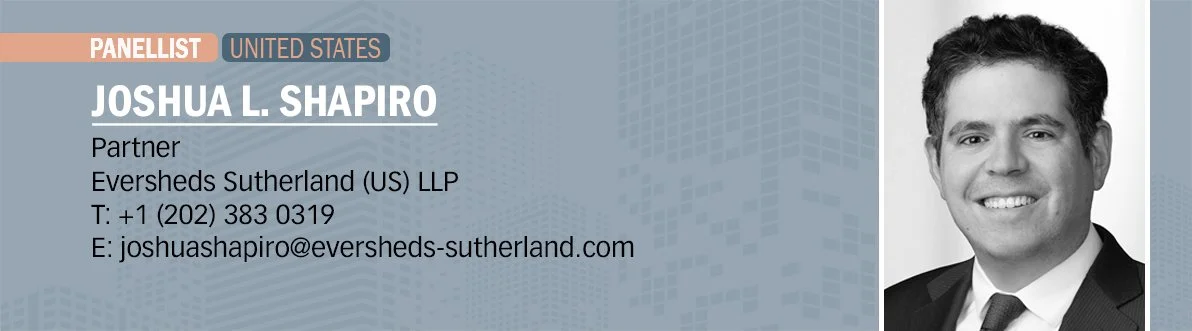
Josh Shapiro is a partner in the Washington, DC office of Eversheds Sutherland (US) LLP, where he serves as head of competition & antitrust. An experienced antitrust attorney, he helps clients navigate through the regulatory review of M&A. This includes deal inception and risk assessment to clearance by the US Federal Trade Commission and Department of Justice. He can be contacted on +1 (202) 383 0319 or by email: joshuashapiro@eversheds-sutherland.com.
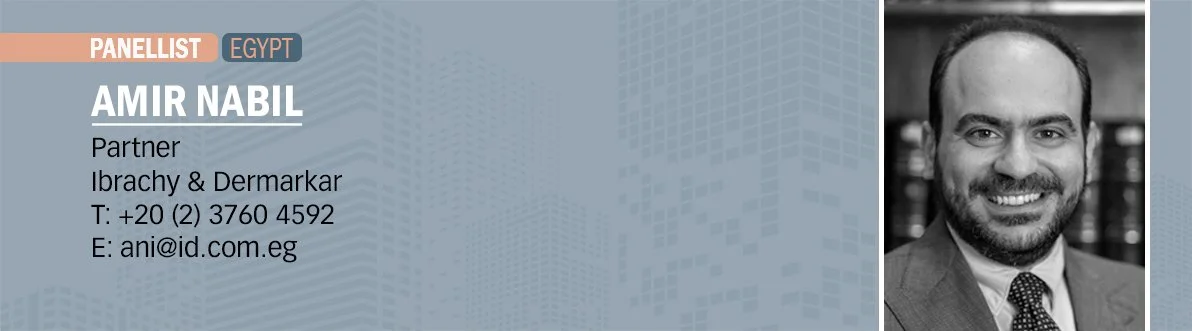
Dr Amir Nabil is a partner at Ibrachy & Dermarkar Law Firm, specialising in competition law, merger control, economic regulation and international trade matters. Former chairman of the Egyptian Competition Authority, he advises multinational clients on complex merger control and regulatory issues across the digital, pharmaceutical and technology sectors. He can be contacted on +20 (2) 3760 4592 or by email: ani@id.com.eg.
Dr David-Julien dos Santos Goncalves specialises in European and German competition law, advising industrial clients on merger control, foreign investment, the Foreign Subsidies Regulation, cartel and abuse of dominance matters. He handles proceedings before the European Commission, German authorities and courts, with particular experience in multijurisdictional cases and a focus on the energy, automotive and financial sectors. He can be contacted on +49 173 615 1040 or by email: david-julien.dos_santos_goncalves@linklaters.com.
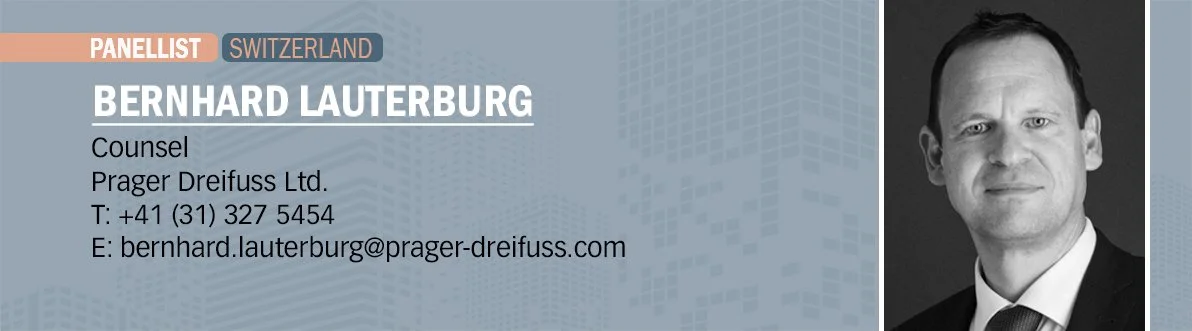
Bernhard Lauterburg is an experienced lawyer specialising in antitrust and competition law. His practice includes representation in cartel investigations and investigation regarding the abuse of market power, the notification of mergers to the COMCO and advice on contract drafting and antitrust compliance. He also specialises in general administrative law, public procurement law and arbitration. He also has in-depth knowledge of the World Trade Organisation and international trade law, investment protection and state aid. He can be contacted on +41 (31) 327 5454 or by email: bernhard.lauterburg@prager-dreifuss.com.
Jacqueline Arena advises on international competition and EU antitrust issues. Based in Hong Kong, she has broad experience advising Asian companies across the APAC region. She also represents multinational clients across different industry sectors, including financial services and pharmaceuticals. Ms Arena has worked on a number of merger transactions involving notifications to the European Commission, as well as multijurisdictional analyses and filings to regulators around the world. She can be contacted on +852 3740 4866 or by email: jacqueline.arena@skadden.com.
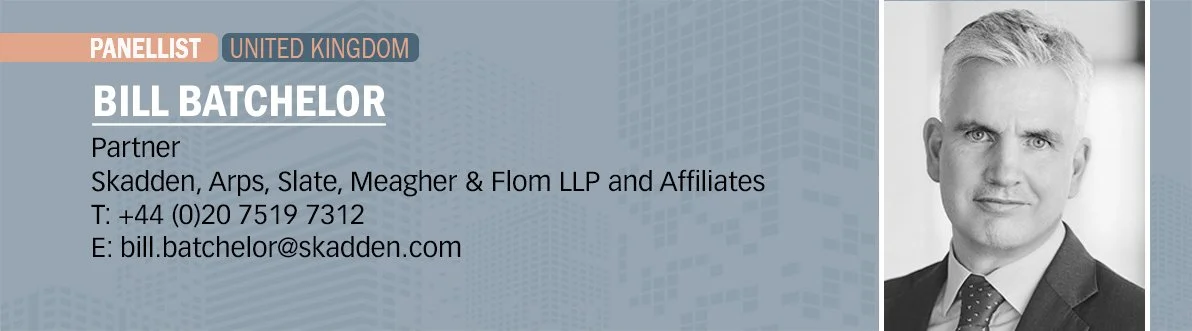
Bill Batchelor has 20 years of European Union (EU) and UK competition law experience and focuses his practice on conduct investigations, including abuse of dominance, cartels and vertical agreements. He regularly represents clients on EU and global merger control matters and litigation, and provides counsel on distribution and collaboration agreements in complex and highly regulated industries, such as healthcare, financial services, insurance, media and entertainment, and gambling, among others. He can be contacted on +44 (0)20 7519 7312 or by email: bill.batchelor@skadden.com.
© Financier Worldwide
THE PANELLISTS
UNITED STATES
Eversheds Sutherland (US) LLP
EGYPT
Ibrachy & Dermarkar
GERMANY
David-Julien dos Santos Goncalves
Linklaters LLP
SWITZERLAND
Prager Dreifuss Ltd.
HONG KONG
Skadden, Arps, Slate, Meagher & Flom LLP and Affiliates
UNITED KINGDOM
Skadden, Arps, Slate, Meagher & Flom LLP and Affiliates