

Evolving dynamics in ESOP M&A
April 2026 | BRIEFING ROOM | MERGERS & ACQUISITIONS
Financier Worldwide Magazine

April 2026 Issue
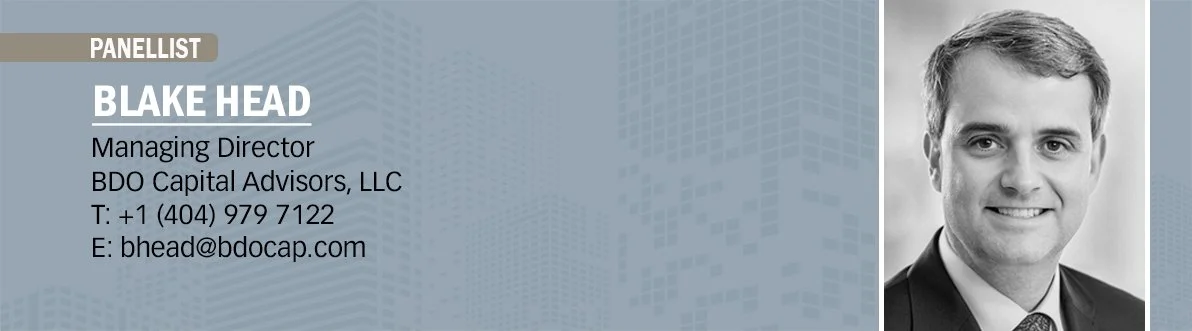
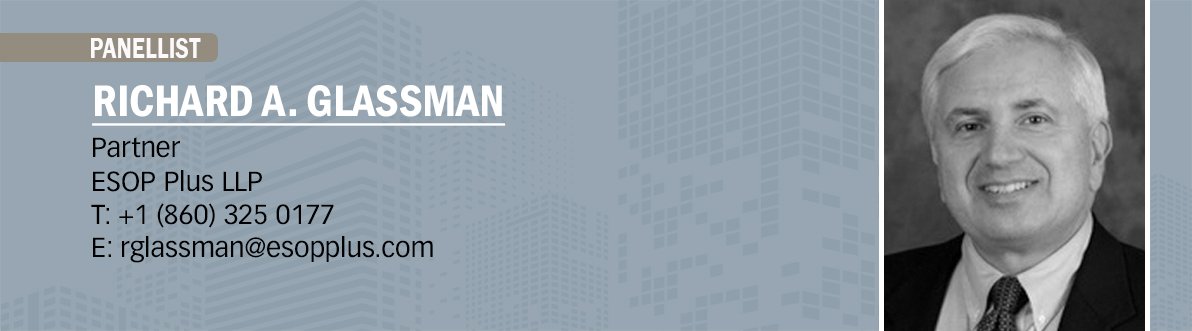
FW discusses evolving dynamics in ESOP M&A with Blake Head at BDO Capital Advisors, LLC and Richard A. Glassman at ESOP Plus LLP.
FW: Reflecting on the last year or so, how would you characterise appetite and activity for M&A involving employee stock ownership plans (ESOPs)?
Glassman: The overall picture over the past year, and importantly, over the past few years, has shown materially more interest – both for new employee stock ownership plans (ESOP) formations and for M&A activity involving existing ESOP-owned companies on both the purchase and sale side of M&A. This increase in activity is principally based upon both the ‘silver tsunami’ – the 5 million businesses that will need ownership transition over the next 7-10 years as baby boomers retire – and the growth in the ‘exit planning’ industry, which is assisting, materially, in spreading the gospel. This brings ESOPs into the mainstream of succession and exit planning. ESOPs are increasingly positioned as an alternative to private equity buyouts or a sale to a competitor or strategic buyer to preserve culture, retain critical employees, attract new employees and build on a culture of employee ownership. Of course, the material tax benefits provided to selling shareholders and sponsoring companies are an important piece of the decision and can make the ESOP, in many situations, the highest price buyer available.
Head: The appetite for ESOP M&A activity is greater than ever. The ‘silver tsunami’ continues to emerge, and we are seeing a trend of larger, more sophisticated companies exploring ESOP transactions, driven by an increased awareness of employee ownership models and a greater understanding of the benefits the ESOP model offers to companies, selling shareholders and employees. When business owners understand that they can sell the business to an ESOP for fair market value, use tax incentives to help repay transaction debt, and provide a benefit to employees, it resonates as a viable alternative compared to other strategic alternatives.
FW: What changes in valuation practices or adviser oversight do you believe will have the biggest impact on ESOP‑related transactions in the months ahead?
Head: The Retire Through Ownership Act is pending before the House of Representatives with broad bipartisan support, and many in the ESOP community are optimistic that it will advance this year. This law would provide ESOP fiduciaries a ‘safe harbour’ when relying in good faith on valuations prepared under Internal Revenue Service (IRS) Revenue Ruling 59-60, reducing uncertainty around “adequate consideration”. For companies planning an ESOP transaction, this means reduced fiduciary liability risk, which is one of the primary concerns that has historically caused business owners to hesitate. Rather than waiting for the legislation to pass, companies and advisers should move forward now with transaction planning, ensuring valuations strictly follow IRS Revenue Ruling 59-60 methodology. This proactive approach positions them to benefit from enhanced legal protections, should the Act pass, while building the documented, good faith processes that are best practice for an ESOP transaction.
Glassman: Although the US Department of Labor (DOL), even after direction from Congress and a lawsuit initiated by the ESOP Association, has still not issued final regulations on the subject of valuations for ESOP transactions, the ESOP valuation industry has been fairly consistent in its handling of repurchase obligations, the impact of the discount for lack of marketability, the impact of minority discounts and how to assess the reliability of financial projections. Importantly, the DOL has Lori Chavez-DeRemer, its new secretary, and Daniel Aronowitz, as the new assistant secretary of the Employee Benefits Administration. This new administration is much more ‘ESOP friendly’. Just recently, the DOL eliminated the audit of ESOP transactions from its national enforcement priorities. It is expected that Congress will continue to support the creation of ESOPs and the DOL will, finally, issue final regulations on ESOP valuations. The combination of these events should provide the ESOP valuation industry with guidance, comfort and consistency.
“The material tax benefits provided to selling shareholders and sponsoring companies are an important piece of the decision and can make the ESOP, in many situations, the highest price buyer available.”
FW: Which aspects of ESOP repurchase obligations – such as long‑term liability forecasting, M&A‑triggered liquidity events and leveraged‑ESOP complexities – do companies most often overlook? And what preparation should they undertake, including repurchase studies and early adviser engagement, before starting M&A discussions?
Glassman: Over the past few years, trustees and boards of directors have become more focused on understanding projected benefit levels and related projected repurchase obligations. Companies that complete a benefit-level analysis prior to finalising the terms of the internal loan, the loan amortisation schedule that controls the allocation of shares, and that have repurchase liability studies completed every 4-5 years, should never be surprised by a cash flow crisis due to distribution and diversification requirements. Of course, the opposite is also true. If benefit levels and projected repurchase liabilities are not a focus, crippling cash flow issues can materialise. Additionally, with the tools of benefit level and repurchase liability studies in hand, ESOP sponsors can continually monitor projected cash flow requirements and take actions, over the life of the ESOP, permitted by the Employee Retirement Income Security Act (ERISA) to change distribution policies, lengthen internal loan maturities and enter into re-leverage transactions.
Head: Technological advances enable more profitable, efficient companies that rely less on human capital. As a result, we are seeing higher ratios of company valuation to payroll and headcount. This challenges ESOP advisers when designing a sustainable share allocation model. A detailed analysis should be conducted early to confirm that the company provides meaningful benefit to employees, while avoiding excessive benefit that could impair repurchase obligations or unintentionally incentivise premature departures. As part of a feasibility study, it is important to have share allocation models that accomplish intended goals, are sustainable for the company and provide meaningful benefits to employees. The model must be incorporated into post-transaction cash flow modelling to ensure the company can afford to buy the shares back. ESOP advisers must also explore downside modelling to allow some room to miss projections and remain solvent. The company will need to maintain ‘dry powder’ to execute its strategic plans, including M&A or other growth initiatives.
FW: How are evolving norms around non‑competes and restrictive covenants influencing deal structuring and risk allocation in ESOP transactions?
Head: Any successful company needs a strong leadership team to succeed. Typically, many privately held businesses considering an ESOP have owners as key leaders of the organisation. In many ESOP transactions, the incentives for the selling shareholders to remain with the company, not compete with the business and ensure the company’s success are aligned through seller notes and warrants. It is typical for non-competes in ESOP transactions to mirror M&A transactions. However, they might not be as necessary for selling shareholders, given the alignment of selling shareholders with the company through the warrants and seller notes. For non-selling leaders, having safeguards in place to protect the business is appropriate. Implementing an ESOP does not meaningfully change the business risk posed by an executive leaving and competing with the company. Good employment practices, including proper incentives, thoughtful vesting schedules, non-competes, in some cases, non-disclosure agreements and other employment agreements may be appropriate.
Glassman: Although state employment law trends are moving in the direction of limiting or eliminating non-compete restrictions and the Federal Trade Commission (FTC) attempted, a few years ago, to implement a near-total ban on non-competes, the FTC’s efforts were thwarted by the courts, and even states that generally restrict non-competes permit non-competes to be enforced against a seller in an ESOP transaction. Trustees and valuation companies are focusing on the risk to the company if non-seller senior management is not bound by an enforceable employment agreement containing reasonable non-compete restrictions. Counteracting some of the risk of losing a seller or a key member of the management team is the use of long term seller notes, which keep the financial interests of the seller aligned with those of the company, and the use of warrants and stock appreciation rights (SARs) which also have the impact of keeping the seller motivated and involved to ensure that the company continues to perform profitably.
“In many ESOP transactions, the incentives for the selling shareholders to remain with the company, not compete with the business and ensure the company’s success are aligned through seller notes and warrants.”
FW: How do equity incentives, management participation and synthetic equity features typically complicate ESOP deal structuring? What best practices help avoid pitfalls?
Glassman: Although it is commonly understood that ESOP deal structuring is more complex when equity incentive programmes, such as SAR plans and warrants, are introduced, the added complexity is usually outweighed by the benefits these programmes provide to the transaction. The inclusion of equity incentive programmes may be critical to closing the transaction – especially in 100 percent S corporation transactions – where the goal is to keep 100 percent of the ‘real’ equity owned by the ESOP. But critical to the success of the ESOP is the provision of a synthetic equity-based programme to retain and incentivise the management team. Other forms of synthetic equity, such as warrants and phantom stock awards, are also useful tools in providing the appropriate financial returns, incentives and cash flow management opportunities to the parties to the transaction. Notwithstanding the positives of these equity-based incentives in a transaction, it is critical to a successful transaction that the competing economic interests, conflicts of interest, dilution, legal restrictions and, importantly, valuation considerations are taken into account and fully appreciated. The DOL has focused on ESOP transactions that include a significant amount of synthetic equity. However, the fully vetted transaction, that properly weighs the impact of synthetic equity and the restrictions contained in sections 409(p) and 409A of the Internal Revenue Code, will stand the test of time.
Head: Executive compensation is critical for any company, ESOP-owned or not. The ESOP catalyses revisiting compensation practices, but good corporate hygiene requires periodic reviews of compensation strategies for all employee groups. The trickier questions involve high-performing leaders who expect future ownership. In a 100 percent ESOP-owned company, traditional equity ownership is limited, requiring an alternative structure that delivers a comparable economic outcome and the psychological comfort that the arrangement is substantively similar to direct ownership. We often see ownership teams build a business to a certain size and want to transition it to key individuals in management. Sometimes the challenge is that the company has grown so large that the management team does not have funds to pay fair market value to the business owner. The owner must choose whether to sell at a discounted value, structure a buyout with a longer payout, or explore an ESOP that bridges the valuation gap and transfers ownership to key individuals through tax savings and increased cash flow.
FW: How are you seeing regulatory shifts reshape the expectations placed on ESOP trustees during sale or acquisition processes?
Head: Regulatory shifts have been very positive over the past several years. Fiduciary process agreements between some ESOP trustees and the DOL, along with new proposed and passed bills, such as the Retire Through Ownership Act, are providing clearer guidance and making ESOPs more attractive.
Glassman: Surprising to some, the anti-ESOP attitude of the DOL over the past 20-plus years has had some positive benefits in that trustees and valuation companies have been ‘trained’ to focus on fair valuations of the share price, the realities of control versus non-control minority transactions and related conflicts of interest post-closing. However, many believe that the DOL has gone overboard and the pendulum has swung too far. Nevertheless, the ESOP industry will benefit if the bad actors – those that structure deals based upon unrealistic projections or an inordinate amount of dilution due to warrants and SARs – can be removed. However, due to the growing support of Congress for employee ownership and the new leadership at the DOL, there is an expectation of a sea change in regulatory oversight and requirements. These changes should not reduce the importance of good valuations and appropriate analysis by the trustee, but they should incentivise more companies to explore ESOPs, reduce the cost of insurance, reduce the risk of fiduciary liability, and bring more trustees, banks and valuation companies into the industry.
FW: In your experience, what are the most important steps trustees should take today to protect themselves against emerging fiduciary and litigation risks in ESOP M&A?
Glassman: Whether or not the emerging fiduciary and litigation risks are increasing or decreasing, the best defence for a trustee is to execute a methodical, conflict free, actively negotiated transaction based upon a fair valuation. The importance of understanding the rules and requirements of the ERISA, the critical nature of a fair valuation and the needed focus on all of the terms and conditions contained in the stock purchase agreement can all be achieved by bringing together an experienced, quality team of professionals both on the sell-side and the buy-side. As a judge once said, the fiduciary responsibility of an ESOP trustee is the highest fiduciary responsibility under the law. However, with the use of quality counsel, a fair valuation and open and active negotiations, the risks of fiduciary and litigation liability should be mitigated to the fullest extent possible. It is also important to remember that, although an independent, external trustee is not legally required for an ESOP purchase transaction, best practices strongly suggest that it is not appropriate to employ an internal, most likely conflicted trustee for the ESOP purchase transaction. Additionally, best practices also recommend that a trustee require the purchase of ERISA fiduciary liability insurance to protect not only the trustee, but also the company, its board of directors and the seller.
Head: ESOP fiduciaries should continue to hold themselves to high standards in accordance with regulatory guidance and best practices in the industry. This means ensuring deep due diligence in the review of ESOP transactions, hiring competent and independent third-party advisers for diligence and negotiation, and maintaining careful consideration when evaluating the company and the details of the ESOP plan.
Blake Head is a managing director at BDO Capital Advisors, a FINRA/SIPC member firm, and the leader of BDO Capital’s ESOP advisory services division. With over 17 years of corporate financial advisory experience, he provides valuation work, strategic exit planning, capital raising and M&A guidance for privately held companies. His experience lies in helping clients assess the feasibility of ESOPs and, thereafter, structuring, negotiating and executing successful sales to ESOPs. He can be contacted on +1 (404) 979 7122or by email: bhead@bdocap.com.
Richard A. Glassman is an attorney with more than 35 years of experience in the law, banking and management. After a 25-plus year career in commercial and investment banking and a family-owned business, Mr Glassman returned to the practice of law focusing on the implementation and management of ESOPs. He is a founding partner of ESOP Plus LLP, and he is also executive vice president of Grandview Capital Strategies, a company providing fiduciary services to ESOP-owned companies. He can be contacted on +1 (860) 325 0177 or by email: rglassman@esopplus.com.
© Financier Worldwide