Fraud/Corruption

Bribery and corruption is widespread in EMEIA, claims new fraud survey

BY Fraser Tennant

Bribery and corruption is a huge problem in Europe, the Middle East, India and Africa (EMEIA), with unethical behaviour and high levels of mistrust among colleagues typical of today's workforce at larger companies, reveals a new EY fraud survey.

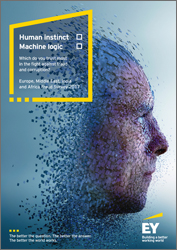
According to ‘Human instinct or machine logic: Which do you trust most in the fight against fraud and corruption?’, an average of 51 percent of those surveyed (4100 senior company executives spanning 41 countries) said they assume that business transactions in their country involve bribery and corruption.

Among the report’s other key findings: (i) 25 to 34 year-olds are more corrupt than other age groups and assume that management is also corrupt; (iii) whistleblowing is not being effectively implemented, with employees often not knowing to whom they can report a suspicious person; and (iii) efforts by regulatory authorities are hitting home, with three-quarters of survey respondents supporting individual responsibility for managers.

The EY fraud survey comes at a time when significant and sometimes unexpected political change is spreading economic uncertainty, presenting businesses with new challenges and opportunities in an increasingly disrupted world. At the same time, the challenges facing businesses continue to mount – such as the pace of technological change, shifts in consumer demands, the changing makeup of the workforce and the constant pressure of growth.

Given these significant political and economic changes, business conduct is now under scrutiny like never before. Businesses must find alternative ways to meet ambitious revenue goals and be responsive to the significant public demand for businesses to be held to account through greater transparency and accountability where traditional compliance frameworks may no longer be valid.

"The diesel dupe, the Libor scandal, illegal price fixing and intentionally falsely declared meat; compliance violations are constantly hitting the headlines,” said Michael Faske, head of fraud investigation & dispute services at EY. “The results of our survey show that unethical behaviour and a high level of mistrust among colleagues are typical of today's workforce at large companies. This applies in particular to managers and the youngest generation.

“The requirements of the regulatory authorities have continued to grow and even the companies themselves have introduced strict compliance regulations. In the perception within and outside of the company, these rules do not change anything however, if they are evaded by individual employees or even by the management committee."

Although the survey does highlight progress and improvement in some emerging economies , overall the fight against bribery and corruption remains a major challenge across the EMEIA region.

Report: Human instinct or machine logic: Which do you trust most in the fight against fraud and corruption?
Significant rise in fraud and risk incidents in 2016, confirms new report

BY Fraser Tennant

Fraud, cyber and security incidents are now the “new normal” for companies across the world, according to a new report by Kroll, the global risk consulting company.

In its ‘2016/17 Annual Global Fraud and Risk Report: Building Risk in a Volatile World’, Kroll highlights the escalating threat to corporate reputation and regulatory compliance. Eighty-two percent of the global executives surveyed stated that their company had fallen victim to fraud in 2016 , up from 75 percent in 2015.

Kroll also found that cyber incidents were particularly commonplace, with 85 percent of executives confirming that their company had suffered a cyber incident over the past 12 months. Furthermore, over two-thirds (68 percent) reported the occurrence of at least one security incident over the course of the year, with the theft or loss of intellectual property cited as the most common type.

Although the Kroll report highlights the widespread concerns over external attacks, the data indicates that the most common perpetrators of fraud, cyber and security incidents over the last year were current and former employees. Junior staff were cited as key perpetrators in two-fifths (39 percent) of fraud cases, followed by senior or middle management (30 percent) and freelance or temporary employees (27 percent). Former employees were also identified as being responsible for 27 percent s of reported incidents.

“It’s becoming an increasingly risky world, with the largest ever proportion of companies reporting fraud and similarly high levels of cyber and security breaches,” said Tommy Helsby, co-chairman at Kroll Investigations and Disputes. “The impact of such incidents is significant, with punitive effects on company revenues, business continuity, corporate reputation, customer satisfaction and employee morale.”

In terms of the impact that fraud and security concerns have on overseas expansion, 69 percent of executives admitted that their company has been dissuaded from operating in a particular country or region due to fraud concerns and security threats.

Mr Helsby concluded: “With fraud, cyber and security incidents becoming the new normal for companies all over the world, it’s clear that organisations need to have systemic processes in place to prevent, detect, and respond to these risks if they are to avoid reputational and financial damage.”

Report: ‘2016/17 Annual Global Fraud and Risk Report: Building Risk in a Volatile World’

Institutional funds hit Tesco with £100m damages claim

BY Fraser Tennant

In a move set to send further shockwaves through the financial world, more than 125 institutional funds have filed a £100m claim for damages against Tesco PLC over alleged breaches of the Financial Services & Markets Act.

The aim of the legal action is to prove that Tesco made a series of misleading statements to the stock market – comments which (it is alleged) omitted pertinent information and resulted in investors making investment decisions based on erroneous data.

“The misstatement of profits leading to a dramatic collapse in the Tesco share price caused substantial damage to many shareholders who manage money for thousands of investors,” said Jeremy Marshall, chief investment officer at Bentham Europe, the litigation funder coordinating the claim for damages. “Investors have a right to rely on statements made by companies to ensure that they correctly allocate capital.”

 In October 2014, Tesco admitted to overstating its profits by £263m. Following the announcement, the retail giant posted a 92 percent fall in interim profits.

“Tesco has misstated its accounts, and in particular its treatment of payments from suppliers, to give the appearance of static trading margins,” said Sean Upson, a partner at Stewarts Law, which is leading the case against Tesco. “The reality was that those margins were falling.  Institutional investors were therefore misled when making investment decisions in respect of Tesco. This is precisely the type of wrongdoing which the Financial Services and Markets Act was designed to redress and therefore to prevent”.

Last month, the UK’s Serious Fraud Office charged three former Tesco executives – Christopher Bush, at one time Tesco’s UK managing director; Carl Rogberg, a former UK finance director; and John Scouler, who used to be Tesco’s UK commercial director for food – over the scandal, alleging that they acted dishonestly by giving false accounts of the commercial income earned by Tesco Stores as well as its financial position.

The men are scheduled to stand trial at Southwark Crown Court in September 2017. 

Jeremy Marshall concluded: “The (damages) claim will assert that Tesco’s misstatements are in clear breach of its obligations under the Financial Services & Markets Act and investors must be compensated.”

News: Institutional funds file 100 million pounds damages claim against Tesco

Volkswagen deal rubber stamped

BY Richard Summerfield

A US district judge in San Francisco has approved one of the biggest corporate settlements on record, stemming from the Volkswagen AG diesel emissions scandal which erupted last year. The company admitted last year that it had equipped its diesel powered vehicles with devices able to circumnavigate emissions testing, which allowed them to releases levels of pollutants far in excess of permitted levels.

Under the terms of the settlement, Volkswagen will offer drivers of 475,000 of the company’s diesel-powered vehicles with 2-litre engines the option of selling back their cars to Volkswagen or waiting for a government-approved fix which will allow the vehicles to remain in service. Consumers have until September 2018 to decide whether to accept the buyback offer. If Volkswagen does not repair or fix at least 85 percent of affected cars by June 2019, the company will incur further penalties. Nearly 340,000 owners of Volkswagen vehicles, including Beetles, Passats, and Audi A3s, have registered to take part in the settlement. About 3500 owners have opted out.

Volkswagen has had to allocate up to $10bn for consumers who wish to trade in their vehicles. Furthermore, Volkswagen’s customers will also receive an additional cash payment of between $5100 and $10,000 per person by way of an apology. The settlement deal also includes a $2.7bn contribution the company must make to an environmental trust over the three year period in order to offset the pollution caused by Volkswagen’s diesel vehicles. The company will also be required to invest $2bn in zero-emission vehicles over the next 10 years.

"Final approval of the 2.0L TDI settlement is an important milestone in our journey to making things right in the United States, and we appreciate the efforts of all parties involved in this process. Volkswagen is committed to ensuring that the program is now carried out as seamlessly as possible for our affected customers and has devoted significant resources and personnel to making their experience a positive one," said Hinrich J. Woebcken, president and CEO of Volkswagen Group of America, Inc., in a statement announcing the approval.

The court’s approva did not come as a surprise. Indeed, Judge Breyer, who presided over the hearing related to the settlement, had indicated over the summer that he would approve the deal. Both parties had been urged by the judge to settle the case in a timely fashion, noting that “intensive” negotiations would provide “benefits much sooner than if litigation were to continue” and reduce the prospect of “additional environmental damage".

News: U.S. judge approves $14.7 billion deal in VW diesel scandal

US diesel emissions scandal results in Volkswagen making $15.3bn settlement

BY Fraser Tennant

In a settlement which it undoubtedly hopes will draw a substantial line under the matter, German carmaker Volkswagen AG has agreed to pay $15.3bn to settle the charge that it cheated on its diesel emissions tests in the US – a scandal which has rocked the automotive industry to its very core.

Volkswagen’s settlement agreement – reached this week in conjunction with the United States Department of Justice (DOJ), the State of California and the US Federal Trade Commission (FTC) – also resolves the civil claims regarding Volkswagen and Audi 2.0L TDI diesel engine vehicles in the US made by private plaintiffs (represented by the Plaintiffs’ Steering Committee (PSC)).

The diesel emissions scandal first became public in September 2015 when Volkswagen acknowledged that it had deliberately misled officials by installing secret software (the so-called ‘defeat device’) to circumvent US emissions tests (thus allowing US vehicles to emit up to 40 times the legal limit for safe levels of pollution).

Also part of the Volkswagen settlement is an agreement by the carmaker to buy back vehicles from affected consumers, as well as to provide funding that could profoundly benefit the creators of cleaner technologies (this includes a $2.7bn environmental remediation fund and the investment of $2bn to promote the use of zero emissions).

Furthermore, Volkswagen has also agreed with the attorneys general of 44 US states, the District of Columbia and Puerto Rico to resolve existing and potential state consumer protection claims in a settlement valued at approximately $603m.

“We take our commitment to make things right very seriously and believe these agreements are a significant step forward,” said Matthias Müller, chief executive officer of Volkswagen AG. “We appreciate the constructive engagement of all the parties, and are very grateful to our customers for their continued patience as the settlement approval process moves ahead.

“We know that we still have a great deal of work to do to earn back the trust of the American people. We are focused on resolving the outstanding issues and building a better company that can shape the future of integrated, sustainable mobility for our customers.”

Despite the settlement, the process represents only a partial resolution for Volkswagen, as the carmaker continues to face a criminal investigation which may result in company executives being held accountable for the wrongdoing related to its diesel emissions testing.

News: Volkswagen Agrees to $15 Billion Diesel-Cheating Settlement

©2001-2026 Financier Worldwide Ltd. All rights reserved. Any statements expressed on this website are understood to be general opinions and should not be relied upon as legal, financial or any other form of professional advice. Opinions expressed do not necessarily represent the views of the authors’ current or previous employers, or clients. The publisher, authors and authors' firms are not responsible for any loss third parties may suffer in connection with information or materials presented on this website, or use of any such information or materials by any third parties.