
Global jaunts not giving businesses value for money, claims PwC

BY Fraser Tennant

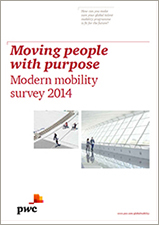
Businesses investing millions sending their employees on assignments across the globe may not be getting value for money, according to a new Modern Mobility report by PwC.

The report, which draws on a survey of 200 global executives, states that six in 10 organisations believe that their global mobility programs do not represent a worthwhile return on investment.

Additionally, PwC predicts that the number of people undertaking global assignments will jump 50 percent by 2020, despite only a paltry 8 percent of global organisations currently being able to accurately calculate the cost of their mobility programs.

Clare Hughes, a director in PwC’s global mobility team, said “It’s not surprising that organisations are expecting a jump in the number of people that are globally mobile – it is a great way for businesses to fill skills gaps, enter high growth markets, attract employees and develop their people. For some businesses, international experience is now a must-have for anyone taking on a leadership position.”

The PwC report also warns that HR teams across the globe are being forced to operate with meagre resources, lacking the investment and infrastructure information they require to tackle the evolving business landscape, as well as the know-how to effectively manage the increasing number of globally mobile employees.

Ms Hughes continued: “Organisations’ failure to measure the cost and value of their programmes will cost them dearly in the long run. Many businesses risk wasting considerable money sending the wrong people to the wrong places, overpaying for expats when local talent is available in-country or offering large financial packages when people are more motivated by the development opportunity.

“Businesses need to have a clear global mobility strategy which is based on growth priorities and what skills they are going to need and where, backed up by plans on how they are going to source, deploy, manage and motivate employees who work internationally.”

Providing extra food for thought, the PwC report, while noting that nine in 10 organisations say they are looking to increase the number of their globally mobile employees over the next two years, three in 10 admit they aren’t sure how many of their employees actually work overseas each year.

Report: Moving people with purpose – modern mobility survey 2014
India: an economic powerhouse on standby

BY Fraser Tennant

India is a sleeping economic powerhouse which should rank among the world’s strongest economies, according to a report published this week by Deloitte.

The report – ‘Competitiveness: Catching the next wave’ – portrays India as a country possessing the basis for great economic strength, such as stable democratic rule, a global outlook, a young demographic base, growing incomes, and an increasingly educated workforce.

But, on the downside, the report makes abundantly clear that the assertion that India is, or should be, a major global economic player is largely theoretical.

Decades of chronic infrastructure paralysis and indecisive political decision-making have resulted in a country which, in automotive terms, is driving with the handbrake very much on.

Despite this, according to report co-author, Gary Coleman, a managing director at Deloitte Global, India is on the cusp of a startling revival. He said: “India is a large market with rising purchasing power, a strategic location with links to fast-growing economic regions, and a young population eager to take part in the nation’s development.

“Recent policy moves such as the Reserve Bank of India’s shift to an inflation-targeting framework, along with the new government’s focus on fiscal consolidation, have helped improve business sentiment.

“Another positive indicator is the government’s initiatives to upgrade ties with major economies, ease decision making, develop infrastructure, and promote manufacturing.

“However, it’s still a long road ahead. Change is never easy, but the government can draw comfort from the economy’s inherent strengths. They will serve as a solid base from which policymakers can steer India’s economic ship to catch the next wave of growth and prosperity.”

Deloitte’s report certainly paints a picture of a sleeping economic giant, just waiting for the right time to stir from its slumber. Whether the stimulus for the awakening will prove to be of domestic or international origin remains to be seen, but what is clear is that India is poised to take its place among the global economic elite.

Report: Competitiveness: Catching the next wave

Lloyds hit with new mis-selling charge

Merely days after squeezing through a European banking health check, Lloyds Banking Group has been hit with another sizeable mis-selling charge.

Relating to the bank’s handling of the payment protection insurance (PPI) scandal, which came to light in the wake of the financial crisis, the £900m charge confirmed on 28 October brings the total cost required to cover Lloyds mis-selling of PPI to £11.3bn. The latest charge means that Lloyds has paid out more than any other affected bank, as well as close to half the total bill for the entire British banking industry. The PPI bill for Britain’s five biggest banks now stands at more than £22bn.

Further, it appears that the bank is still not out of the woods. Analysts have predicted that Lloyds will be required to set aside an additional £1bn to cover potential PPC compensation claims made in 2015. According to Lloyds' finance director George Culmer, PPC complaints in the third quarter of 2014 rose by around 2 or 3 percent compared with Q2, however new complaints are down by 18 percent on the year. The group also noted that should there be a similar level of complaints registered in the fourth quarter, as in Q3 the required provision would increase by around £600m.

Lloyds’ most recent PPI charge overshadowed a raft of other news released by the bank. In a statement Lloyds confirmed a 41 percent rise in underlying profits for the third quarter, with profits rising to £2.2bn following an improvement in bad debts. However, the bank also confirmed its previously reported plan to dispense of 9000 jobs over the next three years. The job losses will be the result of around 200 branch closures as the bank attempts to digitise its business.

Despite its recent tribulations, Lloyds is still confident that it will be able to pass the Bank of England’s stress test in December. The BoE’s test will assess whether Lloyds, the worst performing British bank in European testing, would be able to withstand a new financial crisis. Should Lloyds fail the test, it would be forbidden from paying its first shareholder dividend since it was bailed out by the British government.

News: Lloyds Takes $1.4 Billion PPI Charge, Shares Decline

UK growth to decline sharply

BY Richard Summerfield

The UK will experience economic growth of just 2.4 percent in 2015, according to a recent report from forecasting group EY ITEM Club. The forecast is significantly lower than predictions issued by the Bank of England, the Confederation of British Industry and the International Monetary Fund.

In its ‘Autumn Forecast’ the EY ITEM Club noted that the UK’s changing economic fortunes are likely to be based on uncertainty both at home and abroad. Political uncertainty in the UK will likely deter businesses from investing in the coming year.

Potential constitutional reform, the impending general election and a possible 2017 EU referendum are all expected to curtail investment activity. Further, burgeoning geopolitical risks, most notably the crisis in Ukraine, have heavily dented business confidence in the UK’s key European markets.

Peter Spencer, chief economic adviser to the EY ITEM Club, said “The forecast for GDP growth is still relatively good. What has changed is the global risks surrounding the forecast and the headwinds facing investment by firms. Looming political uncertainty risks denting corporate confidence - the question now is how will these risks play out? I expect caution to become the order of the day.”

Although, as the report notes, growth in business investment in the UK will have increased to 9 percent in 2014 compared with 2013, it will drop sharply in 2015 to 5.8 percent. The faltering European recovery and the relative devaluation of the euro compared with the pound have had a detrimental effect on the UK’s export business. According to Mr Spence, the outlook for UK exports appears to be “dreadful”.

Weaker global economic growth and stagnating UK wages and productivity will all combine to keep interest rate rises at bay. In the UK, interest rates have been at 0.5 percent for more than five and a half years. The report also predicts inflation will remain low going forward. Inflation is currently at a five-year low of 1.2 percent, but that figure is likely to increase marginally, averaging 1.3 percent next year.

Report: EY ITEM Club: Autumn Forecast 2014

Africa rising

BY Richard Summerfield               

Although a lingering sense of scepticism surrounds the continent’s development, Africa’s economic outlook is on the up according to a new EY report. New-found confidence in Africa has been built on the impressive economic growth rates recorded by many country's across the continent.

EY’s report, ‘Africa 2030: Realising the possibilities’, builds on the firm’s previously Africa-centric series, ‘Africa Attractiveness’, which has been highlighting progress over the last 15 years. The report notes that, as a result of the last 14 years of sustained growth across Africa, the continent’s relative attractiveness as an investment destination has increased dramatically. The sub-Saharan region in particular has seen a jump in foreign direct investment (FDI), with projects growing at a compound rate of 19.5 percent between 2007 and 2013.

Looking to the future, entrepreneurship is likely to be a key driver of economic growth and job creation in Africa as we move toward 2030. EY expects that new products, services and problem solving will also help to drive the job creation needed to generate inclusive and sustainable growth.

Yet, despite the optimism, future success across the continent is in no way guaranteed. “There are still many challenges ahead, not least of which is a robust structural transformation — required across many economies — that will not only lessen dependency on commodities, but also expand the private sector, increase productivity levels and, most of all, create jobs,” says the report.

Report: Africa 2030: Realizing the possibilities

©2001-2026 Financier Worldwide Ltd. All rights reserved. Any statements expressed on this website are understood to be general opinions and should not be relied upon as legal, financial or any other form of professional advice. Opinions expressed do not necessarily represent the views of the authors’ current or previous employers, or clients. The publisher, authors and authors' firms are not responsible for any loss third parties may suffer in connection with information or materials presented on this website, or use of any such information or materials by any third parties.