

Rebuilding corporate strategy for a fragmented world
November 2026 | COVER STORY | BOARDROOM INTELLIGENCE
Financier Worldwide Magazine
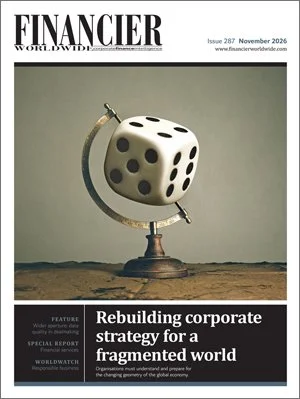
November 2026 Issue
Globalisation has provided the underlying framework for corporate strategy for more than three decades. As companies expanded internationally, developed increasingly complex supply chains and allocated capital across borders in pursuit of growth, efficiency and lower costs, the paradigm for global business evolved. Trade barriers declined, new markets opened and multinational organisations built operating models around an increasingly interconnected world economy.
However, the last decade has marked a significant turning point in attitudes toward globalisation. Today, geopolitical rivalry, economic nationalism and national security concerns are at the forefront of international trade and investment. Led in large part by the US, governments around the world have introduced tariffs and other economic policy tools that influence where and how companies operate.
For some observers, the global economy is moving toward a post-globalisation era. Yet the evidence suggests a more nuanced picture. Despite considerable disruption, global trade has remained remarkably resilient. Goods trade continued to expand through 2025 even as major economies redirected activity toward more geopolitically aligned partners. Rather than disappearing, globalisation is being reorganised around a more complex mix of commercial priorities, political relationships and national security considerations.
This shift is creating fundamental strategic challenges for corporate leaders across jurisdictions and industries. Decisions about where to manufacture, source components, invest capital, acquire businesses or deploy technology can no longer be based primarily on commercial considerations. Geopolitical risk is rapidly becoming a central pillar of corporate strategy.
A changing global order
The transformation underway in the global economy has developed over several years. The coronavirus (COVID-19) pandemic was one of the first and most important catalysts, demonstrating the vulnerability of highly concentrated global supply chains. Russia’s invasion of Ukraine highlighted the risks associated with geopolitical dependence, particularly in areas such as energy and commodities. Together, these events served as a stark reminder of the fragility of the global economy. At the same time, intensifying competition between the US and China has placed technology, manufacturing and trade at the centre of a broader strategic rivalry.
More recently, tariffs and other economic measures have accelerated this process. Economic fault lines have emerged across the global economy, with the US and China remaining dominant forces while the European Union (EU), India, Brazil and other emerging economies seek to advance their own strategic interests.
Yet this fragmentation is occurring within a world economy that remains deeply interconnected. McKinsey research suggests that trade continued expanding during 2025 while increasingly shifting toward more geopolitically aligned economies. This trend has been particularly pronounced in the US, China and the EU. At the same time, the distance travelled by traded goods has increased, while major emerging economies have continued to expand commerce across geopolitical divides.
Rather than separating into isolated economic blocs, global trade routes are being redrawn. As activity has shifted away from China in some sectors, countries such as India and those in Southeast Asia have assumed increasingly important positions within global supply chains as businesses seek alternative suppliers.
In this environment, organisations must understand and prepare for the changing geometry of the global economy.
Trade under pressure
One of the most visible manifestations of this shift has been the return of tariffs as a major instrument of economic policy. The US significantly increased tariffs across a wide range of imports during 2025 and continued doing so throughout 2026, often targeting countries with which it had previously enjoyed close economic and political relationships.
For businesses, the re-emergence of tariffs presents challenges that extend well beyond the direct costs involved. Perhaps the greatest difficulty is the uncertainty they create. Companies must consider where tariffs may be imposed, how long they will remain in force, whether trading partners will retaliate and whether the commercial rationale supporting existing supply chains could suddenly change.
Pricing, procurement and investment decisions have consequently become more complex. Management teams must determine whether additional costs can be absorbed, passed on to customers or mitigated through alternative sourcing arrangements. Manufacturing and operational footprints developed over many years may also need to be reconsidered if new trade barriers fundamentally alter their economics.
Moreover, tariffs rarely operate in isolation. Governments are increasingly deploying sanctions, export controls, subsidies, local content requirements, procurement rules and investment restrictions alongside tariffs to pursue economic and national security objectives.
Corporate strategy therefore needs to account for a far wider range of government intervention. Changes to tariffs, subsidies or rules of origin can emerge with little warning. Strategic planning increasingly requires organisations to ask not only whether an investment makes commercial sense, but whether it is likely to remain politically and economically viable over the long term.
The return of industrial policy
Alongside trade restrictions, industrial policy has returned to the centre of economic strategy. Governments increasingly view capabilities in areas such as semiconductors, artificial intelligence (AI), energy, critical minerals, defence and biotechnology as matters of economic and national security. As a result, states are intervening more directly through subsidies, tax incentives, procurement policies and restrictions on foreign participation.
The scale of intervention continues to increase. According to the Organisation for Economic Co-operation and Development (OECD), subsidies received by 525 of the world’s largest industrial companies across 15 strategically important sectors reached $108bn in 2024, representing the highest level relative to revenues since the global financial crisis. Renewable energy equipment, semiconductors, steel, aluminium and shipbuilding were among the sectors receiving particularly significant support.
“The challenge for today’s business leaders is not simply to manage disruption, but to rebuild strategy for a world in which geopolitical considerations have become inseparable from commercial success.”
For businesses, these interventions present both opportunities and challenges. Subsidies and incentives can transform the economics of investment in particular jurisdictions, encouraging companies to locate manufacturing, research facilities or infrastructure where government support is available. At the same time, organisations competing against heavily subsidised rivals may find their market position weakened even when they are more efficient operationally.
According to the OECD, subsidies can increase recipients’ global market share without necessarily producing equivalent improvements in investment or productivity. In some circumstances, support mechanisms may distort competition by weakening the link between commercial success and underlying economic performance or innovation.
Technology perhaps provides the clearest illustration of this changing environment. Advanced semiconductors, AI infrastructure and other emerging technologies have become strategically important assets around which governments have developed increasingly complex policies. This has created a growing intersection between corporate innovation and national security objectives.
A similar dynamic exists in critical minerals. Rare earth elements and other strategic materials are essential to industries ranging from electric vehicles and renewable energy to electronics and defence. With China controlling the majority of global rare earth mining and processing capacity, concentration risks have transformed what was once considered a procurement issue into a matter of strategic resilience for many organisations.
From efficiency to resilience
One of the most significant corporate responses to these developments has been the reconfiguration of global supply chains. For decades, supply chain strategy was largely driven by efficiency. Increasingly, however, resilience has become an equally important consideration.
While relatively few organisations have completely abandoned established manufacturing centres or reshored production on a large scale, many have sought to diversify suppliers, establish additional sourcing options and redirect trade through alternative markets. Practices such as nearshoring, friendshoring, dual sourcing and regionalisation have become increasingly common as companies seek to reduce dependence on individual countries, suppliers or trade routes.
These changes inevitably come at a cost. Moving production away from the lowest-cost supplier can increase operating expenses. Maintaining additional production capacity or holding larger inventories can tie up capital, while supplier diversification often increases organisational complexity.
Businesses must therefore develop operating models capable of balancing cost competitiveness with sufficient flexibility to withstand disruption. The precise balance will vary between industries and organisations, but many companies increasingly view these additional costs as an acceptable price for greater resilience.
A new dealmaking environment
Geopolitical fragmentation is also reshaping M&A and investment activity. Companies pursuing cross-border transactions must now navigate an expanding network of foreign investment screening regimes, sanctions, export controls and national security requirements.
According to UN Trade and Development, the number of countries operating foreign direct investment screening mechanisms on national security grounds has more than doubled since 2015. More than 40 percent of restrictive investment policy measures introduced during 2024 related to screening mechanisms, with high technology and critical minerals receiving particularly close scrutiny.
As a result, geopolitical analysis must begin much earlier in the transaction process. A deal may appear commercially attractive while simultaneously generating political opposition because a target company controls sensitive technology, infrastructure, intellectual property, data assets or strategically important resources.
Due diligence processes must therefore evolve beyond traditional commercial and regulatory assessments. Would-be acquirers increasingly need to understand a target’s exposure to sanctions, export controls, sensitive technologies, critical suppliers and politically vulnerable markets.
Transaction structures are also being affected. Regulatory approval may depend on divestments, governance restrictions, local investment commitments or safeguards relating to technology and data. Such conditions can influence valuations, transaction timetables and ultimately the viability of a proposed transaction.
Fragmentation is not solely creating risks, however. Substantial government support for semiconductors, defence, energy security, infrastructure and advanced technologies is directing significant volumes of public and private capital toward strategically important sectors. For private equity firms and other investors, understanding industrial policy may become just as important as identifying traditional market opportunities. Increasingly, geopolitics is serving both as a source of transaction risk and as an investment thesis in its own right.
Building geopolitical capability
Against this backdrop, organisations must reconsider how geopolitical risk is governed. Historically, geopolitical analysis was often viewed as a specialist function focused on specific markets or major international developments. Today, its implications extend across strategy, finance, legal, compliance, procurement, technology, operations and M&A.
Many organisations, however, still have considerable work to do. According to a June 2026 BCG survey, 80 percent of companies reported significant exposure to geopolitical developments and approximately 90 percent had strengthened their geopolitical capabilities during the previous year. Despite this, only around 15 percent had systematically embedded geopolitical considerations into core business decisions.
Closing this gap will require far more than the production of periodic risk reports. Boards and senior management teams must be capable of translating geopolitical developments into concrete commercial decisions. Geopolitical intelligence should therefore inform choices relating to capital allocation, supply chains, investment priorities, technology strategy and innovation.
Scenario planning is becoming particularly important in this environment. As volatility increases, predicting government action with certainty becomes increasingly difficult. Organisations must instead understand how a range of potential scenarios could affect their business and identify the strategic options available in response.
What would happen if a major market imposed additional tariffs? Could production be shifted if access to a key supplier was disrupted? How would sanctions affect important customers or counterparties? What if access to a critical technology or raw material became restricted? Would a planned acquisition remain attractive if regulatory intervention limited integration opportunities?
Considering such questions before disruption occurs enables organisations to respond more effectively when circumstances change.
The role of legal and compliance teams is also becoming more strategic. As sanctions, export controls, foreign investment rules and other national security measures become increasingly prevalent, robust regulatory analysis can help determine whether a proposed strategy is feasible before significant resources are committed.
Global reconfiguration
Businesses must also consider whether the current environment represents a temporary period of disruption or a more fundamental restructuring of the global economy.
Compelling arguments exist on both sides. Concerns surrounding technology, energy security, critical minerals and supply chain resilience have become deeply embedded in national economic strategies. Governments also appear increasingly willing to intervene directly in markets to advance economic and strategic objectives.
At the same time, it would be premature to declare the end of globalisation. Trade has repeatedly demonstrated its capacity to adapt. Despite increased tariffs and geopolitical tensions, global trade flows have continued to grow.
As some trading relationships weaken, others inevitably strengthen. While certain companies have reduced their dependence on China, Southeast Asia has become increasingly important within manufacturing supply chains, India has expanded its role in selected sectors and China has continued to build export relationships with markets beyond the US.
What appears to be emerging is not deglobalisation, but a reconfiguration of globalisation. Regionalisation is increasing, yet supply chains may become more complex rather than simpler as businesses route trade through additional jurisdictions. Organisations may also find themselves operating different technology, data and manufacturing models across distinct regions.
These developments will undoubtedly increase costs and complexity for many companies. However, organisations that adapt more quickly than their competitors may find significant opportunities emerging from the transition.
Rebuilding strategy
Ultimately, this evolving economic and geopolitical landscape is forcing businesses to reassess many of the assumptions that shaped corporate strategy during the era of rapid globalisation.
Efficiency and global scale remain valuable sources of competitive advantage. However, greater regional flexibility and adaptability are becoming equally important. Geopolitical risk can no longer be treated as a peripheral consideration. Instead, it must be integrated into core decision making.
By understanding their areas of exposure and identifying the dependencies that matter most, organisations can develop credible alternatives before disruption occurs. They should strive to combine commercial discipline with strategic resilience.
Corporate strategies designed for an era of relatively frictionless trade and accelerating global integration are beginning to look outdated. The challenge for today’s business leaders is not simply to manage disruption, but to rebuild strategy for a world in which geopolitical considerations have become inseparable from commercial success.
© Financier Worldwide
BY
Richard Summerfield