

Private equity
February 2026 | WORLDWATCH | PRIVATE EQUITY
Financier Worldwide Magazine

February 2026 Issue
Private equity (PE) is undergoing a significant transformation worldwide, driven by structural and regulatory reforms alongside ambitious government strategies. The market is also being shaped by a growing emphasis on artificial intelligence, as investors evaluate how the adoption of new technologies influences operational performance and valuations. PE momentum is expected to continue throughout 2026, supported by improving liquidity, structural reforms and more favourable conditions for initial public offerings.



FW: What are the most notable shifts in buyout and investment activity you have observed? How do you expect macroeconomic conditions, sector dynamics and limited partner (LP) sentiment to shape deal flow and valuations in 2026?
UNITED KINGDOM
Mathias: A notable shift in the UK has been the rising dominance of bolt-on acquisitions as sponsors pursue buy and build strategies to create scale ahead of exits. We have seen that bolt-ons now account for a larger share of UK deal volume than traditional leveraged buyouts. While dealmakers remained cautious through 2025, significant levels of unallocated capital will drive renewed activity in 2026. Sponsors will need to balance the impact of macroeconomic conditions and geopolitical tensions on asset valuations with the imperative to deploy capital. Excessive preoccupation with geopolitical risks can lead to missed opportunities; equally, overconfidence can create ‘deal fever’. The challenge for general partners (GPs) is to remain disciplined without becoming overly defensive. Exits have remained muted and fundraising timelines have lengthened, prompting continued growth in GP-led continuation funds and secondary and tertiary transactions. Continuation vehicles now represent close to 20 percent of exits, and we expect them to remain a core part of sponsors’ liquidity toolkit. With a critical mass of continuation funds reaching the end of their natural lifecycle, a developing theme is ‘CV-squared’ – raising a continuation vehicle on an existing continuation vehicle. Third-party exits will remain the preferred route in most instances, but these transactions are likely to feature more prominently in 2026. Across sectors, businesses continue to be highly focused on integrating artificial intelligence (AI) into their operations. The coming year will be an important inflection point as investors assess how these AI initiatives have translated into operational performance and valuations.
UNITED ARAB EMIRATES
Khawaja: The Gulf Cooperation Council (GCC) private equity (PE) market has undergone a profound transformation, shaped by structural reforms and ambitious government strategies. Initiatives such as Saudi Vision 2030 and UAE Vision 2031 have accelerated the region’s pivot from hydrocarbons to a digital and knowledge-based economy, signalling a long-term commitment to diversification. Following recent market developments, the GCC is entering a phase where governments that act boldly will lead, and this assertive policy stance is directly influencing investment flows and valuation dynamics. While PE activity is gaining momentum, the financial investor landscape in the GCC remains distinctive. Sovereign capital dominates the market, with government-linked entities and government-related entities-backed funds acting as primary anchors. These players often lead transactions or form the cornerstone of consortium deals, with other investors typically participating alongside them rather than independently. This structure reflects the region’s strategic approach to capital deployment, ensuring alignment with national priorities and long-term economic objectives.
UNITED STATES
Dambre: Looking back on 2025, headlines were driven by blockbuster megadeals, but US PE deal volume also saw a healthy increase year over year. Deal volume and aggregate deal value are projected to near or even surpass all-time highs, excluding the red-hot market of 2021. Initial hesitancy following the ‘Liberation Day’ announcement and the wait and see approach taken by the Federal Reserve System in the first half of the year gave way to dealmakers forging ahead despite uncertainty. The positive momentum looks likely to continue in 2026, spurred on by optimism following a third rate cut in December, money flowing into tech, infrastructure business services and onshoring of key industries, and an exit backlog that has built up over the past few years. GPs are also reporting that valuation gaps are narrowing. Parties are likely moving closer from both directions, with the lower cost of capital driving valuations up and some sober thinking around seller multiples coming with time passed from the peaks of 2021. Looking further out, the push for retail money to enter PE could lead to an industry-wide transformation. While sponsors see the chance to gain access to large amounts of previously untapped capital, this is occurring just as traditional fundraising has tightened – institutional investors have warned that this could mark a critical incentive shift that could have downstream effects on how they allocate their funds.
CANADA
Grant: While M&A in 2025 started slowly as the world reacted to rapidly shifting economic policies, the end of the year in Canada finished strong. According to the Canadian Venture Capital Association, 2025 was shaping up to be a record year for PE investment in Canada by total value. Most capital went into very large deals of C$500m or more, while transactions under C$25m made up most of the volume. By the third quarter of 2025, PE transactions in Canada reflected two consistent Canadian trends: a few megadeals, coupled with strong mid-market activity. In Canada, some of the most notable shifts reflect enhanced sector emphasis. For 2026, we expect to see increased deal activity, with continued focus on value creation transactions and strong mid-market activity, a greater focus on deals in priority sectors, including defence, sovereign AI and digital infrastructure, critical minerals and energy and infrastructure, a continued emphasis on creative deal structures to bridge valuation gaps and reduce risk, and early regulatory engagement under tightened Competition Act and Investment Canada Act regimes that prioritise national and economic security. Managers will continue to use tools like continuation funds and net asset value (NAV) loans to avoid rushed exits. Limited partners will continue investing in managers with a clear investment thesis, strong track record and clear timelines to exit. The opportunities in Canada favour investors and acquirers with clear thematics, disciplined structuring and regulatory readiness. Where assets intersect with national priorities and resilient cash flows, uncertainty is an enabler, not a deterrent, to decisive, value creating PE transactions.
INDIA
Dalal: 2025 was a year of cautious optimism for India’s investment activity with an uptick in pure-play PE investments compared to 2024. Domestic consumption and defensive sectors, such as non-banking financial companies, life sciences and healthcare and IT and enabled services, accounted for almost half of the deals by value. Nation-building sectors, including infrastructure and real estate, followed this closely. There has been a four-fold growth of buyout deals in India since 2010, which is a clear signal that control is becoming the dominant strategy. With control deals, investors get to actively manage portfolio companies, implement improvements and drive strategic growth to offer stability. Also, reforms in regulations, including the Companies Act, Securities and Exchange Board of India (SEBI) regulations and foreign direct investment policies, coupled with a marked decline in red tape, have simplified investment approvals. Stringent reporting standards as well as tighter governance have boosted investors’ confidence in taking up controlling stakes. Large-scale infrastructure assets, tech platforms and financial services firms offer attractive platforms for consolidation and expansion through control investments. However, global factors, such as US tariff shifts and currency pressures, remain watchpoints. Agility, resilience and innovation will be the defining themes as PE firms shape companies that command premium outcomes.
“The opportunities in Canada favour investments and acquirers with clear investment theses, disciplined structuring and regulatory readiness.”
FW: How are private equity (PE) firms evolving their value creation playbooks in response to margin pressures, digital disruption and longer holding periods? What strategies are proving most effective across portfolio companies?
UNITED ARAB EMIRATES
Khawaja: The Gulf’s PE ecosystem is redefining value creation in ways that diverge from traditional Western playbooks. Historically, global PE relied heavily on financial engineering, leveraging debt and pursuing cost-cutting measures to drive returns. In the Gulf, where capital is abundant but operational expertise has been relatively scarce, investors are adopting strategies that prioritise early alignment, operational excellence and technology-driven transformation. One notable shift is the early integration of strategic investors into investment rounds, often at inception rather than at exit. This approach compresses timelines, aligns incentives across the capital structure and positions portfolio companies for smoother exits or initial public offerings (IPOs). It reflects a growing recognition that value creation begins at entry, not post-acquisition. Technology has become the central lever for margin enhancement and resilience. Gulf-backed portfolio companies are moving beyond conventional cost-reduction strategies to embrace AI-driven solutions, automation and data analytics. These tools are being deployed to optimise pricing, streamline supply chains and unlock new revenue streams. For example, AI-enabled predictive analytics in healthcare and logistics is improving capacity planning, while fintech platforms are driving embedded finance and digital payments. These initiatives aim to build scalable, proprietary platforms capable of serving multiple emerging markets rather than incremental improvements.
UNITED STATES
Dambre: Firms are focusing on fundamentals and execution as ways to overcome challenges to the traditional playbook. Margin pressures coinciding with a slowdown in fundraising across the market may result in a greater differentiation between mega-funds and middle and lower market sponsors. For the former, the large platform may help bolster against margin erosion, as well as enable deployment of tech and AI tools at scale to help create value. For the latter, the pitch may be specialisation, operational excellence – especially when bidding on complex carve-out transactions or distressed assets – and a deep understanding of their chosen sectors. Longer hold periods will continue to run up against liquidity pressures and, given the exit backlog, we are expecting the continuation vehicles and secondaries market to remain strong even if traditional exits continue momentum gained at the end of 2025. Alongside this, the expansion of retail and semi-liquid channels, including vehicles that offer limited, scheduled liquidity such as quarterly, could reshape fundraising cadence and holding period norms, disrupting the traditional approach to portfolio management. Sponsors are also looking for every way in which AI deployment at portfolio companies can create value, which will often be a sector-specific consideration.
CANADA
Grant: PE firms continue to do what they do best: respond quickly and efficiently to market changes. Managers continue to innovate, using continuation funds, secondary sales and NAV loans to release cash while keeping ownership of their best assets. The playbook has evolved where AI has become a key tool in PE’s value creation toolbox. AI is employed at all points across the PE value creation chain: from automating fundraising to identifying potential portfolio company targets, from assisting portfolio companies in identifying further efficiencies and revenue generation opportunities, and from identifying and maximising exit opportunities. Continuation vehicles are used by managers as one solution to maximise exit opportunities where fund vintage and exit timelines are misaligned. These vehicles, strategic recapitalisations and enhanced decision making through the use of technology, enable managers to create ‘operational alpha’, rather than relying solely on financial leverage or market timing.
INDIA
Dalal: PE investors have become transformation architects. They are going beyond funds and bringing in advanced operating models, digital-first processes and institutional-grade governance. PE-backed firms that are agile and innovative from day one are outpacing their market peers and setting benchmarks for next-gen value creation. Revenue growth is the largest driver of PE value creation, while margin expansion plays a smaller role. Companies with a more active buy-and-build strategy drive higher value creation through revenue growth. Having said that, successful integration and execution quality are critical. A recent sale by a PE firm to a strategic in a buyout deal was particularly notable. The PE investor stood to make impressive returns, which, based on anecdotal evidence, seems to have been delivered through a combination of organic and inorganic growth levers. Organic growth was achieved by way of leadership changes, bringing in industry specialists and seasoned operating partners, margin expansion, research and development, pipeline focus, and international expansion. Inorganic growth, on the other hand, was delivered by a string of bolt-on acquisitions that boosted business in some key market segments and white spaces. Our firm recently conducted an in-depth analysis of M&A deals which studied approximately 2000 major deals over the past 10 years. It showed that acquirers who pursue deals with transformational goals at its core provide two to three times better returns to shareholders than their peers.
UNITED KINGDOM
Mathias: There is no universal value-creation playbook, but the traditional levers of cost efficiency and revenue growth are increasingly being re-engineered through digital transformation. Sponsors are using digital tools to enhance operational efficiency – for example, automating manual processes, migrating IT infrastructure to cloud environments and integrating AI-enabled systems. These initiatives both reduce operating costs and position businesses to scale effectively in a digital-first environment. On the revenue side, many portfolio companies are adopting technology-enabled business models, such as subscription services and digital platforms. As holding periods continue to lengthen, the most effective sponsors are those building deeper partnerships with management teams. Sustained operational engagement allows firms to execute multi-year digital transformation programmes and capture the corresponding value uplift.
“The Gulf’s PE ecosystem is redefining value creation in ways that diverge from traditional Western playbooks.”
FW: How is AI reshaping deal sourcing, due diligence and portfolio management in PE ? What capabilities will be essential for firms to stay competitive?
UNITED STATES
Dambre: The ability to quickly digest large amounts of unstructured data is quickly revolutionising both the speed and scope of deal sourcing, thesis formation, due diligence and transaction execution. Firms will have higher confidence in passing on unsuitable opportunities and pursuing chosen targets due to more comprehensive early-stage review, and will have a deeper understanding of target and market data by using AI for information gathering and analysis. This will lead to a better and more efficient allocation of investment team resources. Since sellers value speed and certainty, firms that can push the pace of transactions while maintaining rigorous assessment by using AI tools will have an advantage. While AI use may give certain firms an advantage, it may also level the playing field. Leaner teams with fewer resources may be able to compete against deeper benches by automating tasks that would have previously required manpower. For example, the opportunity cost of chasing deals that do not ultimately pan out may be significantly reduced, freeing up smaller teams to run down more opportunities and increasing competition for assets. Learning to use and emphasising the role of AI tools for investment-level operations will also carry over into skilfully deploying such tools to portfolio companies and unlocking post-acquisition value.
CANADA
Grant: AI tools have been a ‘force multiplier’ for PE. Harnessing large amounts of data has not only been game-changing for individuals but has been particularly game-changing for PE firms. For deal sourcing, we see PE firms using AI to scan large lists of companies and rank likely targets. AI tools include those which can identify ‘off-market’ targets that may not appear in traditional databases. Some service providers have even developed exit predictor tools that use historical data to estimate the likelihood of a company exiting via IPO or acquisition. When diligencing targets, firms use AI tools to review and assess industry-appropriate metrics such as customer patterns, pricing behaviour and hiring data. Law firms also use AI tools to review and summarise large numbers of contracts for deal-specific issues. PE firms have also been actively encouraging the deployment of AI in their portfolio companies. In portfolio companies, AI tools support cash flow forecasting, exception-based reporting, spotting anomalies in finance and cyber, and early warnings for customer losses or outages. While these metrics were always reported, better data and speed enable PE firms and their portfolio companies to assess data in almost real time and make changes accordingly. While the promise of AI is certainly being realised, we note, however, that a human in the loop is still required to assess and analyse the output – currently there is no substitute for strategic, experienced human judgment. Firms and portfolio companies are also deploying practical legal and compliance frameworks covering data sources, confidentiality, intellectual property, privacy and bias, backed by risk assessments and board-level governance. The goal is not AI everywhere, but AI where it improves decisions, protects value and can be explained clearly to participants in the PE value chain.
UNITED KINGDOM
Mathias: AI appears to be reshaping every stage of the PE lifecycle. In deal sourcing, machine learning tools can enable firms to identify opportunities aligned with their investment strategies by processing structured financial data and unstructured information such as news flow, corporate disclosures and market signals. During due diligence, AI tools can help accelerate and deepen analysis – summarising large volumes of documentation, highlighting risk indicators and using predictive analytics to forecast performance. Within portfolios, sponsors are prioritising AI infrastructure as a key value-creation lever, using automation and advanced analytics to streamline operations, enhance compliance and improve reporting. To remain competitive, PE firms will need robust AI infrastructure, a clear governance framework and increased AI literacy across investment, risk and compliance teams. The firms that succeed will be those that can integrate these tools safely, effectively and at scale.
INDIA
Dalal: AI is transforming different facets of PE by automating deal sourcing with data-driven insights, accelerating due diligence through automated document analysis and optimising portfolio management with predictive analytics and continuous monitoring. To stay competitive, firms need to develop strong data integration capabilities, build custom AI models and foster a culture that leverages AI for faster, more informed decision making across the investment lifecycle. Seventy percent of PE firms globally plan to increase AI and generative AI investment across portfolio companies. Firms that embrace AI in deal sourcing, due diligence and portfolio management are likely to gain a competitive edge by expanding their deal flow, accelerating investment cycles and executing superior value creation plays with greater data-driven confidence. AI shifts origination from network-driven to data-driven – deal funnels are expanding. AI accelerates and deepens diligence by automating review of financials, contracts, customer data and compliance documents, cutting diligence timelines. Portfolio companies are increasingly utilising AI-enabled shared services and real-time dashboards, to track margin, pricing return on investment, working capital and operational key performance indicators. This is now driving tighter monitoring and faster decision making. AI supports exits through advanced benchmarking, forward-looking performance projections, and tailored narratives for strategic buyers or IPO markets, which improves valuation positioning.
UNITED ARAB EMIRATES
Khawaja: AI is reshaping the PE lifecycle globally, and the Gulf is beginning to scale adoption. While relationship-driven deal origination remains dominant, AI is increasingly augmenting sourcing through predictive analytics and bilingual natural language processing, scanning regional news, filings and social media to identify distressed assets, sector shifts and emerging targets, accelerating pipeline generation and reducing reliance on informal networks. In due diligence, AI is compressing timelines and deepening insight. Automated tools review thousands of contracts across jurisdictions and languages, flagging anomalies and compliance risks in real time, while machine learning validates financials, detects fraud patterns and stress-tests forecasts under varied macroeconomic scenarios. Firms are also integrating emotive intelligence – AI systems that interpret sentiment and behavioural cues in management teams, bridging human judgement with data-driven processes to improve decision quality. Portfolio management is where AI’s impact is most pronounced. Real-time dashboards aggregate operational and financial data to enable predictive performance monitoring and proactive interventions, while environmental, social and governance compliance tracking is automated to map regulatory changes and assess sustainability risk exposure.
“PE investors have become transformation architects. They are going beyond funds and bringing in advanced operating models, digital-first processes and institutional-grade governance.”
FW: What regulatory shifts or geopolitical developments do you foresee having the greatest impact on PE deal flow, cross-border investments and portfolio risk management? How are firms preparing to navigate these challenges?
INDIA
Dalal: I would say that investment certainty is key to PE investments and stems from having progressive and predictable regulatory policies and stable cross-border relations. This is evident in India’s ‘Viksit Bharat 2047’ vision which is focused on strengthening investor confidence through ease of doing business. Geopolitical factors like US-China tensions, trade wars, global inflation and regional conflicts are creating uncertainty, leading to risk aversion, widening the bid-ask spread and slowing deal flows. PE firms are using enhanced due diligence frameworks, such as geopolitical, supply chain and policy-change assessments, early in the investment process to pre-empt risks. Risk allocation on account of uncertainties is being achieved through structural solves. Earnouts tied to future performance metrics and regulatory outcomes are visibly utilised to meet the bid-ask spread. Also, credit deals with an enhanced security package and higher visibility on stable returns have gained prominence.
UNITED ARAB EMIRATES
Khawaja: Regulatory and geopolitical dynamics are increasingly shaping PE strategies in the Gulf. The introduction of US outbound investment restrictions on advanced technologies such as semiconductors, quantum computing and AI, combined with heightened Committee on Foreign Investment in the United States (CFIUS) scrutiny and proposed greenfield coverage, is compelling Gulf sovereign funds and PE firms to strengthen compliance frameworks and governance standards. These measures are not isolated – they reflect a broader trend of regulatory tightening that investors must navigate when structuring cross-border deals. The Gulf’s position as a neutral intermediary between East and West creates unique opportunities but also demands agility. Firms are responding by diversifying fund domiciles across the Dubai International Financial Centre (DIFC), Abu Dhabi Global Market (ADGM) and offshore centres, embedding robust compliance for sanctions and export controls, and implementing enhanced diligence protocols. Regional reforms amplify this attractiveness: Saudi Arabia’s Regional Headquarters (RHQ) programme, the United Arab Emirates’ (UAEs’) family business law and expanded foreign ownership frameworks are making the Gulf a magnet for international capital seeking stability and tax efficiency.
UNITED KINGDOM
Mathias: One of the most consequential regulatory developments is the anticipated expansion of the UK’s National Security and Investment Act (NSIA) following this year’s consultation. As the definition of ‘sensitive sectors’ broadens – particularly relating to AI, semiconductors, data infrastructure and advanced manufacturing – more transactions are likely to require notification, including minority investments. This shift reflects heightened geopolitical sensitivity around control of critical technologies. A helpful clarification is that the use of ‘off the shelf’ AI tools may fall outside the UK’s definition of AI for NSIA purposes. By contrast, research, development and testing activities are likely to remain firmly within scope. Distinguishing between the two will become a routine part of deal planning. We are also seeing increasing divergence between the UK and European Union (EU) regulatory frameworks. While the EU has introduced the EU AI Act – a comprehensive regulatory regime governing AI development and deployment – the UK is pursuing a principles-based, sector-specific approach. In areas such as competition enforcement, the UK may still align with the EU to limit divergence, but differences will remain. For companies operating across both jurisdictions, compliance is becoming a key strategic and cost consideration. Despite these challenges, appetite for deals is likely to remain resilient in 2026, particularly in sectors that sit at the centre of regulatory focus: AI, digital markets and cyber security. PE firms are increasingly aware and conducting NSIA and geopolitical risk assessments earlier in the deal cycle and investing in cyber and AI capabilities within portfolio companies to enhance compliance and mitigate risk.
CANADA
Grant: Two themes stand out for 2026: foreign investment screening and merger control. Foreign investment screening is tightening, with broader national security reviews, longer timelines and more conditions in sensitive sectors and for state-linked investors. Merger control is also firmer, with closer attention to market concentration, labour effects and data issues. Cross-border deals face added pressure from protectionist policies, sanctions changes and wider geopolitical tensions. In Canada, the federal government’s focus on economic and national security have resulted in more regulatory diligence and scenario planning as a parallel workstream in the investment and M&A due diligence process. Recent Competition Act amendments have increased timing and information requests. Amendments to the Investment Canada Act now explicitly incorporate ‘economic security’ and expand national security scrutiny, including in critical minerals and sensitive technology, and introduce interim conditions powers. Early filings and mitigation planning are advisable. This includes conducting thorough checks, especially for sensitive sectors, to assess potential national security and economic risks, and filing voluntarily for pre-closing clearance to avoid a potential lengthy post-closing review. We expect that deal terms will continue to reflect this with longer outside dates and clear cooperation obligations tailored to the risk.
UNITED STATES
Dambre: There were a number of shifts in 2025 that will reverberate in 2026 and beyond, including tariffs imposed by the US and resulting changes in global trade policy, a more onerous Hart-Scott-Rodino filing process, and increasing attention to CFIUS and global foreign direct investment regimes and onshoring critical technologies. In many cases, preparation of and review periods for regulatory filings have lengthened. Even if there remain some questions around the approach the US regulators will take to certain transactions, 2025 has been a more favourable regulatory environment for dealmaking in the US. The hope is that stabilisation of US trade policy will also contribute to a more favourable macro environment. Traditionally, dealmakers have shied away from committing in uncertain markets, but the second half of 2025 suggests that sponsors may have gotten comfortable with being uncomfortable. The rapidity and significance of changes in the geopolitical realm means that firms will want to consider stress testing their investment theses against different scenarios, including black swan geopolitical events, which have played a significant role in defining the period since the pandemic.
“There is no universal value-creation playbook, but the traditional levers of cost efficiency and revenue growth are increasingly being re-engineered through digital transformation.”
FW: What factors are likely to shape PE exit activity in the months ahead? How are firms preparing for a potential rebound in initial public offerings (IPOs), strategic sales and secondary transactions?
UNITED KINGDOM
Mathias: Sponsors are adopting a broad-based approach to exit preparation. Global IPO activity showed early signs of recovery toward the end of 2025, and there is cautious optimism that the UK market will follow in 2026 – supported by sustained investor interest in technology and AI-enabled businesses. However, high interest rates and inflation remain key factors influencing the pace of recovery. In practice, many firms are preparing for multiple exit scenarios simultaneously. Dual-track processes are becoming more common again, with sponsors undertaking IPO readiness assessments – upgrading governance, reporting and financial controls – while also preparing materials for strategic sales and sponsor to sponsor transactions. Minority investments and continuation vehicles continue to provide alternative routes to liquidity. A notable emerging practice is the establishment of a formal exit committee to provide structured oversight of exit readiness, valuation strategy and process execution. Firms that institutionalise this discipline are likely to achieve smoother processes and stronger valuations as markets recover.
UNITED ARAB EMIRATES
Khawaja: Over the last few years, the region has seen a noticeable increase in public markets activity with improving liquidity and structural reforms that favour listings and strategic transactions. IPO momentum has been strong in the recent past in the region. Saudi Arabia led the region with 42 IPOs in 2024, ranking seventh globally in capital raised, while the UAE delivered some oversubscribed offerings. As the foundation around the capital markets has been building, it would not be surprising if the capital markets continue to show resilience into 2026, underpinned by ambitious diversification agendas and investor appetite for sectors aligned with Saudi Vision 2030 and UAE Vision 2031 priorities. Several factors will shape exit dynamics in the near future. Public market depth and regulatory reforms, including DIFC and ADGM frameworks and Saudi RHQ incentives, are expected to create attractive listing venue options for regional champions. Sectoral tailwinds are also strong, with technology, software and healthcare dominating exit volumes, supporting deal momentum. Global economic conditions inevitably have a bearing as well. Liquidity conditions and stabilising interest rates are expected to revive IPO pipelines, while valuation resets and buyer selectivity will drive structured exits. At the same time, geopolitical and compliance considerations are prompting firms to embed scenario planning and vendor due diligence to mitigate risks from regulatory tightening and supply chain realignment.
CANADA
Grant: We believe that in Canada, factors that will shape PE exit activity in the months ahead include cost and availability of cash, acquisitions by strategic buyers, and secondaries and continuation funds. In uncertain pricing markets, we expect that buyers and sellers will continue to use earnouts to bridge valuation and tariff and market uncertainty risks. We continue to recommend thoughtful, precise drafting to avoid the risk of later disputes. We expect that, to offset risk, representations and warranties insurance will continue to grow, supporting cleaner exits and reduced indemnity frictions. Finally, we expect that private credit availability and improved debt markets will support larger deals, even as underwriting remains selective and diligenced deeper. The opportunities in Canada favour investments and acquirers with clear investment theses, disciplined structuring and regulatory readiness. We are looking forward to a busy 2026.
UNITED STATES
Dambre: The general market sentiment is that exit activity will continue to pick up in 2026 as it did in 2025. One of the primary factors that will drive exit activity is the significant backlog and quantity of ageing vintages, with nearly a third of inventory having been held for seven or more years. Sponsors’ backs are increasingly up against the wall to return capital to investors. The Fed’s third rate cut in December will add to the momentum and, alongside the cost of capital coming down, sponsors have noted that the bid-ask spread is getting narrower. The IPO market opening back up is likely to be sector-selective, but suggestions of potential public company compliance reforms by the administration could further ease that route, and firms should be reassessing assets to consider all possible paths. We expect secondary transactions to remain a significant factor, but with exit activity picking back up, the year on year increase may start to flatten out.
INDIA
Dalal: For ‘new age’ digital businesses focused on profitability and scale, IPOs were the headline exit route in 2025. IPOs enable sizeable liquidity events for early PE and venture capital backers. Secondary transactions, GP-led restructurings and strategic trade sales have also become important complementary pathways, due to a combination of market maturity, liquidity pressures and changing investor needs. With India’s PE markets maturing, more funds are reaching the end of their typical cycles, prompting early investors and funds to seek alternative exit avenues. Regulatory changes, including stricter timelines for fund liquidations and closures set by SEBI, have nudged funds to pursue secondary transactions to comply and provide liquidity to LPs. Moreover, the recent boom in public markets and expectation of lucrative IPOs motivate secondary buyers, especially for late-stage, near-IPO companies. Secondary deals are seen as an attractive way to participate at a discount before valuation uplifts. As funds mature, managers need to actively manage tail-end assets and optimise portfolios, including continuation funds for their best holdings and discounted exits for underperformers. Early exit planning, continuation strategies, flexible exit routes and stronger investor communication will define future exits – balancing value creation, liquidity and risk.
“The ability to quickly digest large amounts of unstructured data is quickly revolutionising both the speed and scope of deal sourcing, thesis formation, due diligence and transaction execution.”
Romain Dambre advises public and private companies, as well as financial sponsors and their portfolio companies, on a wide range of domestic and cross-border transactions, including acquisitions, leveraged buyouts, take-privates, divestitures, carve-outs, joint ventures, equity financings and corporate restructurings. He has been recommended by Legal 500 for US M&A, large deals and for US private equity buyouts, with clients noting that he “impresses with his ‘out of the box solutions’ in leveraged buyouts and carve-outs”. He can be contacted on +1 (212) 610 6308 or by email: romain.dambre@aoshearman.com.
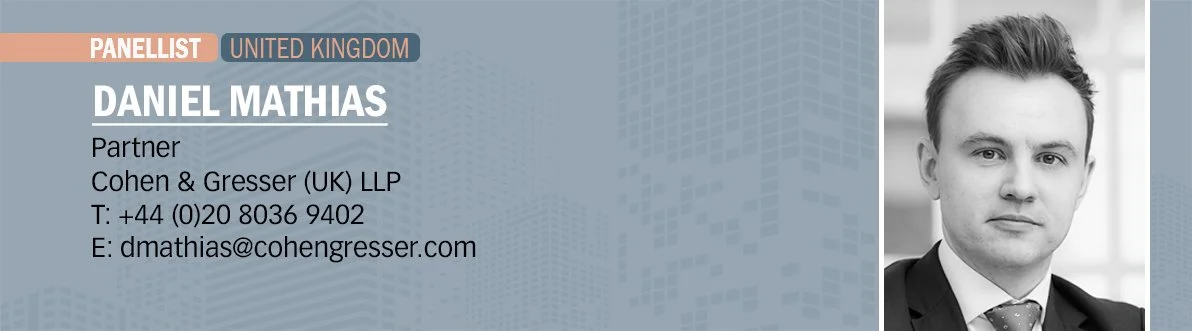
Daniel H. Mathias is the managing partner of Cohen & Gresser’s London office and a member of the firm’s corporate group. He focuses his practice on complex cross-border private equity and M&A transactions, predominantly across North America and Europe, in sectors including media, technology, consumer, aerospace and industrial. He has extensive experience advising private equity firms, owners, family offices, growth equity funds and other alternative asset managers on their investments and divestments. He can be contacted on +44 (0)20 8036 9402 or by email: dmathias@cohengresser.com.
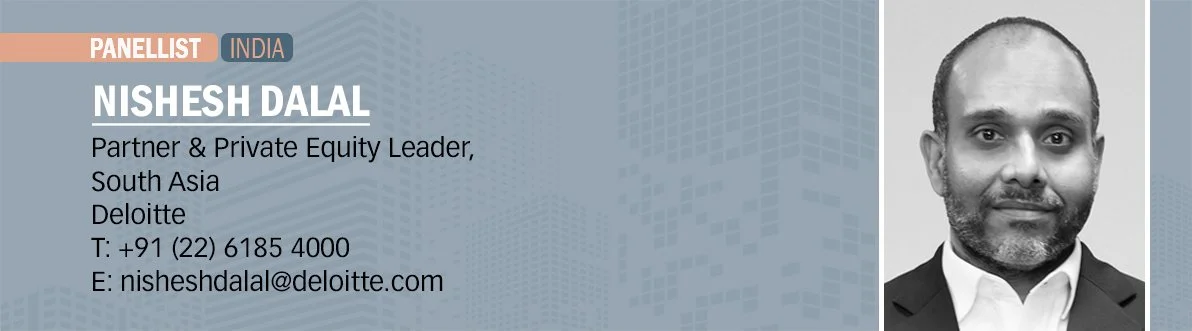
Nishesh Dalal is a partner and private equity leader at Deloitte South Asia, leading overall sponsor coverage at the firm. He is primarily responsible for aligning Deloitte’s services to priorities of its private equity clients and their portfolio companies, across the investment lifecycle – from deal origination to evaluation and portfolio value creation and management to exit. He has 25-plus years of experience in the professional services ecosystem, focusing on M&A and transactions. He can be contacted on +91 (22) 6185 4000 or by email: nisheshdalal@deloitte.com.
Salmaan Khawaja has acted as lead adviser across a range of international transactions for over 20 years originating, implementing and successfully completing M&A and investment opportunities involving companies across North America, Far East, Europe, Middle East, Pakistan, India and Africa. He has advised corporates, private equity firms, sovereign wealth funds and high net worth individuals across various sectors on complex buy-side and sell-side mandates. He is responsible for the strategy and growth of the M&A and transactions advisory team across the region. He can be contacted on +971 4 388 9925 or by email: salmaan.khawaja@ae.gt.com.
Vanessa Grant is a senior partner in the business law group of Norton Rose’s Toronto office and co‑head of the firm’s private equity practice in Canada. Known for her strategic insight and cross-sector expertise, she is a trusted adviser to clients navigating complex corporate and financial transactions. Her practice focuses on M&A, fund formation, corporate finance, corporate governance, and private equity and venture capital matters for both public and private companies. She can be contacted on +1 (416) 216 4056 or by email: vanessa.grant@nortonrosefulbright.com.
© Financier Worldwide
THE PANELLISTS
UNITED STATES
A&O Shearman
UNITED KINGDOM
Cohen & Gresser (UK) LLP
INDIA
Deloitte
UNITED ARAB EMIRATES
Grant Thornton UAE
CANADA
Norton Rose Fulbright Canada LLP