

Responsible business
November 2026 | WORLDWATCH | BOARDROOM INTELLIGENCE
Financier Worldwide Magazine

November 2026 Issue
The responsible business agenda is evolving from voluntary corporate social responsibility into a formal discipline rooted in reporting, governance and accountability. Meanwhile, geopolitical uncertainty, competitiveness pressures and regulatory fragmentation are prompting organisations to focus resources more strategically. As technology transforms risk monitoring and decision making, companies that embed responsible business practices within corporate strategy will be best placed to strengthen stakeholder confidence and create long-term value.


FW: How has the responsible business agenda evolved in recent years? What do you see as the most significant risks, challenges and opportunities facing organisations today?
IRELAND
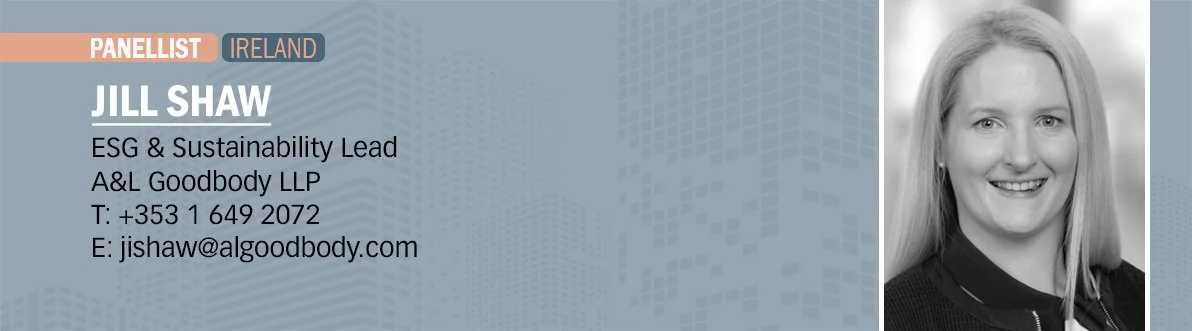
Shaw: Many of the key topics on the responsible business agenda have remained consistent in recent years, including decarbonisation, sustainability reporting, circularity, sustainability due diligence, biodiversity restoration and ensuring sustainability-related claims are clear, fair and not misleading. What has changed is the way these issues are being prioritised, as legal requirements, stakeholder expectations and the broader geopolitical environment increasingly influence the pace and direction of corporate action. From a European Union (EU) perspective, one of the most significant challenges currently facing organisations is regulatory uncertainty. While the Omnibus proposals are designed to simplify obligations and reduce administrative burdens, in the short term they have led to increased uncertainty and complexity for businesses. At the same time, organisations that successfully embed sustainability into their corporate strategy are increasingly benefitting from greater resilience, improved access to capital and stronger stakeholder trust, resulting in a competitive advantage for those businesses, particularly in sustainability-focused markets.
CANADA
Struthers: The responsible business agenda in Canada has evolved from a largely voluntary focus on corporate commitments and disclosure into a much broader question of how organisations identify and manage business risk. Expectations now extend across supply chains and encompass technology, climate change, human rights, biodiversity and relationships with communities and indigenous peoples. At the same time, geopolitical uncertainty, competitiveness concerns and regulatory fragmentation are forcing organisations to be more disciplined about where they focus their efforts. The challenge is no longer about making sustainability commitments or producing more disclosure, but to demonstrate that responsible business considerations are informing organisational decisions. Organisations that understand the material impacts of responsible business, engage effectively with stakeholders and anticipate emerging risks will generally be better positioned to meet project timelines, strengthen supply chains, maintain market access and build resilience as expectations evolve.
UNITED STATES
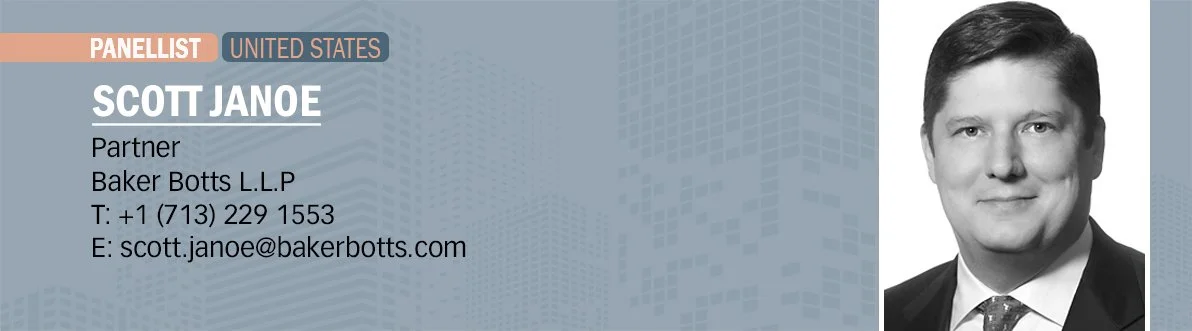
Janoe: The responsible business agenda has undergone two somewhat conflicting shifts in the past few years. As many jurisdictions outside the US and some states have moved from voluntary pledges to enforceable legal obligations, the US federal government and some other states have taken a more sceptical view of such measures. The most significant risk right now is regulatory fragmentation. Companies face mandatory disclosure regimes in Europe and some US states while simultaneously navigating anti-environmental, social and governance (ESG) headwinds in other parts of the world and other states. This alternating demonisation of both fossil fuels and renewables – depending on one’s politics – by the major US political parties and others creates an environment of political risk. Maintaining a consistent message and focus across these conflicting programmes and political agendas is the defining compliance challenge of our time.
SINGAPORE
Goh: The responsible business agenda has shifted decisively – from voluntary corporate social responsibility sitting within communications, philanthropy or reputation management, to a formal discipline grounded in reporting, governance and accountability. Today it is a dedicated organisational function, supported by specialist teams, systems and data, and is firmly on the board agenda. This shift has been driven by the rapid expansion of mandatory disclosure requirements, investor scrutiny and, increasingly, litigation and regulatory risk. In Singapore and across the region, sustainability reporting has moved beyond a ‘comply or explain’ approach toward greater rigour, assurance and scrutiny, with regulators and exchanges raising expectations around data quality and comparability. What was once about communicating good intentions is now about producing credible, verifiable, decision-useful information. The most significant risk is the widening gap between stated ambition and operational reality. Greenwashing is no longer just a reputational concern, as unsupported claims can carry material legal, financial and regulatory consequences. This makes robust data, clear governance of disclosures and dedicated ownership of the responsible business function increasingly critical, rather than leaving it dispersed across communications, human resources or operations without a clear mandate. The opportunity is equally significant. Organisations that close this gap between ambition and delivery are better positioned to access capital, attract and retain talent, and build lasting stakeholder and customer trust.
FW: As sustainability, governance and due diligence requirements continue to develop around the world, how are organisations balancing compliance obligations with the need to create long-term business value?
CANADA
Struthers: The challenge for organisations is to avoid approaching each new sustainability, governance or due diligence requirement as a standalone compliance exercise. Regulatory requirements differ across jurisdictions and are continuously evolving, meaning that a reactive approach can become costly and burdensome. More sophisticated organisations are building risk-based systems that can be applied enterprise-wide, from identifying material risks and impacts, to strengthening supply chain oversight, improving data and internal controls, and supporting compliance and business decisions. This requires organisations to be attuned to their business contexts. Specifically, not every issue presents the same level of risk, and due diligence should be proportionate to the organisation and its circumstances. Beyond compliance, a well-designed approach can provide visibility into emerging risks, facilitate improved investment and procurement decisions, enhance stakeholder confidence, strengthen business resilience and, ultimately, build long-term value.
“The challenge is no longer about making sustainability commitments or producing more disclosure, but to demonstrate that responsible business considerations are informing organisational decisions.”
UNITED STATES
Janoe: Embedding ESG governance into risk management and supply chain oversight creates both regulatory resilience and competitive advantage. The key is framing compliance as a foundation for value-driven, sustainable growth regardless of which way the political winds are blowing.
SINGAPORE
Goh: The organisations getting this right stop treating compliance and value creation as separate workstreams. Sustainability and due diligence obligations – whether driven by Singapore’s reporting requirements, EU extraterritorial regimes or supply chain legislation in key export markets – are converging into a single expectation: that businesses know and can evince how they operate. The challenge is to avoid treating compliance as simply a cost or reporting exercise. The more strategic opportunity is to use the data, systems and governance it requires to improve how the business operates – identifying inefficiencies, strengthening supply chains and uncovering opportunities for growth. Sustainability creates the greatest value when embedded in the core business rather than managed as a separate agenda. Leading companies are integrating sustainability and governance considerations into strategy, capital allocation and risk management, so the same infrastructure supports both compliance and better commercial decisions. In this sense, compliance should be viewed as the floor, not the ceiling. The goal is not simply to meet new requirements, but to turn the capabilities they demand into a source of resilience, competitiveness and long-term value.
IRELAND
Shaw: Leading organisations have moved beyond viewing sustainability solely as a compliance exercise. Instead, they are embedding sustainability considerations into corporate strategy, governance and core business functions, enabling them to more easily identify risks and opportunities and create long-term business value. Organisations must have a clear understanding of the sustainability-related legal requirements applicable to their operations and value chains. Beyond ensuring compliance, this allows businesses to assess whether their strategy, policies, systems and processes remain fit for purpose and to identify any changes required. It also enables organisations to integrate these obligations into existing governance and risk management frameworks, supporting a more strategic and resilient approach to embedding sustainability across the business.
FW: What are the biggest challenges organisations face in managing responsible business risks across their supply chains and wider value chains? How are leading businesses responding?
UNITED STATES
Janoe: Supply chain due diligence is now one of the most consequential compliance challenges any multijurisdictional company faces. The Corporate Sustainability Due Diligence Directive (CSDDD) requires companies to identify, prevent and remediate human rights and environmental harms across global value chains, and jurisdictions from France and Germany to Canada and Australia each have their own frameworks. The biggest challenge is visibility – many organisations simply lack reliable data beyond the first tier of suppliers. Moreover, variability in the level of sophistication and regulatory ‘literacy’ down and across supply and value chains can create obstacles to robust compliance. For example, companies committed to working with small businesses as part of their responsible business practices must apply their sustainability data collection programmes flexibly to avoid burying such businesses in expenses and red tape. This can be especially true when working with small businesses in developing countries where the infrastructure to collect and maintain such information is less prevalent. Leading companies are investing in supply chain mapping technology, formalising risk management processes and building cross-functional teams that embed ESG into procurement. Some are leveraging AI-powered tools to automate due diligence and enhance transparency.
IRELAND
Shaw: From an EU perspective, a number of significant sustainability due diligence measures, including the CSDDD, the Deforestation-free Products Regulation and the Forced Labour Regulation, have increased expectations on organisations to identify, assess and address sustainability risks across their operations and value chains. For many companies, particularly those with complex global supply chains, the practical implementation of these requirements presents a significant challenge. Obtaining reliable and verifiable data remains difficult where supply chains span multiple jurisdictions, involve numerous intermediaries and lack transparency. Leading organisations are responding by adopting a risk-based approach to due diligence. Common actions being taken include integrating due diligence into governance and risk management frameworks, undertaking detailed supply chain mapping exercises, as well as enhancing supplier engagement and capacity-building initiatives. Other actions include leveraging technology to improve traceability, and strengthening contractual provisions to support ongoing monitoring and accountability.
“The companies making the greatest progress connect sustainability to the drivers of business performance – turning visibility of environmental and social risk into efficiency, resilience and competitive advantage.”
SINGAPORE
Goh: The biggest challenge is that these risks are no longer confined to an organisation’s own operations. They sit across complex, global value chains where businesses often have limited visibility, influence and reliable data – and must balance environmental and social expectations against cost, competitiveness and supplier relationships. A second challenge is a compliance-led response. As requirements multiply, businesses can end up collecting data and demonstrating compliance rather than addressing underlying risks. This produces fragmented processes, supplier fatigue and cost without improving the resilience of the value chain. Leading businesses are responding with better supply chain data and due diligence to anticipate disruption, strengthen supplier relationships and inform procurement decisions. Rather than simply imposing requirements on suppliers, they are looking for ways to build capability and incentives across the value chain. The companies making the greatest progress connect sustainability to the drivers of business performance – turning visibility of environmental and social risk into efficiency, resilience and competitive advantage.
CANADA
Struthers: Though businesses are gaining more insight into the risks posed by the activities of their direct suppliers, they continue to have difficulty identifying issues and risks that are two, three or more levels down in their supply chain. These are parties they have little insight into and no contractual relationship with. However, it is often in these areas in their supply chain, several layers removed, where they find material business risks such as the use of forced labour. Business that are addressing this challenge well take time to understand their value chain and where risks actually sit, allowing them to prioritise and right-size diligence efforts as opposed to taking a ‘one size fits all’ approach. They will frequently push disclosure, audit and information rights down through their tier one contracts to reach sub-suppliers, and take an active approach to utilising these rights, testing what they are told rather than simply taking broad or general attestations at face value.
FW: How can organisations embrace innovation and emerging technologies while maintaining trust, accountability and effective governance?
SINGAPORE
Goh: Technology, and artificial intelligence (AI) in particular, is now inseparable from the responsible business agenda. It offers powerful tools for supply chain transparency, emissions tracking and regulatory reporting, but also introduces governance risks around data integrity, bias, algorithmic accountability and cyber security. AI governance and sustainability governance are converging, not separate silos. The organisations navigating this well are extending existing governance frameworks – including board oversight, risk committees and internal audit – to capture technology risk, rather than building disconnected new structures. They are deliberate about explainability and human oversight in AI-assisted decisions, particularly where these affect employees, customers or suppliers. Trust follows from demonstrable accountability: being able to explain how a system reached a decision and who is responsible for it.
CANADA
Struthers: Organisations can embrace innovation while maintaining trust and compliance by embedding governance into technology adoption. The winning mindset is ‘governance by design’, in which governance informs the lifecycle of technology – from procurement or development – to end of life. The ingredients of effective technology governance typically include people, policies and procedures, and technical safeguards. Organisations should designate stakeholders with clear responsibility for managing technology risk. Those stakeholders should be supported by policies and procedures that provide a structured framework for technology adoption throughout its lifecycle, including risk assessments, vendor due diligence, responsible use requirements, security and privacy reviews, incident response, ongoing monitoring, periodic reassessments, and end of life planning, including secure migration and transition. Technical safeguards should support these governance measures by protecting data and intellectual property, enhancing security and mitigating emerging technology risks.
IRELAND
Shaw: Emerging technologies, particularly AI, offer significant opportunities to enhance the processes relating to sustainability reporting, compliance monitoring, supply chain traceability and risk management. As sustainability-related disclosure requirements become increasingly data intensive, technology is playing a critical role in helping organisations collect, manage and analyse large volumes of information more efficiently and effectively. However, innovation must be supported by robust governance. Organisations face growing risks relating to data quality, transparency, cyber security, bias and accountability, particularly where automated tools influence decision making. Clear board oversight, defined responsibilities and appropriate internal controls are therefore essential to ensure that the use of emerging technologies is embedded within existing governance and risk management frameworks. Transparency is equally important in maintaining trust. Organisations should be able to explain how these technologies are used, the risks and opportunities they create and the safeguards in place to oversee them. Ultimately, organisations that can demonstrate responsible, transparent and ethical use of technology will be best placed to build stakeholder confidence and realise long-term value.
“Leading companies are investing in supply chain mapping technology, formalising risk management processes and building cross-functional teams that embed ESG into procurement.”
UNITED STATES
Janoe: Technology, particularly AI, presents enormous opportunities for ESG – from automating sustainability reporting to enhancing supply chain transparency. But it also introduces new governance risks. Organisations need clear AI governance frameworks with documented accountability, human oversight and robust training protocols. Board-level engagement is critical. It is important to counsel clients across the energy and technology sectors to build governance structures that allow them to deploy innovative tools responsibly, while maintaining the trust of regulators, investors and the public.
FW: Looking ahead over the next five to 10 years, which responsible business trends do you expect to have the greatest impact on organisations? How should leaders prepare?
CANADA
Struthers: Over the next five to 10 years, responsible business will become increasingly integrated with core questions of business resilience and long-term value. Climate adaptation, secure access to energy and natural resources, robust supply chains, biodiversity, human rights and the responsible use of AI will increasingly affect where and how organisations operate. Policies and commitments alone will be insufficient. Organisations will be expected to use evidence-based approaches to identify and manage impacts. Leaders can prepare by focusing on building adaptable governance and risk management systems. Building these systems requires understanding where organisations are exposed to risk, improving the quality of information available to decision makers, and integrating responsible business into investment, procurement and operational decisions. Organisations that develop this capacity will be better equipped not only to respond to evolving regulations, but also to navigate a dynamic business environment.
IRELAND
Shaw: The transition to a low-carbon and more circular economy is likely to remain a defining feature of the responsible business agenda. Issues such as decarbonisation, climate mitigation and adaptation, energy efficiency, circularity, biodiversity and nature-related risks will continue to shape corporate strategies and investment decisions. From a practical perspective, sustainability due diligence is likely to have a significant impact as organisations embed the governance, risk management and operational processes required to meet both legal obligations and stakeholder expectations. Increased scrutiny of sustainability data, the accuracy of corporate sustainability claims and supply chain transparency are also likely to drive continued regulatory enforcement and litigation activity. In this evolving landscape, business leaders should focus on understanding the sustainability issues that are material to their organisation, assessing the impact of legislative developments and embedding these considerations into corporate strategy so that risks are effectively managed and emerging opportunities can be identified and realised.
UNITED STATES
Janoe: Three trends will likely dominate the discussion in the coming years: mandatory human rights due diligence, the escalation of climate litigation and the integration of AI into ESG governance. Human rights due diligence regimes are expanding globally and could increasingly expose multinationals to cross-border liability. Climate-related litigation will keep intensifying – for instance, greenwashing claims are evolving from reputational risks into serious financial and legal hazards. And AI will become central to both ESG compliance and ESG risk, powering more robust compliance frameworks and self-assessment tools while raising its own governance questions. Leaders should prepare by strengthening data assurance, investing in board-level ESG expertise, and building governance frameworks flexible enough to adapt as regulations and political attitudes shift across jurisdictions.
SINGAPORE
Goh: Responsible business will move from a sustainability agenda to a core question of resilience and competitiveness. The shift is from asking whether companies meet sustainability expectations to whether they can thrive amid resource constraints, climate disruption, regulatory change and shifting stakeholder expectations. Three trends will matter most. Value chain transparency will become the norm, making traceability, data quality and supplier relationships strategic. Resource and climate pressures will increasingly shape economics, including energy, materials, insurance, infrastructure and supply chains. And technology and AI will transform how organisations monitor risk and make decisions, while raising new governance questions of their own. These trends are signals of a broader shift: externalities are increasingly becoming internal business costs. What looks today like a sustainability issue – be it resource scarcity, emissions, labour conditions, biodiversity or supply chain resilience – can translate into financial, operational or strategic risk. Leaders should prepare for this convergence rather than respond to each trend separately, building the data and governance to see risks early and to convert them into new sources of growth. The winners will not be those that simply do the least harm or comply most efficiently, but those who spot major environmental and social shifts early and use them to rethink products, operations and strategy. Leaders should therefore focus less on predicting exactly what the next decade looks like, and more on building organisations that can adapt to multiple plausible futures, with strong value chain visibility, disciplined governance and sustained investment in innovation.
“The transition to a low-carbon and more circular economy is likely to remain a defining feature of the responsible business agenda.”
Jill Shaw supports A&L Goodbody’s clients and practice groups on ESG and sustainability matters, providing advice across a broad range of sectors, assisting them with understanding whether and how sustainability related legislation impacts on their business. She has a particular focus on advising clients on their sustainability reporting, disclosure and due diligence obligations. She has been recognised as a ‘green ambassador’ by Legal 500 for three consecutive years, 2024 to 2026. She can be contacted on +353 1 649 2072 or by email: jishaw@algoodbody.com.
Scott Janoe is the chair of Baker Botts’ environmental, safety & incident response section. He advises energy, mining, and manufacturing clients on environmental, health, safety and transportation matters. His clients turn to him for the full suite of environmental issues ranging from permitting and compliance counselling to litigation, enforcement defence, bankruptcy matters and crisis management. He can be contacted on +1 (713) 229 1553 or by email: scott.janoe@bakerbotts.com.
Timothy Goh is a partner in Hogan Lovells Lee & Lee’s corporate & finance practice and head of ESG for Asia Pacific. He advises investors, fund managers and businesses on climate-focused fund formations, energy transition investments, renewable energy transactions and other sustainability-related matters. Beyond his transactional practice, he is actively involved in ESG thought leadership, industry initiatives and pro bono projects supporting clean energy and sustainable development. He can be contacted on +65 6302 2595 or by email: timothy.goh@hlc.com.
Sonia Struthers is a partner in McCarthy Tétrault LLP’s Montréal business law group and co-lead of the firm’s national environmental, social and governance (ESG) and sustainability strategic issues group. Recognised by Chambers Canada (investment funds and insurance (regulatory & transactional)) and by other directories, she is a leading adviser on complex capital markets, M&A, securities regulation, investment funds, insurance, governance and ESG matters. She can be contacted on +1 (514) 397 4232 or by email: sstruthers@mccarthy.ca.
© Financier Worldwide
THE PANELLISTS
IRELAND
A&L Goodbody LLP
UNITED STATES
Baker Botts L.L.P
SINGAPORE
Hogan Lovells Cadwalader Lee & Lee
CANADA
McCarthy Tétrault LLP