Mergers/Acquisitions

Driverless tech the catalyst for Intel’s $15.3bn acquisition

BY Richard Summerfield

Intel Corp announced yesterday that it was to acquire Israeli driverless technology company Mobileye in a deal worth $15.3bn. The deal is another show of confidence in the nascent driverless automobile space.

According to a statement announcing the deal, Mobileye’s shareholders will receive $63.54 per share in cash, making the deal the biggest ever acquisition of an Israeli technology company. The deal is expected to close in the next nine months, pending regulatory approval and certain other closing conditions. Mobileye’s shares closed at $47.27 on Friday in New York.

Once the merger has been complete, Mobileye’s current chief technology officer and co-founder, Professor Amnon Shashua, will lead Intel’s autonomous driving division, which will be based in Israel. Doug Davis, Intel’s senior vice president will oversee how Mobileye and Intel work together across the whole company and will report to Professor Shashua going forward.

Intel estimates the vehicle systems, data and services market will be worth as much as $70bn by 2030. The deal for Mobileye will allow them to position themselves at the forefront of the emerging – and disruptive – driverless technology.

Intel, synonymous with personal computers, has seen its standing negatively impacted by the proliferation of smart devices, which have overtaken PCs in popularity and usage.

“This acquisition is a great step forward for our shareholders, the automotive industry and consumers,” said Brian Krzanich, Intel's chief executive. “Intel provides critical foundational technologies for autonomous driving including plotting the car’s path and making real-time driving decisions. Mobileye brings the industry’s best automotive-grade computer vision and strong momentum with automakers and suppliers. Together, we can accelerate the future of autonomous driving with improved performance in a cloud-to-car solution at a lower cost for automakers.”

The acquisition of Mobileye comes after a period of cooperation between the two companies; Intel – along with Delphi Autmotive – began working on an affordable driverless car with Mobileye in November 2016.

“We expect the growth towards autonomous driving to be transformative. It will provide consumers with safer, more flexible, and less costly transportation options, and provide incremental business model opportunities for our automaker customers,” said Ziv Aviram, co-founder, president and chief executive of Mobileye . “By pooling together our infrastructure and resources, we can enhance and accelerate our combined know-how in the areas of mapping, virtual driving, simulators, development tool chains, hardware, data centers and high-performance computing platforms. Together, we will provide an attractive value proposition for the automotive industry.”

News: Intel's $15 billion purchase of Mobileye shakes up driverless car sector
Standard Life and Aberdeen Asset Management in £11bn merger agreement

BY Fraser Tennant

In a deal that will lead to the creation of a world class investment group, Standard Life plc and Aberdeen Asset Management PLC, two of the UK’s biggest investment companies, have reached agreement on the terms of an all-share merger valued in the region of £11bn.

Described as having a compelling strategic and financial rationale due to the complementary strengths of the two firms (which oversee assets worth £660bn), the merger, once complete, will see Standard Life shareholders own 66.7 percent of the combined entity while Aberdeen shareholders will own 33.3 percent.

The boards of Standard Life and Aberdeen believe the merger will: (i) create an investment group with strong brands, leading institutional and wholesale distribution franchises, market leading platforms and access to longstanding, strategic partnerships globally; (ii) deliver through increased diversification an enhanced revenue, cash flow and earnings profile and strong balance sheet that is expected to be capable of generating attractive and sustainable returns for shareholders, including dividends; and (iii) result in material earnings accretion for both sets of shareholders, reflecting the significant synergy potential of the merger.

"We believe this merger is excellent for our clients, bringing together the strong and highly complementary investment capabilities of each firm with a breadth and depth of talent unrivalled amongst UK active managers and positioning the business to meet the evolving needs of clients and customers”, said Gilbert, chief executive of Aberdeen Asset Management PLC. “This merger brings financial strength, diversity of customer base and global reach to ensure that the enlarged business can compete effectively on the global stage."

To be headquartered in Scotland, the combined company will be branded to incorporate the names of both Standard Life and Aberdeen Asset Management.

"This merger brings together two fine companies and I'm greatly honoured to be asked to chair the combination”, said Sir Gerry Grimstone, chairman of Standard Life. “I look forward to welcoming our new colleagues. We will be successful as long as we continue to put our clients, customers, employees and good governance at the heart of what we do."

In addition, the merger is expected to harness Standard Life's and Aberdeen's complementary, market leading investment and savings capabilities which would deliver a compelling and comprehensive product offering for clients covering developed and emerging market equities and fixed income, multi-asset, real estate and alternatives.

Simon Troughton, chairman of Aberdeen, concluded: "The strategic fit is compelling and will facilitate significant investment in the business to support growth, innovation and a drive for greater operational efficiency.”

The Standard Life/Aberdeen deal is subject to a number of conditions, including shareholder approvals.

News: Standard Life and Aberdeen agree merger

Deutsche Börse deal dead

BY Richard Summerfield

The proposed $30.1bn merger of equals between the London Stock Exchange (LSE) and Deutsche Börse, a deal which would have created Europe’s biggest stock exchange, is seemingly dead after coming under intense antitrust scrutiny.

According to the LSE, any merger between the two rivals should now be considered “highly unlikely” given that the company will be unable to meet antitrust conditions set by the European Commission. As a result, it seems that the on again, off again merger, which failed to get off the ground in both 2000 and 2005, will again end unsuccessfully.

The LSE was unable to commit to the divestiture of its majority stake in the Milan stock exchange, which the European Commission had stipulated had to happen in order to win regulatory approval.

In a statement, the LSE said: “The LSE board believes it is highly unlikely that a sale of MTS could be satisfactorily achieved, even if LSE were to give the commitment. Moreover, the LSE board believes the offer of such a remedy would jeopardise LSE’s critically important relationships with these regulators [in Italy] and be detrimental to LSE’s ongoing businesses in Italy and the combined group, were the merger to complete.”

The LSE had previously agreed to sell part of its clearing business, LCH, to satisfy competition concerns before the Commission demand the sale of its MTS shareholding earlier in February. The LCH business was sold to the company’s European rival Euronext for €510m.

The proposed merger between Deutsche Börse and the LSE has been controversial from the outset. A merged Deutsche Börse/LSE could easily compete with the Chicago Mercantile Exchange and ICE in the US, as well as the Hong Kong stock exchange in Asia. However, European scepticism around the deal has been fierce. The proposed union has drawn yelps of derision from a host of other European countries, including France, Belgium, Portugal and the Netherlands, many of which are fearful for their own stock exchanges owned by Euronext.

News: LSE scuppers Deutsche Boerse merger hopes by rejecting EU demand

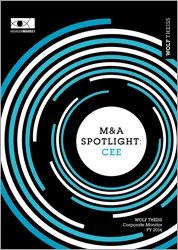
M&A appetite strong in CEE/SEE, say dealmakers

BY Fraser Tennant

Mergers & acquisitions (M&A) activity in Central, Eastern and South-Eastern Europe (CEE/SEE) is strong, with 98 percent of dealmakers in the region indicating they will continue to invest in the market, according to a new report from Mergermarket and Wolf Theiss.

The ‘Corporate Monitor’ report, which canvassed the opinions of 150 senior-level executives about their experiences and outlook on M&A in the CEE/SEE region, also includes in-depth analysis of macroeconomic developments and M&A trends in each CEE/SEE country.

The report found that M&A activity in CEE was lively in 2016 amid global economic uncertainty, with deal value reaching €38.3bn, up 62 percent from €23.6bn in 2015. Furthermore, in line with global trends, deal volume remained fairly even year-on-year, with 507 deals compared to 516 in 2015.

Additionally, the report found that: (i) Poland, Austria and the Czech Republic are seen as the most attractive markets for buyers; (ii) the leading driver for M&A in the region is a target’s intellectual property or technology suggesting that CEE is developing strong innovation; (iii) the main challenge for dealmakers in specific countries stems from the competitive bidding environment according to 51 of senior-level executives; and (iv) investors expect distressed opportunities to grow in 2017, which should be of particular interest to buyout firms.

“Firm GDP growth in most CEE countries has sparked investor confidence in the region,” says Sonja Caymaz, research editor at Remark, part of the Mergermarket Group. “There was strong appetite for TMT, real estate, consumer and energy targets, especially from private equity (PE) firms which led to a record value for PE deals in 2016 (103 deals worth a combined value of €11.3bn – the highest deal value for PE in the region ever recorded by Mergermarket). There is still plenty of room for digitalisation in consumer and manufacturing businesses, and the ability to grow strong local brands across borders. As elsewhere in Europe, inbound activity from China into the CEE region also doubled compared from 2015.”

Horst Ebhardt, head of the corporate and M&A group at Wolf Theiss, concluded: “CEE/SEE saw a very strong M&A market in 2016 and this trend is widely expected to continue in 2017 – despite uncertainty in assessing the policy approaches of the new US administration, the outcome of elections in France and Germany and the UK’s structuring of its exit from the European Union.”

Report: M&A SPOTLIGHT: CEE - WOLF THEISS Corporate Monitor FY 2016

Reckitt Benckiser to acquire Mead Johnson for $16.6bn

BY Richard Summerfield

The world’s leading consumer health and hygiene firm, Reckitt Benckiser Group plc, has announced that it is to acquire Mead Johnson Nutrition Company for around $16.6bn, though the total value of the deal, including the target's existing debt, will be around $17.9bn.

Mead's shareholders will receive $90 cash per share held, a premium of 9 percent to the company's closing price of $69.50 on 1 February 2017, the day before speculation of a possible deal first emerged, and 24 percent up on its 30-day volume-weighted average price of $72.37.

In a statement announcing the deal Rakesh Kapoor, Reckitt's chief executive, said: “The acquisition of Mead Johnson is a significant step forward in RB’s journey as a leader in consumer health. With the Enfa family of brands, the world’s leading franchise in infant and children’s nutrition, we will provide families with vital nutritional support. This is a natural extension to RB’s consumer health portfolio of Powerbrands which are already trusted by millions of mothers, reinforcing the importance of health and hygiene for their families.”

According to the firms, the newly combined company will generate around 40 percent of its sales in developing markets. China will be the firm’s second-largest market after the US. The takeover will add to Reckitt's earnings within a year of the deal completing and the deal will generate $250m of cost savings after three years.

James Cornelius, chairman of Mead's board of directors, said: “The agreement being announced today is about value creation. First and foremost, this transaction provides tremendous value to Mead Johnson Nutrition stockholders. Additionally, relative to the future growth and development of the Mead Johnson business, Reckitt Benckiser – with its strong financial base, broad global footprint, consumer branding expertise and dynamic business model – is an ideal partner.”

Reckitt has confirmed that the deal will be funded through a combination of cash and new debt. To complete the deal, the company will take out a bridging loan of $8bn to cover the cash consideration and issue $9bn of new debt in the form of three- to five-year-term loans.

The two companies have also noted that the deal will include a $480m break-fee if either company walks away, subject to certain conditions.

News: Reckitt Benckiser to buy Mead Johnson

©2001-2026 Financier Worldwide Ltd. All rights reserved. Any statements expressed on this website are understood to be general opinions and should not be relied upon as legal, financial or any other form of professional advice. Opinions expressed do not necessarily represent the views of the authors’ current or previous employers, or clients. The publisher, authors and authors' firms are not responsible for any loss third parties may suffer in connection with information or materials presented on this website, or use of any such information or materials by any third parties.