US banks face new regime

On 18 February 2014, the Board of Governors of the Federal Reserve System approved a final rule implementing certain of the ‘enhanced prudential standards’ mandated by Section 165 of the Dodd-Frank Act. The Final Rule applies the enhanced prudential standards to US bank holding companies with $50bn or more in total consolidated assets and the US banking presence of foreign banking organisations (FBOs). The Final Rule is certainly an important new regulation for large US banking organisations. But it also represents a significant development for non-US banking organisations that have operations in the US.

FW spoke to Jeff Berman at Clifford Chance, Robin Maxwell at Linklaters and Brian D. Christiansen at Skadden, Arps, Slate, Meagher & Flom, about the new regime.

TalkingPoint: Enhanced prudential standards for banks in the US

France strikes deal on Alstom sale

BY Matt Atkins

The French government has successfully negotiated a deal to purchase a stake of rail and energy group Alstom from its largest shareholder, French conglomerate Bouyuges. The agreement grants the government an option to buy up to 20 percent of Alstom shares from Bouygues, removing the final hurdle in Alstom's sale to US rival General Electric Co. (GE).

According to Bouygues, which has business interests ranging from construction to telecommunications, the government's option to buy Alstom shares will last for 20 months, beginning after the GE-Alstom deal closes. The government will only be entitled to a 15 percent stake if it does not exercise the option during this period.

GE’s original proposal has changed dramatically since it was first mooted, owing largely to French government pressure. Initially, the US firm offered $17bn for the whole of Alstom's energy business. The government effectively blocked this offer and gave itself veto powers, insisting on assurances for the preservation of Alstom’s strategic operations, the safeguarding of French control over its nuclear business and guarantees on employment.

The new deal, accepted by Alstom’s board on 21 June, will see GE buy Alstom's operations that manufacture natural gas turbines for power plants. In turn, Alstom will buy GE's railway signalling systems division. In addition, GE and Alstom will create three equally owned joint ventures, for power grid, renewable energy and nuclear power businesses. These projects will employ thousands of people in France and make politically sensitive technology, such as turbines for nuclear plants.

The government has declared it will purchase its stake when Alstom shares are trading at their lowest levels. However, this decision may see the state lose money. Part of GE's cash payment – estimated by government officials at between €8bn and €10bn – will be returned to Alstom's shareholders. With Sunday's agreement, Bouygues now is entitled to some of that cash, instead of the government.

News: France claims victory in Alstom deal with US rival GE

Infrastructure spending to soar, shift eastwards

BY Matt Atkins

According to new PwC research, global spending on infrastructure and capital projects is set to rocket, hitting $9 trillion by 2025, up from $4 trillion in 2012. The focus on spending will also shift from West to East, says the new report 'Capital project and infrastructure spending: Outlook to 2025'.

The majority of growth is expected to come from the emerging economies. China, which became the world's top spender on capital and infrastructure in 2009, will be a primary driver. “Emerging markets, especially China and other countries in Asia, without the burden of recovering from a financial crisis, will see much faster growth in infrastructure spending,” said Richard Abadie, global capital projects and infrastructure leader at PwC.

Developing economies currently account for nearly half of all infrastructure spending, and while mature markets will continue to grow, they will see their infrastructure spending shrink from nearly half of the global total today to about one-third by 2025.

Underlying this shift is accelerating urbanisation in many developing countries, which will result in spending growth in sectors such as water, power and transportation. Growing per capita income in emerging markets will also mean a larger middle class that will translate into infrastructure for manufacturing sectors that provide the raw materials for consumer goods and for more and better roads. However, though emerging economies represent the biggest opportunities going forward, CEOs are still apprehensive about the potential for slowdown in these regions. While emerging economies represent the biggest opportunities for infrastructure development and investment, CEOs worry almost as much about a slowdown in the emerging economies as they do about sluggish growth in the advanced economies.

Achieving this predicted growth decade will depend on whether emerging markets can provide the proper conditions for infrastructure development.

Besides the need for available capital, growth markets will need to reduce investor risk by establishing robust governance, a consistent regulatory framework, and political stability. Developing economies must also invest in training highly skilled and low-to-medium skilled workers to support design and construction activities.

Report: Capital project and infrastructure spending: Outlook to 2025

EU proposes harmonised trade secret protection

Only two-thirds of EU member states have specific legislation protecting trade secrets, and trade secret protection varies widely. This acts as a significant barrier to legal and commercial certainty across Europe, and restricts innovation and exploitation of trade secrets across the European market. The EU's proposed Directive on the protection of trade secrets is a positive step towards effective harmonisation across EU member states and, for the first time, will establish a recognised framework of minimum protections regarding abuse of trade secrets.

FW spoke to Warren Wayne, Robert Williams and Simon Shooter at Bird & Bird, about protecting trade secrets in the European Union.

TalkingPoint: Protecting trade secrets in the European Union

Asset management set for change

BY Matt Atkins

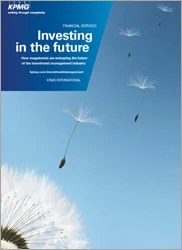
The asset management industry will be radically altered in the next 15 years, says KPMG.

A new report, Investing in the Future, makes a number predictions including that, by 2030, client bases will be fundamentally different as Generation X approaches retirement; the number of players in the global market will halve in the next five years; and big tech firms will make headway into the sector. The report also stresses that asset managers are currently behind the curve on embracing new technology.

Current business models will prove woefully insufficient, according to Tom Brown, global head of investment at KPMG international. "We are on the verge of the biggest shake-up the industry has experienced; and the message to asset managers is clear – adapt to change or your business won't survive. The two biggest issues that need to be addressed are the changing client base and technology, and asset managers need to get to work on these areas now."

Technological investment will be critically import in the coming years says the report. The future needs of clients will be fundamentally different from today, with a growing demand for personalised information, education and advice. However, businesses are currently focusing on the wrong areas.

"Asset managers still have a long way to go to recognise and exploit big data and data analytics," says Ian Smith, financial services strategy partner with KPMG in the UK. "While IT is already attracting a significant amount of investment, it is not being channelled into the right areas. Many businesses are putting their efforts into trying to unpick the complex legacy of disparate systems and technologies while trying to make sure they provide the right level of control to meet increasingly stringent compliance. There is too little focus on building the architecture to meet the business needs of tomorrow."

The report also predicts a shift in the way customers buy investment products. Online purchases are expected to increase, while 'Trip Advisor type' websites will provide buyers with greater opportunities to conduct their own research.

Report: Investing in the Future

©2001-2026 Financier Worldwide Ltd. All rights reserved. Any statements expressed on this website are understood to be general opinions and should not be relied upon as legal, financial or any other form of professional advice. Opinions expressed do not necessarily represent the views of the authors’ current or previous employers, or clients. The publisher, authors and authors' firms are not responsible for any loss third parties may suffer in connection with information or materials presented on this website, or use of any such information or materials by any third parties.