Oil & gas M&A market awash with ‘cautious optimism’

BY Fraser Tennant

The oil and gas M&A market is awash with ‘cautious optimism’ according to EY’s new Capital Confidence Barometer. 

The Barometer, EY’s 11th, paints a picture of an increasingly stable global economy which, although still recovering and relatively modest in scale, will lead to an increase in oil & gas M&A activity.

“The issues surrounding the oil & gas M&A landscape are primarily uncertainty and volatility,” said Andy Brogan, global oil & gas transaction Leader at EY. “While the broader economy is increasingly seen as stable, growth is anemic, and has notably slowed oil demand growth.

EY’s survey found that the number of oil & gas executives who believe that the global economy is more secure has doubled in the last 12 months. Executives are now positioning themselves to respond to a market which, although still sluggish, is once again beginning to stir.

“This means more oil & gas assets on the market now than in many past years, but in the buyer’s market, deals are taking longer to close,” believes Mr Brogan. “But as oil prices adjust to a slower global economy, we do see some cautious optimism for deal-making, which is supported by the resilience the market has historically shown.”

Key findings in the Capital Confidence Barometer include:  (i) 94 percent (of oil & gas executives) expect the global economy to improve or at least be stable over the next 12 months; (ii) 53 percent are expecting the oil and gas deal market to improve over the next 12 months; (iii) 68 percent expect that their deal pipeline will increase over the next 12 months, almost double compared to expectations six months ago; and (iv) 53 percent see increased geopolitical instability as the greatest economic risk over the next 12 months, up sharply from six months ago.

Sluggish and uncertain the market may be, but for many oil & gas companies, dealmaking prospects are firmly on an upward trajectory.

Report: Cautious optimism to fuel M&A rebound

Shanghai-Hong Kong stock exchange link-up heralds new era of international trade

BY Fraser Tennant

Hailed as ‘historic’ and ‘a landmark’, the link-up between the Hong Kong and Shanghai stock exchanges has well and truly opened the floodgates, with billions of dollars set to flow in and out of mainland China – the world’s second-largest economy.

Officially known as the Shanghai-Hong Kong Stock Connect, the new trading platform is expecting to see US$3.8bn a day being generated in cross-border transactions. Many hedge funds, banks, brokerage firms and big institutional investors are waiting in the wings to get their piece of the action.

These international investors purchased 13bn yuan (US$2.1bn) of Shanghai shares on the opening day of the link-up (maxing out the daily limit), while mainland investors got through 1.4bn yuan of the 10.5bn yuan quota in Hong Kong.

While the Hong Kong-Shanghai link is a major step in opening up China’s financial markets, which until now had largely been closed to foreign investment, major trade restrictions, such as the daily US$2.1bn limit on buying stocks, remain.

"It's really the beginning of a new era," said Charles Li, Hong Kong Exchanges chief executive.  “The link is a massive bridge, a massive road. It is going to be here not for days, not for weeks, not even for months, it is going to be here for years and decades."

Others are more circumspect.

Investor Wang Chenyu said “The Shanghai-Hong Kong Stock Connect offers a limited scope of shares for trading and it has investment quotas. It does not have any special advantages."

Castor Pang, head of research at Core Pacific-Yamaichi, added “Mainland investors will have to get used to the trading system. Right now it's the wait and see attitude.”

Although early trading on the Shanghai-Hong Kong Stock Connect has gone smoothly, demand has dropped somewhat since the opening day extravaganza. Thus far, Chinese investors have shown little interest in Hong Kong-listed stocks, while international investment into China has slowed markedly since first day trading.

Whether this proves to be the norm, a sign that the link-up has been overhyped, is too early to say.

News: China Stock Link Goes From Through-Train to Ghost Train as Flows Slump

Asia Pacific investment: PwC presents executives’ 10 year perspective on growth

BY Fraser Tennant

Senior business executives’ views on the opportunities for growth and business investment in the Asia Pacific region over the next 10 years form the basis of PwC’s 2014 APEC CEO Survey.

The Survey – ‘New vision for Asia Pacific: Connectivity creating new platforms for growth’ – shows that business leaders believe that a more connected, more balanced APEC region is the way forward.   

The 600 senior executives surveyed as to their perspectives on investment, trade and connectivity, were unanimous on what they believed the region had to do to drive investment over the next decade – 'be bold and break down barriers to growth'.

The Survey also reveals that the senior executives see the momentum swinging toward free trade across the APEC region and goes on to speculate as to where businesses are likely to be building their platforms for growth.

Key findings in the report include: (i) investments are set to rise across the region; (ii) confidence in revenue growth continues to improve; (iii) process barriers to trade can be as material as tariffs; (iv) executives aspire to do more with business partnerships; and (v) confidence lags on returns from social network investments.

Dennis Nally, PwC’s global chairman, said “As more of the world’s economic activity shifts to the APEC region, confidence and revenue growth continues to improve. Our survey revealed that 46 percent of executives are very confident as to near-term revenue growth over the next 12 months.

“Businesses are acting on opportunities across the APEC region and a majority of CEOs plan to increase investment over the next year. Supporting much of this confidence is a vision of a more connected Asia Pacific region.

“As the world becomes more inter-connected, there is no choice for businesses to not only adapt, but to innovate.”

While the survey makes clear that many barriers to business growth in the Asia Pacific region have receded, others remain firmly in place. What business leaders say they are looking for is greater clarity and transparency around regulations and other 'soft barriers'.

Whether they get their wish remains to be seen.

Report: New vision for Asia Pacific: Connectivity creating new platforms for growth

Regulators hit banks with £2.7bn fine following FOREX investigation

BY Fraser Tennant

Six banks have been hit with fines totalling £2.7bn for their part in failing to stop traders who were manipulating the financial system by rigging the £3.5 trillion-a-day foreign exchange (FOREX) markets.

The penalties were handed out to Royal Bank of Scotland (RBS), HSBC, JPMorgan, UBS, Citibank and Bank of America Merrill Lynch following an 18-month investigation by the Financial Conduct Authority (FCA) and its counterparts in Switzerland and the US.

The FCA’s portion of the fines represents the biggest financial punishment ever levied by the British regulator. 

Yet another British bank, Barclays, has been told to expect similar punitive action for its part in the scandal.

The regulators’ investigation discovered that some traders, who referred to themselves as ‘the A-team’, ‘the Players’ and ‘the 3 musketeers’, made millions for their banks while pocketing bonuses worth hundreds of thousands of pounds often in just a single afternoon.

Evidence collected showed that traders posted messages on forums bragging about making 'free money' and collecting eye-watering profits  the very same forums where, over a five-year period, they colluded to share privileged client information. 

The regulators have also warned that anyone found guilty of manipulating the FOREX market could face jail but although it’s believed that 30 traders have been sacked or suspended, not one has faced charges.

Martin Wheatley, chief executive of the FCA, said “The FCA does not tolerate conduct which imperils market integrity or the wider UK financial system. These record fines mark the gravity of the failings we found and firms need to take responsibility for putting it right. They must make sure their traders do not game the system to boost profits or leave the ethics of their conduct to compliance to worry about. Senior management commitments to change need to become a reality in every area of their business.

“But this is not just about enforcement action. It is about a combination of actions aimed at driving up market standards across the industry. All firms need to work with us to deliver real and lasting change to the culture of the trading floor. This is essential to restoring the public’s trust in financial services and London maintaining its position as a strong and competitive financial centre.”

News: Six Banks to Pay $4.3 Billion in First Wave of Currency-Rigging Penalties

Global jaunts not giving businesses value for money, claims PwC

BY Fraser Tennant

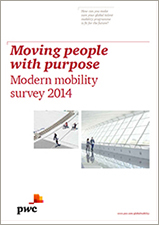
Businesses investing millions sending their employees on assignments across the globe may not be getting value for money, according to a new Modern Mobility report by PwC.

The report, which draws on a survey of 200 global executives, states that six in 10 organisations believe that their global mobility programs do not represent a worthwhile return on investment.

Additionally, PwC predicts that the number of people undertaking global assignments will jump 50 percent by 2020, despite only a paltry 8 percent of global organisations currently being able to accurately calculate the cost of their mobility programs.

Clare Hughes, a director in PwC’s global mobility team, said “It’s not surprising that organisations are expecting a jump in the number of people that are globally mobile – it is a great way for businesses to fill skills gaps, enter high growth markets, attract employees and develop their people. For some businesses, international experience is now a must-have for anyone taking on a leadership position.”

The PwC report also warns that HR teams across the globe are being forced to operate with meagre resources, lacking the investment and infrastructure information they require to tackle the evolving business landscape, as well as the know-how to effectively manage the increasing number of globally mobile employees.

Ms Hughes continued: “Organisations’ failure to measure the cost and value of their programmes will cost them dearly in the long run. Many businesses risk wasting considerable money sending the wrong people to the wrong places, overpaying for expats when local talent is available in-country or offering large financial packages when people are more motivated by the development opportunity.

“Businesses need to have a clear global mobility strategy which is based on growth priorities and what skills they are going to need and where, backed up by plans on how they are going to source, deploy, manage and motivate employees who work internationally.”

Providing extra food for thought, the PwC report, while noting that nine in 10 organisations say they are looking to increase the number of their globally mobile employees over the next two years, three in 10 admit they aren’t sure how many of their employees actually work overseas each year.

Report: Moving people with purpose – modern mobility survey 2014

©2001-2026 Financier Worldwide Ltd. All rights reserved. Any statements expressed on this website are understood to be general opinions and should not be relied upon as legal, financial or any other form of professional advice. Opinions expressed do not necessarily represent the views of the authors’ current or previous employers, or clients. The publisher, authors and authors' firms are not responsible for any loss third parties may suffer in connection with information or materials presented on this website, or use of any such information or materials by any third parties.