
Gender equality key to GDP growth?

BY Richard Summerfield               

Women today continue to face myriad social and economic barriers to attaining true gender parity. However, according to a new report from the McKinsey Global Institute, a lack of gender equality not only hinders women, it is also holding back the global economy to the tune of $28 trillion.

The world’s gross domestic product (GDP) could be uplifted by the equivalent of the combined economies of the US and China - $28 trillion - by 2025, according to the report, entitled 'The power of parity: How advancing women’s equality can add $12 trillion to global growth'. This economic uptick is contingent on women performing identical labour roles to their male equivalents. “We would call it an opportunity cost - this is the value at stake,” says Anu Madgavkar, a senior fellow at the McKinsey Global Institute and one of the authors of the report.

According to the research, women currently generate just 37 percent of global GDP. However, if they gained gender parity, they could boost the global economy by the equivalent of the US and Chinese economies combined. Even incremental progress on gender equality could be hugely beneficial to the global economy. If every country matched the participation rates of the highest-performing countries in their region, global activity would increase by $12 trillion – a figure equal to the combined GDPs of Japan, Germany and the UK.

Three of the major roadblocks which hold women back, according to the report, are lower workforce participation, fewer hours worked, and the fact that women are disproportionately represented in low-productivity sectors like agriculture. The notion that women are expected to take on the role of unpaid care in their personal lives also has a detrimental effect on their ability to contribute more significantly to global GDP. “When we looked at all the elements of gender inequality in work, unpaid care work was one of the top factors,” notes Ms Madgavkar.

Clearly, the role that women can play in advancing the global economy is considerable; however, it is important to note that gender equality in the workplace must go hand in hand with equality in wider society: "Realising the economic prize of gender parity requires the world to address fundamental drivers of the gap in work equality, such as education, health, connectivity, security, and the role of women in unpaid work".

Report: The power of parity: How advancing women’s equality can add $12 trillion to global growth

Volkswagen chief quits as emissions gloom gathers

BY Richard Summerfield

Volkswagen’s chief executive, Martin Winterkorn, announced his resignation yesterday in light of the increasing scandal around the German car manufacturer’s rigging of emission tests in the US.

Mr Winterkorn’s resignation was a long time coming. Analysts had expected his departure from the firm as soon as the news broke, but Mr Winterkorn remained in his position until Wednesday, only tendering his resignation following an emergency board meeting in the company’s native Germany.

“I am shocked by the events of the past few days. Above all, I am stunned that misconduct on such a scale was possible in the Volkswagen Group” said Mr Winterkorn is a statement released at the conclusion of the meeting. “As CEO I accept responsibility for the irregularities that have been found in diesel engines and have therefore requested the Supervisory Board to agree on terminating my function as CEO of the Volkswagen Group. I am doing this in the interests of the company even though I am not aware of any wrongdoing on my part. Volkswagen needs a fresh start - also in terms of personnel. I am clearing the way for this fresh start with my resignation.”

Volkswagen also vowed to prosecute those individuals responsible for the scheme to cheat US anti-pollution testing, though the company has not yet stated how many people were involved or whether their identities are known. A special investigative subcommittee has been established by Volkswagen in order to establish the facts of the case.

Volkswagen has championed diesel vehicles in both Europe and the US. Diesel engines account for just three percent of new cars sold in the US, compared to around half in Europe. Better fuel economy and lower carbon emissions have proven to be key selling points for Volkswagen and the wider automotive industry, however the suggestion that the German manufacturer – and possibly other firms – utilised ‘defeat devices’ to beat emissions tests could have long-term repercussions.

To date, Volkswagen has recalled nearly half a million vehicles in the US alone, setting aside around $7bn to cover costs. However, should it be required to modify the 11 million vehicles worldwide that are believed to have the software responsible for the falsified figures, $7bn would be grossly inadequate. Furthermore, Volkswagen could face fines of more than $18bn from the US Environmental Protection Agency. In addition to the internal probe launched by the company, the US Department of Justice has also launched a criminal investigation that could result in indictments against Volkswagen executives.

News: Volkswagen boss quits over diesel scandal

Second time around: Syriza election win is ‘victory for the people’ hails Tsipras

BY Fraser Tennant

Greece’s newly re-elected prime minister Alexis Tsipras has described his party’s return to power as a 'victory for the people’ and pledged to make persuading the country’s creditors to remove more debt his first priority.

The second general election to be held in Greece this year - triggered by Mr Tsipras' announced resignation on 20 August - saw the left-wing Syriza party win 145 seats (35 percent of the vote), delivering a fresh mandate to govern, albeit alongside a coalition partner.

Despite the re-endorsement, analysts are warning that Mr Tspiras faces tough times ahead.

“Syriza’s resounding win came after a painful and dramatic seven-month negotiation process with creditors that ended last July with the signing of a new harsh austerity program," observes Dimitris Rapidis, a political analyst and director of the think-tank, Bridging Europe. “In addition to that, Tsipras’ major argument to convince voters was the renegotiation of the sovereign debt that is expected to surge over €300bn.”

Further concern was expressed by the familiar figure of Yanis Varoufakis, the prime minister’s former finance minister, who said that Mr Tspiras’ fate “depends on whether his new government implements genuine reforms to give bona fide business some confidence to invest, and uses the intensification of the crisis to demand real concessions from Brussels".

The vote by the Greek people to give Mr Tspiras a second chance to make a difference means that full implementation of the spending cuts demanded by international creditors (and promised by Syriza in the summer following an anti-austerity U-turn) in return for an EU bailout of €86bn, will now have to be swiftly carried out by the new administration.

“The Greek economy will get back to health if it sticks to the terms of its new bail-out program," European Commission vice president Valdis Dombrovskis said earlier this week. “If the reforms agreed are properly implemented, Greece can grow again quite quickly. The underlying growth potential is still there.”

Should the newly installed Greek government fail to implement the reforms and appease international creditors, the consequences for the country remain dire: a default and potential ejection from the eurozone (the dreaded Grexit).

“The true winners of the Greek election are the creditors that will now squeeze the government to force a bailout deal that is designed to fail," claims Mr Rapidis. “Syriza pledged to implement a parallel program against austerity aimed at supporting and protecting the most vulnerable parts of society. But under pressure from creditors, it is likely that the Greek government will end up failing in i mplementing both programs.”

For now, although the election may be over, Greece’s long-standing economic problems remain. 

News: Triumphant Tsipras returns to fight for debt relief


Global cyber insurance market predicted to expand to $7.5bn by 2020

BY Fraser Tennant

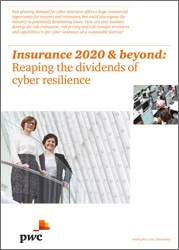
A prediction that the global cyber insurance market could expand to $7.5bn in annual premiums by 2020 is among the headline findings of new research published by PwC this week.

The research report – ‘Insurance 2020 & beyond: Reaping the dividends of cyber resilience' – also suggests that as boards become increasingly aware of the need to protect against potentially devastating cyber attacks, insurers will find more clients questioning the value of their current policies.

The PwC analysis follows hot on the heels of the firm’s 18th Annual Global CEO Survey, which revealed that 61 percent of business leaders across all industries see cyber attacks as a threat to the growth of their business.

"If insurers continue to simply rely on tight blanket policy restrictions and conservative pricing strategies to cushion the uncertainty, they are at serious risk of missing this rare market opportunity to secure high margins in a soft market," said Paul Delbridge, an insurance partner at PwC.

Furthermore, Mr Delbridge believes that should the cyber insurance industry take too long to innovate, there is a very real risk that a disruptor will attempt to move in and corner the market with aggressive pricing and more favourable terms.

Additionally, the PwC report finds that insurers (as well as reinsurers and brokers) can maximise opportunities whilst managing exposures by: (i) maintaining their own cyber risk management credibility through effective in-house safeguards against cyber attacks; (ii) robustly modelling exposures and potential losses to provide a better understanding of the evolving threat; (iii) identifying concentrations of exposure and systemic risks in an increasingly interconnected economy; and (iv) assessing and monitoring trends in frequencies and severities of attritional and large losses, and in the types of attack being perpetrated.

“For insurers, cyber risk is in many ways a risk like no other," opines Mr Delbridge. “It is equally an opportunity. Insurers who wish to succeed will base their future coverage offerings on conditional regular risk assessments of client operations and the actions required in response to these reviews. A more informed approach will enable insurers to reduce uncertain exposures whilst offering clients the types of coverage and attractive premium rates they are beginning to ask for.”

Report: Insurance 2020 & beyond: Reaping the dividends of cyber resilience

Banks agree $1.9bn antitrust deal

BY Richard Summerfield

A number of the world’s biggest banks have agreed a $1.9bn settlement to resolve the claims of investors who alleged that the banks conspired to fix prices and freeze competitors out of the market for credit default swaps.

Twelve banks and two industry groups stuck a preliminary agreement with the plaintiffs in a civil suit which will see the financial institutions pay $1.87bn to settle the case, which was borne out of a raft of regulatory activity and private lawsuits which alleged that the banks manipulated foreign-exchange and commodity markets, as well as interest-rate benchmarks. Those cases have resulted in a number of banks paying fines worth billions of dollars.

Should the deal win final approval it will see the group of defendant banks - Bank of America Corp, Barclays PLC, BNP Paribas SA, Citigroup Inc, Credit Suisse Group AG, Deutsche Bank AG, Goldman Sachs Group Inc, HSBC Holdings PLC, J.P. Morgan Chase & Co, Morgan Stanley, Royal Bank of Scotland Group PLC and UBS Group AG – agree to pay one of the largest antitrust settlements in US history.

Though a tentative agreement has been reached there are still some issues which must be resolved. The settlement would also need to meet with a judge’s approval, but this is a significant step as it would avert a costly and expensive trial.

The plaintiff group, made up of a number of hedge funds, pension funds, university endowments, small banks and other investors, alleged that the banks "made billions of dollars in supracompetitive profits’ by taking advantage of ‘price opacity in the CDS market".

In an interview with Bloomberg TV Daniel Brockett, a partner at the plaintiffs’ law firm Quinn Emanuel Urquhart & Sullivan LLP, noted that the formal agreement of the deal would take about 10 days to come through. “We are pleased to have reached agreement on many of the important terms, including the amount of the settlement, but there are a few issues that remain to be discussed and negotiated," said Mr Brockett.

Under the terms of the settlement the banks will pay different amounts towards the settlement. The size of each bank’s contribution will be derived from its share of CDS trading.

A spokesman for the International Swaps and Derivatives Association (ISDA) said the group was “pleased the matter is close to resolution". He added: “ISDA remains committed to further developing [swaps] market structure to ensure the market functions safely and efficiently." ISDA had previously noted that the allegations against the banks were without merit.

News: Big banks in $1.865bn swaps price-fixing settlement

©2001-2026 Financier Worldwide Ltd. All rights reserved. Any statements expressed on this website are understood to be general opinions and should not be relied upon as legal, financial or any other form of professional advice. Opinions expressed do not necessarily represent the views of the authors’ current or previous employers, or clients. The publisher, authors and authors' firms are not responsible for any loss third parties may suffer in connection with information or materials presented on this website, or use of any such information or materials by any third parties.