


Q&A: Pay transparency and pay equity
September 2026 | SPECIAL REPORT: HUMAN CAPITAL & EMPLOYMENT
Financier Worldwide Magazine

September 2026 Issue
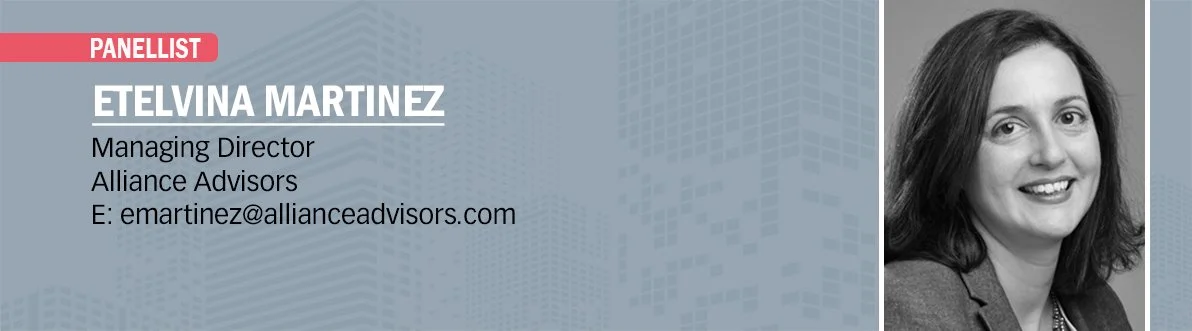
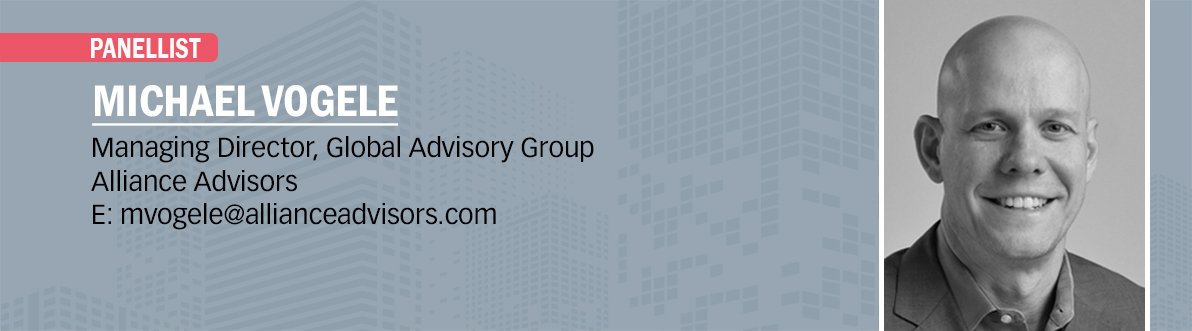
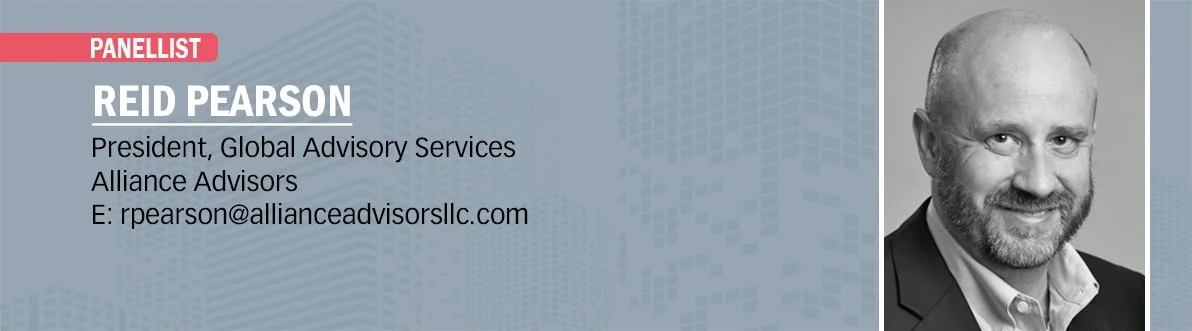
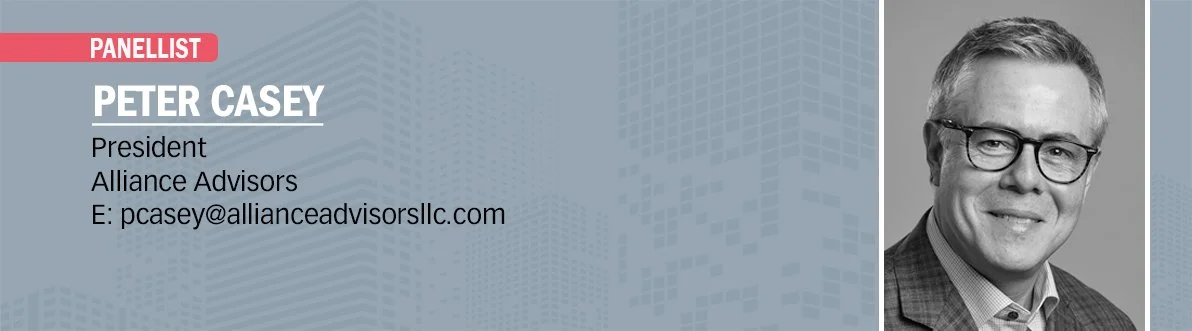
FW discusses pay transparency and pay equity with Etelvina Martinez, Michael Vogele, Reid Pearson and Peter Casey at Alliance Advisors.
FW: Why has pay transparency become such a central issue in the modern workplace?
Martinez: Pay transparency has moved to the centre of the modern workplace because it sits at the intersection of talent, culture and regulation. Employees now expect clarity on how pay decisions are made, not just what they earn, and they use external benchmarks and social platforms to compare outcomes in real time. At the same time, regulators and investors increasingly view pay equity as a core governance and environmental, social and governance issue – linking fair, explainable compensation to long-term value creation. For boards and leadership teams, opaque pay practices now translate directly into trust deficits, higher attrition and reputational risk. Transparent frameworks help organisations show that pay reflects role, contribution and market data, rather than subjective or biased judgments, which is critical for attracting and retaining diverse, high performing talent.
FW: What new disclosure obligations will most significantly change how organisations manage pay?
Vogele: The most significant shift is the move from aggregate narrative disclosure to granular, data-driven reporting on pay and representation. Jurisdictions are increasingly mandating publication of gender and ethnicity pay gaps, band-level or job-level statistics, and, in some cases, individual-level pay ranges in job postings. These obligations force organisations to link job architecture, performance management and pay decisions in a coherent way that regulators, employees and investors can all interrogate. For global employers, the challenge is harmonising different local rules into a consistent policy framework while still meeting country-specific requirements around metrics, frequency and format. The practical impact is that organisations must treat pay data and governance controls with the same rigour they apply to financial reporting, including clear ownership, robust data quality and board level oversight.
“Preparation starts with treating pay transparency as a governance programme, not a communications exercise.”
FW: What are the biggest litigation and compliance risks emerging from pay transparency?
Pearson: The biggest emerging risks stem from misaligned narratives, inconsistent data and inadequate documentation. If public disclosures, recruitment materials and internal messaging promise pay equity but underlying datasets reveal unexplained gaps, organisations face heightened exposure to discrimination claims and class actions. Incomplete job architecture and manual, discretionary pay decisions create particular vulnerability, as regulators and courts increasingly ask for evidence of systematic, bias resistant processes. Cross-border employers also face compliance risk when they apply a single global pay policy, but fail to respect local transparency and reporting rules. Finally, poor data governance, including inaccurate or fragmented human resources (HR) and payroll systems, can lead to erroneous disclosures, triggering regulatory scrutiny, investor concern and reputational damage that extends beyond compensation into broader assessments of governance quality.
“The biggest emerging risks stem from misaligned narratives, inconsistent data and inadequate documentation.”
FW: How should organisations prepare for increased scrutiny, including audits, employee challenges and data requests?
Casey: Preparation starts with treating pay transparency as a governance programme, not a communications exercise. Organisations should map their end to end pay decision process – from job evaluation and market benchmarking to performance calibration and promotion – and document each stage in a way that can be shared with regulators or challenged by employees. A risk based internal audit of pay practices, including statistical analysis of gaps and outliers, helps identify issues before external stakeholders do. HR, legal and investor relations need a coordinated response plan for employee queries, regulatory reviews and shareholder questions, grounded in consistent data and messaging. Training frontline managers is essential. They will often be the first to face employee challenges and must be able to explain pay frameworks confidently, backed by clear talking points and escalation paths.
FW: How can organisations build defensible pay frameworks that stand up to regulatory and legal scrutiny?
Martinez: A defensible pay framework combines robust design, reliable data and disciplined execution. Organisations should start with a clear job architecture that groups roles by impact, skills and market value, then anchor pay ranges to credible external benchmarks and an agreed compensation philosophy. From there, they need structured processes for starting pay, promotions and variable compensation, with defined criteria and approval thresholds that limit undue discretion. Regular analytics – for example regression-based pay equity studies or cohort analyses by gender, ethnicity and location – help identify and correct unexplained gaps. Finally, documentation matters. Policies, governance minutes and rationale for exceptions all contribute to a record that regulators, courts and investors can review and understand, demonstrating that decisions were made systematically rather than arbitrarily.
“The challenge is harmonising different local rules into a consistent policy framework while still meeting country-specific requirements.”
FW: How is greater pay transparency changing the relationship between employers and employees?
Vogele: Greater pay transparency is reshaping the employer-employee relationship from one based on implicit trust to one grounded in explicit, data backed fairness. Employees now expect to understand how their pay compares to peers, what drives progression through ranges and how performance translates into reward. This pushes organisations to articulate their compensation philosophy in plain language and to engage in more sophisticated, two way conversations about value, contribution and development. Transparency can strengthen relationships when it reveals coherent, equitable structures. It can also surface tensions where legacy practices have created inconsistencies. Over time, organisations that embrace openness are likely to see higher engagement and retention, while those that resist may face ongoing scepticism, escalations and challenges to leadership credibility.
“Pay transparency has moved to the centre of the modern workplace because it sits at the intersection of talent, culture and regulation.”
FW: What does ‘good’ pay transparency look like in practice in a mature organisation?
Pearson: In a mature organisation, good pay transparency is embedded rather than episodic. Employees have access to clear pay ranges for roles, understand how their position within the range reflects experience and performance, and can see realistic pathways for progression. Managers are equipped with tools and training to discuss compensation confidently, supported by dashboards that show team level pay equity metrics and trends. Externally, the organisation publishes concise, investor-friendly disclosures on pay gaps and governance, linking actions to measurable outcomes over time. Crucially, transparency is integrated with broader inclusion and talent strategies – for example targeted development and succession planning for underrepresented groups, so that pay becomes one visible component of a holistic approach to fairness and opportunity.
Etelvina Martinez has been in the field of corporate governance since 2003, and has worked with issuers and institutional investors in the US and several international markets. She began her career as an analyst at Institutional Shareholder Services, advising institutional investor clients on proxy voting decisions, including proxy fights and other contested situations. She can be contacted by email: emartinez@allianceadvisors.com.
Michael Vogele is a multilingual professional with 25 years of experience providing consultative services on the design and disclosure of governance and compensation topics within global corporate filings. His expertise lies in analysing executive and director compensation structures, evaluating governance practices, and modelling proxy voting trends. He can be contacted by email: mvogele@allianceadvisors.com.
Reid Pearson is president of global advisory services at Alliance Advisors and leads its corporate governance practice. He works with clients and partners on a number of proxy issues, including solicitation strategy, shareholder engagement, say-on-pay, equity compensation plans and other corporate governance matters. A respected figure in the field, he is a frequent speaker on corporate governance and equity compensation issues. He can be contacted by email: rpearson@allianceadvisorsllc.com.
Peter Casey is the president of Alliance Advisors where he oversees the proxy solicitation group and proxy contest/M&A practice. He has extensive knowledge in equity compensation plan analysis, corporate governance consulting, proxy solicitation and contested situations. His considerable proxy fight experience includes consent solicitations, hostile tender offers, contested mergers and numerous proxy fights for board representation, including fights involving cumulative voting and ‘vote no’ campaigns. He can be contacted by email: pcasey@allianceadvisorsllc.com.
© Financier Worldwide